Disclosure: This article contains affiliate links. I may earn a commission at no extra cost to you.
Many Subaru owners eventually face a simple choice: aero bars or round bars. Both can carry cargo boxes, bikes, kayaks, and other gear, but they differ in wind noise, accessory compatibility, and everyday usability. For most Crosstrek, Forester, and Outback owners, the best option depends on how often the roof rack is used and what gear it needs to carry.
Aero bars use a wing-shaped profile to reduce wind resistance and noise, and they typically sit lower on the vehicle for a cleaner look. Round bars use a simple cylindrical design that’s been on roof racks for decades — their advantage is simplicity and broad accessory compatibility, since many bike racks, kayak carriers, and other accessories were originally designed around round-bar systems. For most owners, the decision comes down to whether wind noise and everyday usability matter more than the simplicity of a traditional round-bar setup.
Wind Noise and Highway Driving
Aero bars move air more smoothly over the roof, which minimizes whistling and wind noise at higher speeds — a real difference for owners who leave crossbars installed year-round or drive long distances. Round bars create more air disturbance, and while the difference is minor at lower speeds, it becomes more noticeable on the highway, especially with no accessories mounted to break up the airflow. Crossbar height also affects garage and parking-deck clearance: aero-bar systems tend to sit lower than comparable round-bar setups, though the exact difference varies by rack design. For occasional roof rack use, these differences matter less than accessory compatibility or cost.
Cargo Box and Accessory Compatibility
Most cargo boxes mount to both aero and round bars, but fitment depends more on bar spread, positioning flexibility, and hatch clearance than bar shape alone — a properly fitted box performs well on either style. Bike racks and kayak carriers are similar: most modern accessories work with both, though some older gear was designed specifically around round bars, so it’s worth checking compatibility before buying regardless of shape. If you’re running multiple accessories at once, usable bar space and mounting flexibility matter more than bar shape. Popular cargo box picks that pair well with either setup: Yakima SkyBox NX 16 (best overall), Thule Force 3 L (best for families), and Thule Motion 3 (premium pick). See our full Best Cargo Box for Subaru guide for more options.
When Aero Bars Make More Sense
Aero bars are usually the better choice for frequent highway driving, since the noise difference becomes more noticeable over hundreds of miles. Cargo box owners tend to benefit too, since many boxes are designed around aerodynamic profiles. For daily-driven vehicles, aero bars offer a better overall balance of noise, clearance, and everyday comfort — and if quiet operation is the top priority, aero bars are the clear pick.
When Round Bars Make More Sense
Round bars appeal to budget-focused owners who want functional roof storage without paying more for aerodynamics. If your setup is simple and unlikely to change — a single bike rack or occasional kayak trip — the extra refinement of aero bars may add little practical benefit. For owners who use roof storage only a few times a year, the wind noise and clearance differences are also far less noticeable.
FAQs
Are aero bars quieter than round bars?
Usually yes — aero bars are designed to reduce wind resistance and generally produce less noise, especially at highway speeds.
Do cargo boxes work better on aero bars?
Often yes — aero bars typically offer better cargo box compatibility, positioning flexibility, and overall fitment.
Are round bars stronger than aero bars?
Not necessarily — strength depends on the specific crossbar system, not just the bar shape.
Are aero bars worth the extra cost?
Often yes for owners who frequently use roof racks, drive long distances, or leave crossbars installed year-round.
Do aero bars improve gas mileage?
They can slightly reduce aerodynamic drag compared to round bars, but the real-world fuel economy difference is usually small.
Can you use the same accessories on both?
Many accessories fit both styles, but compatibility varies — always verify fitment before purchasing.
Final Thoughts
The choice between aero bars and round bars comes down to how you use your roof rack. Aero bars generally make more sense for frequent driving, cargo boxes, and year-round use, while round bars can work well for budget-focused, occasional, or simple accessory setups. For most Crosstrek, Forester, and Outback owners, aero bars offer the best overall balance of quiet operation, cargo box compatibility, and daily usability.
Disclosure: This article contains affiliate links. I may earn a commission at no extra cost to you.
Many Subaru owners eventually face a choice: keep their OEM crossbars or upgrade to an aftermarket setup. For some, factory crossbars work perfectly well. For others, larger cargo boxes, kayaks, and multiple accessories make aftermarket options worth considering. The right choice depends on how you use your vehicle — in real-world Subaru ownership, fitment and everyday usability usually matter more than weight capacity alone.
What’s the Difference?
OEM (Original Equipment Manufacturer) crossbars are designed specifically for Subaru vehicles and sold through Subaru dealerships or parts suppliers. Their biggest advantages are simplicity, straightforward fitment, and guaranteed compatibility with the vehicle. Aftermarket crossbars come from third-party brands like Thule and Yakima, offering more bar spread, adjustment range, and accessory compatibility — at the cost of an added purchase and installation step.
Where OEM Crossbars Work Best
For many owners carrying bikes, skis, or smaller cargo boxes, OEM crossbars provide enough functionality without added cost or complexity. If you use roof storage occasionally and your current setup handles your gear without problems, there’s often little reason to upgrade — simplicity, easy installation, and minimal setup complexity outweigh the extra flexibility aftermarket systems offer.
Where Aftermarket Crossbars Work Best
Aftermarket crossbars become worthwhile once larger cargo boxes enter the picture — many systems offer greater bar spread and positioning flexibility, making it easier to maintain rear hatch clearance as boxes get longer and larger. Hatch clearance is one of the most common reasons owners upgrade at all: more adjustment range makes it easier to position a box without the hatch catching. Kayaks, canoes, skis, and multiple simultaneous accessories also push owners toward aftermarket systems, since OEM bars run out of usable spread quickly once more than one accessory is mounted.
OEM crossbars are designed specifically for the vehicle and generally perform well for everyday driving and occasional use. Aftermarket aerodynamic crossbars can be even quieter, particularly when left installed year-round, with the biggest differences showing up on highway drives and longer road trips. On daily convenience, OEM keeps the edge — less setup, fewer compatibility concerns — while aftermarket trades that convenience for more flexibility when you actually need it.
Which One Makes Sense for You?
Keep OEM if you use roof storage occasionally and your current setup already handles your gear without problems — smaller cargo boxes, bikes, skis, and occasional road trips are all well within OEM’s range. Upgrade if roof storage becomes a regular part of how you use your vehicle: larger cargo boxes, kayaks, multiple accessories, or recurring fitment and hatch-clearance issues are the clearest signs aftermarket crossbars will pay off.
For most everyday roof storage, yes — limitations mainly show up with larger cargo boxes or multiple accessories.
Do aftermarket crossbars hold more weight?
Some do, but for most cargo boxes, OEM crossbars already work well — fitment and positioning matter more than raw capacity.
Which works better with cargo boxes?
For smaller boxes, OEM crossbars often work well. For larger boxes, aftermarket crossbars typically provide better fitment and positioning flexibility.
Do aftermarket crossbars improve hatch clearance?
Often yes — additional adjustment options make it easier to position a cargo box without interfering with the rear hatch.
Are OEM crossbars easier to install?
Usually — they’re designed specifically for the vehicle with fewer fitment and compatibility concerns.
Are aftermarket crossbars worth the extra cost?
They can be if you frequently use cargo boxes, kayaks, or multiple roof accessories. For occasional use, OEM crossbars are often enough.
When should you upgrade from OEM crossbars?
When you start experiencing cargo box fitment issues, hatch clearance problems, accessory limitations, or more demanding roof storage needs.
Final Thoughts
The choice between OEM and aftermarket crossbars comes down to your storage needs. For occasional use, OEM crossbars are usually enough — for frequent, heavier, or multi-accessory roof storage, an aftermarket upgrade pays for itself in fitment and flexibility.
Disclosure: This article contains affiliate links. I may earn a commission at no extra cost to you.
Subaru cargo space usually feels different in real use than it does on paper. Once passengers, bags, coolers, and everyday items are inside the vehicle, usable space changes quickly — the real question isn’t just what fits, but what fits comfortably without making the vehicle harder to live with day to day.
Cargo shape, passenger space, and packing style usually matter more than raw cargo numbers. Open space, flexible packing, and easy access to gear make the biggest real-world difference — and that’s exactly where the Outback, Forester, and Crosstrek start to differ.
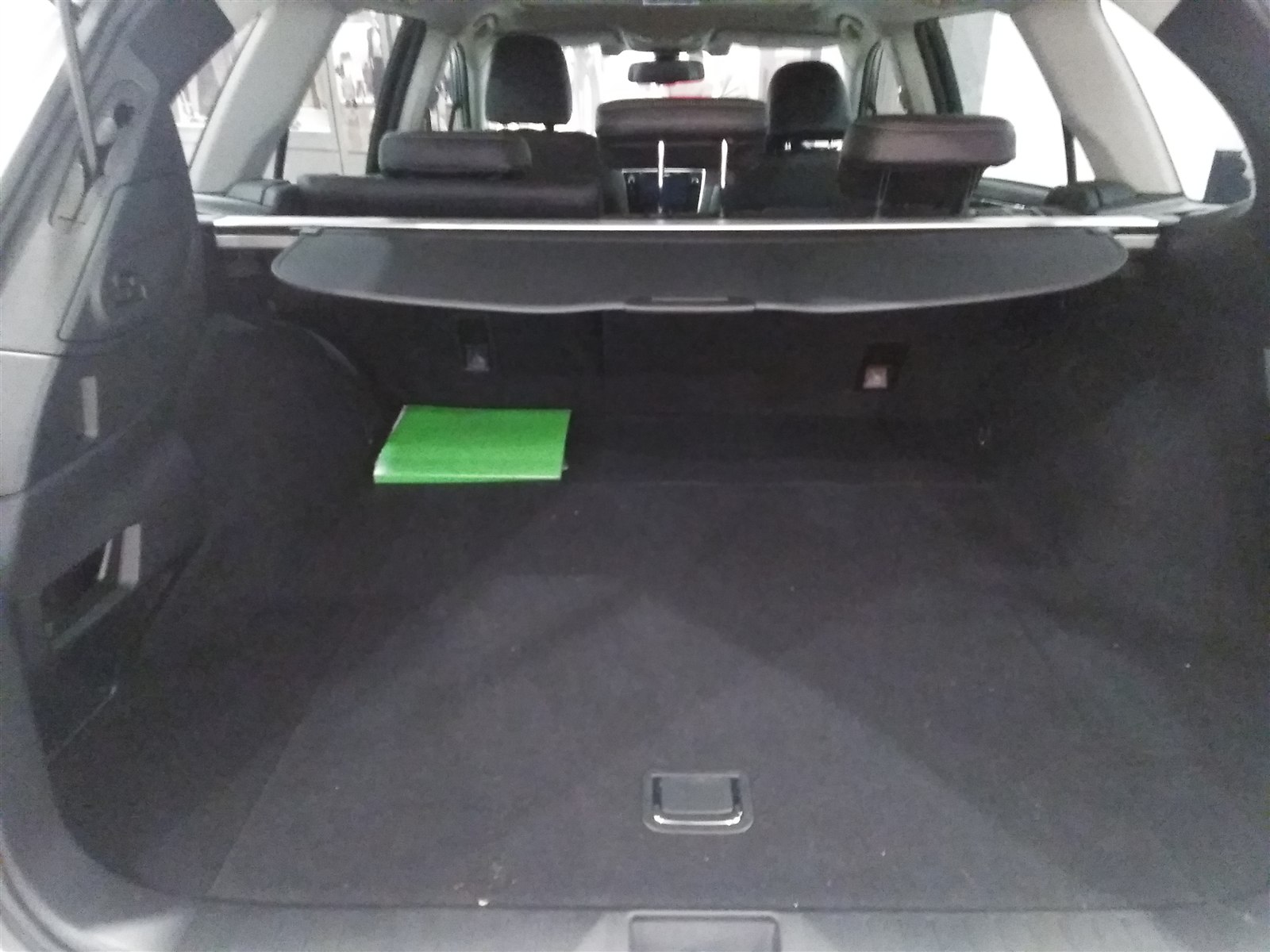
Published cargo numbers don’t tell the whole story. Cargo area length matters most for long gear and moving-day loads. Roof height and hatch opening affect how easily bulky items load in — the Outback’s lower roof height makes this easier than taller SUVs, especially during frequent road-trip stops. Wheel well width affects usable space more than the total cargo number suggests: wide coolers and rigid bins may not fit as cleanly as the raw volume implies, which is part of why soft bags consistently outperform hard cases in a Subaru. Rear seat fold angle also matters — seats that fold flatter make it easier to slide in longer gear.
What Fits for Everyday Use
Groceries, strollers, coolers, and weekend bags all fit comfortably in any of the three models — the real differences show up with bulkier or longer items. The Outback handles larger coolers and travel bags most comfortably; the Crosstrek benefits from simpler packing and smaller loads. A soft-sided cooler fits around passengers and uneven cargo layouts better than a rigid one.
Long sports gear highlights the difference between cargo shape and total size — the Outback usually works best because of its cargo length, while the Forester handles bulkier upright gear well. Dog crates fill space fast once passengers and luggage are added: the Outback fits larger crates best, the Forester’s taller cargo area helps with upright fitment, and the Crosstrek works better for smaller dogs. A foldable dog crate and dog seat cover make pet setups easier to manage on longer trips.
Road Trips and Car Camping
For travel packing, family loads fill space faster than two-person trips — carry-ons stack more predictably than large suitcases, and camping gear without roof storage is where space problems usually start first.
The Outback works best for sleeping inside thanks to its longer cargo area — most adults fit without aggressive seat folding or a complicated setup. Thinner sleeping pads work better than thick air mattresses since they leave more room for gear, which usually has to move to the front seats once the sleeping area is set up. One-person setups are easier to manage in all three models; two-person setups make organization matter a lot more. See our full Subaru Outback Car Camping Setup guide for a complete walkthrough.
Large Items and One-Off Hauls
Bikes — fit with a seat down in all three models; a bike fork mount keeps interior transport clean.
Lumber and home improvement materials — the Outback handles shorter boards surprisingly well; longer material needs roof transport or a truck.
Flat-pack furniture — fits more easily than assembled furniture; the Outback’s longer floor makes large boxes easier to load than the Crosstrek.
TVs and large electronics — the Outback and Forester handle these more comfortably; the Crosstrek reaches its limit fastest with oversized boxes.
Moving-day loads — the Outback handles moderate moves well (apartments, dorms, smaller furniture runs); soft bags and stackable boxes fit more efficiently than oversized bins.
Roof Storage vs Interior Storage
Interior space stops being enough once luggage, camping gear, strollers, or coolers start crowding passenger space. Everyday items — snacks, chargers, jackets, valuables — should stay inside within easy reach. Bulky or infrequently used gear works better on the roof. A roof basket suits oversized or dirty gear, though it needs more strapping and weather protection than a box. Maximum capacity doesn’t always make a better setup — easy access and open cabin space usually matter more. See Cargo Box vs Cargo Basket on a Subaru Outback for a deeper breakdown.
Outback vs Forester vs Crosstrek Cargo Space
The Outback usually feels biggest in real use — its longer cargo floor improves flexibility and organization. The Forester feels roomier vertically, though its shorter cargo length shows with longer gear and family packing. The Crosstrek works best with lighter, simpler loads and fills up fastest once passengers, luggage, or camping gear are added.
Model
Best Strength
Biggest Limitation
Best For
Outback
Long cargo floor and flexible packing
Less vertical cargo height than Forester
Family trips, camping, mixed daily use
Forester
Upright cargo space and visibility
Shorter cargo length than Outback
Vertical loads, taller gear
Crosstrek
Compact and easy to manage daily
Fills up fastest with passengers or gear
Lighter, simpler loads
Common Mistakes
Ignoring hatch clearance. Roof height and hatch opening matter more than most people expect once gear gets bulky.
Overestimating vertical space. Cargo areas look taller than they feel once coolers, bags, and bins are stacked below the hatch line.
Packing hard containers too early. Soft bags fit around passengers and uneven spaces more easily, especially in the Crosstrek and Forester.
Forgetting passenger space. Legroom, child seats, and everyday items reduce usable cargo flexibility faster than most people expect.
Assuming cargo volume equals usable space. Published cargo numbers don’t reflect real-world usability — shape, floor length, and wheel well spacing matter more than cubic feet alone.
What Actually Works
Soft bags consistently pack better than hard cases — they compress around other gear and leave more flexibility once passengers and everyday items are added. Open space matters more than maximum capacity: overcrowded setups feel harder to manage on longer drives. Most people don’t need roof storage as early as they expect — simpler packing and better organization solve most space problems first. When in doubt, favor smaller, flexible loads over bulk; they’re consistently easier to manage than one big push for maximum capacity.
FAQs
How much can actually fit in a Subaru Outback?
More than most people expect, especially because of its longer cargo floor and flexible layout.
Can the Outback fit a full-size stroller?
Yes. Most full-size strollers fit without issue, though larger strollers reduce usable cargo space quickly once bags and passengers are added.
Is the Outback big enough for family road trips?
Yes for most families — it offers a good balance of passenger comfort, cargo space, and everyday drivability.
Can two people sleep in the back comfortably?
Yes, but comfort depends heavily on height, sleeping setup, and how much gear stays inside the vehicle.
Does the Forester hold more than the Outback?
Not usually in real use. The Forester offers better vertical space, while the Outback feels more flexible because of its longer cargo area.
When do you actually need roof storage?
Usually once luggage, camping gear, strollers, or coolers start crowding passenger space and limiting everyday access.
What’s the biggest limitation of the Outback cargo area?
Height and passenger-related space loss once larger gear, coolers, or family items start stacking inside.
Final Thoughts
The Outback handles more in real use than most people expect, but usable space still depends heavily on passengers, packing style, and trip type. Simpler, more flexible setups usually work better over time than trying to maximize raw capacity — open space and easy access to gear matter more than the cargo number on paper.
Choosing a roof cargo box for a Subaru seems simple at first. Most boxes list similar capacities, and compatibility charts say they should fit. In real use, though, small details make a big difference.
Subaru roofs have a few quirks. Hatch swing, crossbar spacing, and roof length can turn a “compatible” box into something frustrating if it sits too far back, blocks the hatch, or creates more wind noise than expected.
This guide focuses on how cargo boxes behave in everyday Subaru use road trips, weekend gear hauling, and normal daily driving. It’s written for Crosstrek, Forester, and Outback owners who want a setup that works well without constant adjustments.
The goal is simple: help you choose a cargo box that fits properly, stays quiet on the highway, and remains easy to live with over time.
Disclosure: This article contains affiliate links. I may earn a commission at no extra cost to you.
Lower height helps reduce wind drag and highway noise.
The Subaru Reality Check Before You Compare Brands
Before comparing brands, it helps to understand a few Subaru-specific fit factors that influence how well a cargo box actually works in daily use.
Hatch clearance is the dealbreaker (especially on Outback)
A cargo box can mount securely and still be a poor fit if it blocks the rear hatch. When the hatch can’t open fully, everyday access quickly becomes frustrating.
The Outback is especially sensitive because the hatch swings upward and slightly forward. Even a properly mounted box can contact the hatch if it sits too far rearward.
Placement matters more than overall box length. If the box extends behind the rear crossbar, interference becomes more likely.
Before committing, open the hatch fully with the box installed and confirm comfortable access.
If clearance is tight, you need more forward placement flexibility or a different box shape. On the Outback, this often determines whether the setup remains usable long term.
Crossbar type and spacing changes what “fits”
Compatibility does not guarantee a good fit. Crossbar design and spacing determine where a box can sit once mounted.
Cargo boxes clamp to the bars. If spacing is limited, the box may be forced rearward, increasing hatch interference and reducing balance.
Fixed factory bars limit adjustment. Adjustable crossbars allow wider spread and forward positioning, which often improves real-world fit.
Bar height and profile can also affect clamp clearance and mounting compatibility.
Focus on placement flexibility rather than compatibility alone. A box that mounts but can’t be positioned correctly can create daily frustration.
What matters more than stated volume (shape, usable packing, mounting range)
Listed volume rarely reflects real usability. Shape, interior layout, and mounting flexibility determine how useful a box actually is.
Tapered noses and rounded rears often pack more efficiently and can improve hatch clearance compared with square designs.
Smooth interiors and wide openings improve usable space and loading ease.
Mounting range matters as well. Limited clamp travel can force the box rearward, while longer tracks allow better forward positioning.
Choose based on how the box packs, mounts, and fits your roof. Stated volume is best treated as a rough comparison.
Thule vs Yakima — How They Compare in Real Use
Once the basic fit factors are understood, the next step is looking at how the two brands compare during everyday use.
Fitment & Hatch Clearance on Subaru Roofs
Best buy for Subaru hatch clearance:
Thule Motion XT M (Amazon)
Honorable mention:
Yakima SkyBox 16 Carbonite (Amazon)
Both offer strong real-world usability, but models with longer mounting adjustment make forward positioning easier when hatch clearance is tight.
Hatch clearance often determines whether a roof box setup works smoothly in daily life. A carrier can mount securely and still become frustrating if the rear hatch can’t open fully.
The key factor isn’t box length. It’s how far forward the box can be positioned while still clamping securely. Forward placement keeps the rear of the box clear of the hatch as it swings upward.
Both Thule and Yakima use sliding clamp systems that allow some fore-aft adjustment. The usable mounting range determines how flexible that positioning is. A longer box with generous mounting travel can sometimes clear the hatch more easily than a shorter box with limited adjustment.
Many Thule models provide slightly longer mounting tracks, which can make forward positioning easier when clearance is tight. Yakima mounting systems are simple and secure, though some models offer slightly less adjustment range.
Subaru models also vary in sensitivity. The Outback is the most demanding because the hatch swings upward and slightly forward. The Forester usually has manageable clearance, while the Crosstrek is generally the least sensitive.
Noise and Highway Comfort
Best buy for highway comfort:
Thule Vector M
Honorable mention:
Yakima GrandTour 16
Both use aerodynamic shells that reduce turbulence compared with taller cargo boxes, helping wind noise blend into normal highway road sound.
Roof boxes rarely sound identical on the highway, but the differences usually come from shape and placement rather than brand.
Lower, tapered boxes disturb airflow less than tall or blunt designs. Mounting the box farther forward can also help because airflow coming off the windshield is smoother there. Crossbar design matters too—aerodynamic bars are noticeably quieter than square ones.
Between comparable shapes, Thule and Yakima perform similarly. Low-profile boxes are typically the quietest, mid-height boxes produce moderate wind rush, and taller high-capacity carriers are the most noticeable at highway speeds.
Some Thule models emphasize sleeker tapering, which can slightly reduce turbulence. Yakima designs sometimes prioritize interior volume, which can make them slightly taller. In everyday driving, placement and crossbars usually matter more than the logo on the box.
For most Subaru owners, a properly positioned box produces a mild wind rush that blends into normal road noise.
Fuel Economy Impact and “Leave-It-On” Practicality
Best buy for minimizing fuel economy impact:
Thule Motion XT Low (Amazon)
Honorable mention:
Yakima GrandTour Lo
Both use lower-profile aerodynamic designs that reduce drag compared with taller cargo boxes, helping limit fuel economy loss during highway driving.
Any roof box adds aerodynamic drag. The real question is how noticeable that impact becomes in everyday driving and whether it makes sense to leave the box installed between trips.
Lower-profile boxes disturb airflow less than tall designs, so they usually cause the smallest drop in fuel economy. Wider boxes and blunt front shapes increase drag more quickly, especially at highway speeds. Mounting the box forward can help slightly by keeping it in smoother airflow.
Between comparable sizes, Thule and Yakima perform similarly. Fuel economy changes are driven more by box height and shape than by brand.
Whether you remove the box between trips usually comes down to driving habits. Regular highway commuters often remove the box to reduce drag and wind noise. If the carrier is used frequently for trips or weekend travel, leaving it installed is often more convenient.
Ease of Install, Removal, and Living With It
Best buy for easy install and removal:
Thule Motion XT M (Amazon)
Honorable mention:
Yakima SkyBox 16 Carbonite (Amazon)
Both use tool-free clamp systems that align quickly on most crossbars, making repeat installs and removal manageable for one person.
Cargo boxes are often installed for trips and removed afterward. How easy that process feels in real life often determines whether owners actually take them off between uses.
Most modern boxes use internal clamps that tighten around the crossbars from inside the carrier. Thule systems typically use torque-limiting knobs with wide clamp jaws that center easily on the bars. Yakima systems use similar quick-grip clamps that are simple and secure, though alignment can sometimes take a moment if the bars sit near the edge of the mounting range.
After the first install, repeat installs become much quicker. Most setups take around 10–20 minutes once clamp positions are known. Many owners mark crossbar locations or leave clamps loosely positioned to speed things up.
Handling the box itself is often the bigger challenge. Mid-size carriers are manageable for most people to install alone, while longer boxes can feel awkward to lift and position. A step stool or briefly resting the box on the rear hatch edge can make solo installs easier.
In practice, removal usually happens because of garage clearance, fuel economy concerns, or daily driving comfort.
Locking, Opening, and Access on the Side of the Car
Best buy for dual-side access and secure latching:
Thule Motion XT M (Amazon)
Honorable mention:
Yakima SkyBox 16 Carbonite (Amazon)
Both offer dual-side opening and reliable locking systems that make curbside loading and everyday access easier in tight parking situations.
How a cargo box opens affects everyday usability more than many buyers expect. Loading gear in tight parking lots, narrow driveways, or curbside spaces quickly reveals whether access works for your routine.
Dual-side opening allows the box to be accessed from either side of the vehicle. This makes it easier to load from the curb, work around walls or garages, and reach gear without moving the vehicle. Single-side opening can still work but usually requires more careful parking.
Most mid- and upper-tier models from both Thule and Yakima offer dual-side access, while some entry-level boxes open from only one side.
Latch design also affects day-to-day usability. Thule typically uses centralized locking systems that prevent the key from being removed unless all latch points are engaged, providing clear feedback that the box is closed. Yakima latches engage smoothly and provide solid mechanical feedback when aligned correctly.
Build Feel, Durability, and Long-Term Ownership
Best buy for long-term durability:
Thule Motion XT M (Amazon)
Honorable mention:
Yakima SkyBox 16 Carbonite (Amazon)
Both have proven multi-year durability with solid hinge hardware, reliable latch systems, and weather-resistant seals that hold up well to regular travel and outdoor exposure.
Cargo boxes spend years exposed to sun, weather, vibration, and repeated loading. Long-term durability depends less on marketing claims and more on how the box holds up in everyday use.
Both Thule and Yakima build carriers designed for multi-year ownership. What matters most is how solid the box feels when opening and closing. Lid rigidity, hinge movement, latch engagement, and seal compression all influence how well a carrier ages.
Boxes that close cleanly and latch without force tend to stay trouble-free longer. Hinges and hardware experience the most wear over time, so smooth operation and consistent alignment are good signs of durability.
Large plastic lids naturally flex slightly when opened. Thule boxes often feel a bit more rigid when closing, while Yakima lids may show mild flex but remain durable in normal use.
Over time, sun exposure gradually dulls finishes and can make plastics more brittle. Gloss finishes show scratches more easily but clean well, while matte textures tend to hide wear better.
In long-term ownership, differences between Thule and Yakima are small. Both brands have strong reputations for weather resistance and structural durability.
Choosing the Right Box Style First (Then Picking a Brand)
Before comparing specific models, it helps to choose the right box style. Size and profile usually affect daily usability more than the brand itself.
Low-profile: when comfort matters more than volume
Low-profile cargo boxes prioritize quiet travel and everyday drivability over maximum storage. They sit closer to the roof, cut through the air more cleanly, and usually feel calmer at highway speeds.
On a daily-driven Subaru, that difference is noticeable. Lower boxes tend to create less wind noise, feel more stable in crosswinds, and have a smaller impact on fuel economy. They also keep overall vehicle height down, which can help with garages and tight parking.
The tradeoff is vertical space. Low-profile boxes don’t handle bulky suitcases or rigid bins very well. They work best with soft gear like duffels, jackets, sleeping bags, and compressible camping equipment.
This style makes the most sense when the box stays on the car often. If you commute with it installed, drive long highway distances, or simply prefer a quieter ride, the aerodynamic benefits can outweigh the smaller capacity.
Both Thule and Yakima offer well-shaped low-profile designs. In real use, differences are subtle, usually small variations in lid shape or finish rather than noticeable performance changes.
For Subaru owners who prioritize comfort and quiet travel, low-profile boxes often feel like the easiest option to live with.
Mid-size: the “most people” option for family travel
Mid-size cargo boxes are the sweet spot for most Subaru owners. They add real storage space without the extra bulk, wind drag, or fit challenges that come with oversized carriers.
This size comfortably handles the gear most families bring on trips—duffels, jackets, camping gear, sports equipment, and compact strollers. It frees up cabin space without making the roof setup feel oversized.
Mid-size boxes are also easier to live with day to day. They usually clear the hatch more easily than longer carriers, create less wind noise than tall boxes, and remain manageable to install or remove.
Going bigger can introduce tradeoffs. Larger boxes often increase wind noise, make hatch clearance more sensitive, and can push garage height limits. They also add more weight higher on the vehicle.
Between Thule and Yakima, mid-size boxes perform very similarly. Differences usually come down to interior shape, lid opening width, or mounting adjustment range rather than overall usability.
For most Outback, Forester, and Crosstrek drivers, mid-size boxes provide the best balance of capacity and everyday drivability.
Large: when you truly need bulky capacity (and accept tradeoffs)
Large cargo boxes are built for maximum storage. They make sense when smaller carriers simply aren’t enough—long trips, larger families, or bulky outdoor gear.
The extra space can be helpful for coolers, winter gear, ski equipment, or multiple duffels. It also keeps the cabin clearer so passengers and pets have more room.
But the tradeoffs are real. Larger boxes create more wind noise, catch crosswinds more easily, and reduce fuel efficiency at highway speeds. Their height and length also make the vehicle feel slightly different in strong winds.
Fitment becomes more sensitive too. Large carriers extend farther rearward, which increases the chance of hatch interference—especially on the Outback. Proper crossbar placement and forward positioning become important.
In general:
• Low-profile boxes are quiet and efficient but smaller
• Mid-size boxes balance storage and drivability
• Large boxes offer maximum capacity but bring the biggest impact on noise and fit
Across brands, differences usually come down to mounting adjustment, rear taper shape, and interior layout. In most cases, choosing the right size matters more than choosing a specific brand.
Large boxes work best when you consistently need the extra space. If the need is occasional, a mid-size carrier is usually easier to live with.
Crosstrek vs Forester vs Outback — What Changes Brand-to-Brand
Even with the same cargo box, Subaru models behave slightly differently. Roof length, height, and hatch design all affect how the setup feels in real use.
Crosstrek: shorter roof, tighter fit tolerance
The Crosstrek’s roof is shorter and more compact than the Forester or Outback. That smaller footprint leaves less room to position a cargo box, which makes fitment more sensitive to box length, mounting adjustment, and crossbar spacing.
A carrier can technically fit and still feel cramped if it can’t sit in the right spot. With less front-to-rear space available, boxes often end up closer to the hatch than ideal, and rear overhang becomes noticeable sooner than on the larger Subaru models.
Compact carriers tend to work best here. Low-profile and mid-size boxes are usually easier to position and keep the load balanced on the shorter roof. Longer boxes can still work, but they often require more careful placement.
Crossbar spacing matters more on the Crosstrek than on the other models. Maximizing bar spread within the rail limits improves stability and gives the box more freedom to sit forward. Narrow or fixed bar spacing can force compromises even when the carrier is technically compatible.
Across brands, the biggest difference comes from mounting adjustment rather than compatibility claims. Boxes with longer mounting tracks or more clamp travel are easier to position correctly on the shorter roof.
Key takeaway: Compact low-profile or mid-size boxes with generous mounting adjustment are usually the easiest fit on the Crosstrek’s shorter roof.
Forester: tall vehicle, noise and height feel different
The Forester’s taller ride height changes how roof cargo feels in daily driving. Because the roof sits higher in the airflow, wind exposure increases and roof-mounted gear tends to feel more noticeable than on the Crosstrek or Outback.
That height amplifies a few things. Wind noise becomes more apparent at highway speeds, crosswinds have more leverage on the carrier, and total vehicle height climbs quickly once gear is installed.
Box profile matters more than brand here. Low-profile carriers usually stay quiet enough for everyday driving, while mid-height boxes introduce more wind rush. Taller boxes and stacked loads increase both noise and drag because they sit directly in stronger airflow.
Height clearance also becomes a daily consideration. With a box installed, total vehicle height can approach the limits of garages, parking decks, and drive-throughs.
Loading can take a little more effort as well. Reaching the center of the carrier is harder on a taller vehicle, so many owners use a small step stool or door-sill step when loading gear.
Across brands, differences mostly come down to box shape. Lower, tapered designs reduce wind exposure and noise, while taller designs trade comfort for additional capacity.
Key takeaway: Lower-profile cargo boxes usually feel quieter and more stable on the Forester’s taller roof.
Outback: long roof but hatch clearance still decides everything
The Outback’s long roof makes it one of the easiest Subarus to work with when installing a cargo box. The extra length allows better weight distribution and more flexibility in where the carrier can sit.
But hatch clearance still determines whether the setup works smoothly in daily use.
The Outback’s rear hatch swings upward and slightly forward as it opens. If the rear of the cargo box sits too far back, the hatch can contact the box or stop short before fully opening.
This makes hatch clearance the pass-or-fail test for any setup. Interference usually happens when the box extends behind the rear crossbar or cannot be positioned far enough forward.
Before settling on placement, it’s worth confirming clearance in real conditions:
• Mount the box where you plan to run it
• Open the hatch fully, not just partially
• Check clearance on level ground and slight inclines
• Make sure the cargo area is still comfortable to access
Compared with the other Subaru models, the fit challenges are different. The Crosstrek has less roof space overall, the Forester emphasizes height and wind exposure, and the Outback mainly demands proper rear clearance.
The Outback handles mid-size and large carriers comfortably, but placement still matters. Longer boxes increase hatch risk more than wider ones.
Across brands, differences usually come from mounting track length and rear taper shape. Boxes with longer mounting tracks and a tapered rear profile tend to clear the hatch more reliably.
Key takeaway: The Outback fits larger carriers easily, but hatch clearance always depends on how far forward the box can be positioned.
Common Buying Mistakes When Comparing Thule and Yakima
Before choosing between brands, it’s worth avoiding a few common mistakes that make cargo box setups harder to live with.
Picking based on cubic feet instead of usable packing
Cargo box volume is easy to compare, but it rarely tells the full story. Two boxes with similar cubic-foot ratings can carry very different amounts of gear depending on their shape and interior layout.
Much of the listed volume sits in areas that are hard to use. Tapered noses reduce width near the front and rear, curved lids limit stacking height, and mounting hardware can take up space on the floor of the box. Narrow openings can also make bulky items harder to load even when the box technically has enough capacity.
In real use, interior shape matters more than the number on the spec sheet. Boxes with wide, smooth interiors tend to pack soft gear more efficiently, while aggressive tapering trades packing space for aerodynamics.
This matters because most Subaru roof loads are compressible items—duffels, jackets, sleeping bags, and camping gear. A box that accommodates those shapes well can feel larger in practice than one that simply lists more cubic feet.
Across brands, packing usability varies more by model than by manufacturer. Interior contour, rear taper shape, and lid opening width usually make a bigger difference than brand name.
The practical approach is to treat cubic feet as a rough comparison rather than the deciding factor. Focus on interior shape and how your actual gear packs.
Ignoring carrier weight and roof limits
Many buyers focus on storage space and forget that the carrier itself uses part of the roof’s weight limit. On most Subarus, the dynamic roof rating is around 150 pounds. That total includes crossbars, the carrier, mounting hardware, and everything packed inside.
A cargo box weighing 40–55 pounds can consume a large portion of that capacity before any gear is added. Once loaded, it’s easy to approach the limit without realizing it.
Different carriers vary in weight depending on size and construction, but the main issue is how the total load adds up. Problems usually appear when buyers treat the roof rating as cargo capacity alone, combine multiple carriers, or pack dense items like tools or coolers on the roof.
Even when the numbers technically work, heavy roof loads can make the vehicle feel less stable.
A simple rule helps avoid this: start with the vehicle’s roof rating, subtract the weight of bars and the carrier, and treat the remaining number as the limit for gear. Lighter, bulkier items are usually better suited for the roof, while dense gear stays more stable inside the vehicle.
Roof limits are a safety guideline, not a packing goal. Staying comfortably below the limit usually results in a quieter and more stable drive.
Assuming aftermarket bars “fix” a too-long box
Upgrading crossbars can improve stability and placement flexibility, but they cannot fix a cargo box that is fundamentally too long for the vehicle.
Stronger or adjustable bars can allow wider spacing, reduce flex, and make it easier to position a carrier precisely. Those improvements can help fine-tune placement, but they don’t change the overall length of the box or how far it extends beyond the mounting points.
If the rear of the box sits too far behind the rear crossbar, hatch interference and poor weight balance are still likely. Limited mounting track adjustment on the box itself can create the same problem.
This misconception usually comes from the idea that better crossbars increase usable roof space. In reality, fitment is limited by three things: the mounting adjustment range on the box, the crossbar spread allowed by the roof rails, and the hatch opening arc.
Both Thule and Yakima offer adjustable bar systems that help with placement, but successful fitment usually depends more on the box’s mounting range and overall length.
If a carrier barely clears the hatch or sits far rearward, the better solution is usually a shorter box or a model with longer mounting tracks.
Buying for the one big trip, not normal trips
It’s tempting to choose the largest cargo box available to prepare for a single big road trip. The problem is that most driving happens outside those peak trips.
Oversized carriers often introduce everyday tradeoffs. Larger boxes are harder to position forward, which increases the risk of hatch interference. They also add more wind noise, increase drag, and can reduce garage clearance. Bigger carriers are heavier and more awkward to install or remove between trips.
What feels like extra capacity “just in case” often becomes unnecessary bulk during normal driving.
Most trips involve soft luggage, jackets, sports gear, or weekend travel items. These pack efficiently and rarely require maximum box volume. A mid-size carrier often handles real-world packing while keeping noise, height, and drivability under control.
Both Thule and Yakima offer similar size ranges, so the bigger decision is choosing the right size for how you actually travel.
A good rule is to size the box for normal trips rather than the rare extreme load. Occasional overflow can usually be handled with better packing, shifting heavy items inside the vehicle, or adding a hitch carrier when needed.
The best setup is the one that works comfortably in everyday driving, not just on the biggest trip of the year.
What to Check Before You Buy (Practical Checklist Without Hype)
Before purchasing a cargo box, a few quick checks can prevent most fit problems and long-term frustrations.
Measure/confirm crossbar spacing and usable mounting zone
Cargo box fit depends as much on crossbar placement as on the box itself. A carrier may be compatible on paper but still sit in a poor position if the bars fall outside the box’s mounting range.
Start with a few simple measurements:
• Distance between the front and rear crossbars
• Distance from the rear crossbar to the top of the hatch opening
• Available space forward of the front bar before the box approaches the windshield area
These numbers determine whether the box can sit far enough forward to maintain hatch clearance and balanced weight.
Mounting range often matters more than box length. Most boxes attach using sliding clamps within a fixed track. If your bar spread falls outside that range, the box may have to sit farther back to reach both bars. That can create hatch interference even when the roof has plenty of space.
Crossbar design also affects flexibility. Fixed or integrated bars limit placement options, while adjustable aftermarket bars allow you to fine-tune spacing and positioning. In many cases, that adjustment matters more than brand choice.
Before buying, confirm a few basics:
• Your crossbar spread fits within the carrier’s mounting range
• The box can sit forward without clamp interference
• Hatch clearance looks workable based on estimated placement
A box that mounts securely but sits too far back quickly becomes frustrating in daily use. Confirming spacing and mounting range ahead of time prevents most fit problems.
Confirm hatch swing clearance strategy
A cargo box can mount securely and still interfere with the rear hatch. On many Subarus, especially the Outback, the hatch swings upward and slightly forward as it opens. If the rear of the box sits too far back, the hatch may stop short or contact the carrier.
What matters most is where the rear of the box sits relative to the rear crossbar. Even a few inches of overhang behind the bar can create interference once the hatch swings upward.
Preserving clearance usually means pushing the box as far forward as the mounting range allows. Ideally, the rear edge of the box sits close to, or slightly ahead of, the rear crossbar rather than extending behind it.
Box shape can also influence clearance. Models with a tapered rear profile often allow the hatch to swing farther than boxes with a square rear design.
Once mounted, take a moment to test it:
• Open the hatch slowly and confirm full clearance
• Check on slight inclines where the hatch arc changes
• Make sure cargo access is comfortable, not just possible
Hatch clearance is essentially a pass-fail test. A setup that barely clears often becomes annoying very quickly.
Decide if you’ll remove it between trips (storage + lifting reality)
Cargo boxes are easiest to live with when they match how often you plan to use them. The real question isn’t installation difficulty—it’s whether you’ll realistically remove and store the box between trips.
Most carriers weigh 35–60 pounds and are bulky to maneuver overhead. Even lighter boxes can feel awkward when lifting above shoulder height or aligning clamps on the roof.
Before buying, think through the routine:
• Can you lift and position it alone?
• Will you need a second person each time?
• Do you have a step stool or stable platform?
If removal requires help every time, the box may end up staying on the roof longer than planned.
Storage space matters too. Many boxes exceed seven feet in length, which limits where they can live when off the vehicle. Ceiling hoists, wall mounts, floor storage, or a shed are common solutions.
Most attachment systems become predictable after a few installs. The differences that matter over time are clamp alignment, tool-free tightening, and how easily the clamps find the bars during placement.
Whether the box stays on the roof usually comes down to daily driving habits. Limited garage clearance, wind noise, or fuel economy concerns push people toward removing it. Frequent trips, inconvenient storage, or a quiet low-profile carrier often lead owners to leave it mounted.
The key is being realistic about lifting and storage. If removal feels like a chore, it probably won’t happen often. Choosing a size and setup you can manage alone makes the box far easier to live with.
Final Recommendation
If you want one cargo box that works well across most Subaru setups, the Thule Motion XT M is the safest overall choice. It balances size, hatch clearance flexibility, noise control, and everyday usability better than most alternatives.
FAQs
Is Thule or Yakima easier to fit without blocking the Outback hatch?
Neither brand guarantees hatch clearance. Forward adjustment range and box shape matter more. Models with longer mounting tracks and a tapered rear are easier to position so the hatch opens fully.
Do Thule boxes run quieter than Yakima on the highway?
Noise differences are minimal between comparable box shapes. Profile height, placement, crossbar type, and driving speed influence sound far more than brand. Both can be quiet enough for daily driving.
Does either brand work better with factory Subaru rails and crossbars?
Both brands work well with factory systems. Fit depends more on crossbar spacing, bar adjustability, and how far forward the box can be positioned. Aftermarket bars improve placement flexibility, not capacity.
Which matters more for Subaru use: box length or mounting slot range?
Mounting slot range matters more. A shorter box can still block the hatch, while a longer box with sufficient fore-aft adjustment can often be positioned to clear it.
Are larger boxes worth it on a Crosstrek, or do they become a hassle?
Large boxes can work, but they reduce clearance tolerance and increase wind sensitivity and handling changes. For daily use, mid-size boxes are typically more practical and easier to live with.
If I plan to remove the box often, what should I prioritize?
Prioritize tool-free clamps, easy alignment, manageable weight, and good handholds. Lighter boxes with simple mounting systems make frequent removal realistic.
Can the same cargo box work across Crosstrek, Forester, and Outback?
Yes, if the size is appropriate. Mid-size boxes transfer best between models, while longer boxes may overwhelm a Crosstrek. Always recheck hatch clearance and bar spacing when switching vehicles.
Final Thoughts
There’s no perfect cargo box setup for every Subaru. The right choice depends on how you use your Crosstrek, Forester, or Outback, what gear you carry, and how much noise, height, or extra drag you’re willing to live with.
For many owners, comfort and everyday usability matter more than maximum capacity. Others need the extra space and accept the tradeoffs that come with larger boxes. The key is choosing a setup that fits your normal trips rather than the biggest haul of the year.
Fitment almost always matters more than brand. Hatch clearance, mounting adjustment, roof size, and box shape determine whether a cargo box feels easy to live with or constantly in the way.
Once you’ve narrowed down the right size and style, the next step is comparing specific box models. That’s where small design differences start to matter, especially when you’re trying to dial in the best fit for a Crosstrek, Forester, or Outback.
Choosing between a cargo box and a cargo basket is less about which one is “better” and more about which one fits how you actually use your Subaru. Crosstrek, Forester, and Outback owners tend to drive their vehicles every day, so roof storage choices affect comfort, noise, access, and fuel economy in ways that show up quickly.
A lot of advice treats boxes and baskets as interchangeable, but in real use they solve different problems. What works well for a short local haul can feel frustrating on a long highway trip, and what feels great for a road trip can be unnecessary for everyday tasks.
This article focuses on those differences through real-world Subaru use, not idealized builds or one-off scenarios. The emphasis is on how each option behaves once installed and how it changes the way the car feels to live with.
The goal is not to push one option over the other, but to help you decide which makes sense based on your driving patterns, the type of gear you carry, and how often roof storage is part of your day-to-day driving.
Disclosure: This article contains affiliate links. I may earn a commission at no extra cost to you.
When a Cargo Box Makes More Sense
A cargo box makes more sense when you need enclosed, predictable storage and want the car to stay comfortable on longer drives. For most Subaru owners, this comes down to how often you travel, what kind of gear you carry, and whether you want to keep that gear out of the cabin.
Weather protection is one of the biggest advantages of a box. If you regularly drive in rain, snow, or road grime, a sealed box keeps luggage and soft gear clean and dry without extra bags or covers. On multi-day trips, avoiding constantly wet gear becomes a real quality-of-life benefit.
Cargo boxes also tend to work better for highway-heavy driving. Compared to open racks, they manage airflow more consistently and reduce the amount of wind noise you hear in the cabin. While any box affects fuel economy, the driving experience usually feels more stable and predictable, especially at higher speeds or in crosswinds.
A box is also easier to live with when you carry mixed or soft gear. Items like duffels, strollers, sleeping bags, and loose luggage load quickly and stay contained. You do not need to worry about straps loosening, items shifting, or checking gear at every stop.
The tradeoff is bulk and convenience. Cargo boxes cost more, take up storage space when removed, and are not ideal for oversized or dirty items. If your priority is clean storage, reduced noise, and a setup that feels integrated into everyday driving, a cargo box is usually the better choice.
Recommended cargo boxes that work well on Subaru roofs
Thule Motion XT M (Amazon / REI)— balanced size, good hatch clearance flexibility, quiet highway travel
Yakima SkyBox 16 Carbonite (Amazon / REI)— roomy and durable, usually a lower price than comparable premium boxes
When a Cargo Basket Might Be Better
A cargo basket becomes the better choice when flexibility and quick access matter more than weather protection or quiet driving. For some Subaru owners, especially those who use roof storage frequently but briefly, a basket fits daily use better than a box.
Baskets work well for dirty, bulky, or awkward gear. Items like muddy boots, coolers, firewood, recovery gear, or sports equipment are easier to toss in and strap down without worrying about damaging an enclosed shell. Keeping mess and odors out of the cabin is often the main appeal.
Access is another advantage. A basket is faster to load and unload, especially during short stops or when carrying items you need to grab quickly. There is no lid to open or close, and oversized items that would never fit inside a box can still ride securely with proper strapping.
A few simple accessories make cargo baskets much easier to secure safely:
Helpful accessories for cargo baskets
• Rhino USA Ratchet Straps (Amazon) • Nite Ize CamJam Tie Down Straps (Amazon) • Weatherproof cargo net (Amazon)
The downsides are significant. Open baskets create more wind noise, reduce fuel economy more noticeably at highway speeds, and leave gear exposed to weather. Strapping becomes part of every trip, and forgetting to secure a load properly can lead to shifting or noise that you will feel and hear while driving.
A cargo basket makes more sense if you value speed, flexibility, and hauling dirty or oversized items over comfort and weather protection. If most of your trips are short, local, or task-focused rather than travel-focused, a basket can be the more practical tool.
Popular cargo baskets used on Subaru vehicles
Yakima LoadWarrior Cargo Basket (Amazon / REI)— durable steel basket with strong mounting system
Common Mistakes to Avoid When Choosing Between Them
One of the most common mistakes is choosing based on capacity alone. It is easy to assume that more space automatically means a better solution, but larger setups often introduce clearance issues, added noise, and daily inconvenience. If the setup makes the car harder to live with, that extra capacity goes unused more often than expected.
Another frequent misstep is underestimating how often the gear will stay on the roof. A setup that feels fine for a single weekend trip can become irritating if it stays installed for days or weeks. Wind noise, fuel economy loss, and access issues matter far more in daily driving than during a short trip.
Many owners also overlook how they actually load and access their gear. Enclosed storage works best for soft, clean items and longer trips, while open storage is better for bulky or dirty gear and quick access. Choosing the wrong style leads to constant workarounds rather than convenience.
It is also easy to ignore mounting and fit limitations until after purchase. Boxes and baskets behave very differently depending on how far forward they can be mounted and how they interact with the rear hatch. A setup that technically fits can still be frustrating if positioning options are limited.
The most practical approach is to be honest about use, not just intent. Think about trip length, driving frequency, weather exposure, and how often you want to load or unload gear. Choosing the option that matches those realities leads to fewer compromises and a setup you are more likely to use consistently.
FAQs
Which is quieter on the highway, a cargo box or a basket?
A cargo box is noticeably quieter. Baskets create more wind noise, especially at highway speeds, because gear and crossbars are exposed to airflow.
Which option hurts MPG more on an Outback?
Both reduce fuel economy, but baskets usually have a bigger impact when loaded. Exposed gear creates more drag than an enclosed box, especially on longer drives.
Can I leave a cargo basket on full time?
You can, but most owners find it noisy and inefficient for daily driving. Baskets are easier to live with when installed temporarily for specific trips or tasks.
Is a cargo basket better for dirty or wet gear?
Yes. Baskets are easier for muddy, wet, or smelly items since you are not enclosing them inside a shell that needs to stay clean.
Which option is easier to load and unload?
Baskets are faster for quick loading and oversized items. Boxes take a bit more effort but keep everything contained and protected once loaded.
Will either option block the rear hatch?
Both can, depending on length and mounting position. Boxes are more likely to cause hatch clearance issues if they are too long or cannot slide forward enough.
Which makes more sense for family road trips?
A cargo box usually works better. It keeps luggage dry, reduces cabin noise, and feels more stable on long highway drives compared to an open basket.
Final Thoughts
Choosing between a cargo box and a cargo basket comes down to how you actually use your Subaru, not which option offers the most space or looks the most versatile. Each solves a different problem, and neither works well in every situation.
Cargo boxes favor comfort, weather protection, and longer trips where noise and stability matter. Cargo baskets favor speed, flexibility, and hauling gear that is bulky, dirty, or awkward to fit inside an enclosed shell. The tradeoffs are unavoidable. More protection usually means more bulk, while more flexibility usually means more noise and exposure.
The most practical setups come from being honest about patterns, not exceptions. Consider how often you drive on the highway, how long your trips usually are, what kind of gear you carry most, and whether roof storage will stay on the car or come off between uses. Matching the storage style to those habits reduces frustration and increases how often you actually use it.
Once you know which direction makes sense, evaluating specific sizes, mounting options, and designs becomes much easier. Future guides will break those details down further, helping refine a setup that fits your Subaru and your routine without unnecessary compromise. If you decide a cargo box is the better choice, see Best Cargo Box for Subaru Outback for model recommendations.

.jpg)
_China_(8).jpg)