Disclosure: This article contains affiliate links. I may earn a commission at no extra cost to you.
Quick Picks: Best Trunk Storage Products for a Subaru
• Best rigid storage: Rubbermaid ActionPacker Storage Box (Amazon)
• Best soft organizer: Drive Auto Products Trunk Organizer (Amazon)
• Best cargo liner: Motor Trend FlexTough Cargo Liner (Amazon)
Subaru trunks offer a lot of open space, but that doesn’t always work in daily use. Once you start loading groceries, gear, or everyday items, things shift and mix together.
Most people don’t fix it because they want to keep the space flexible. Fixed setups can get in the way, so the trunk stays unorganized.
The goal isn’t a perfect system. It’s something simple that keeps items in place and easy to access without limiting the space.
This guide focuses on what actually works for Crosstrek, Forester, and Outback owners in real use.
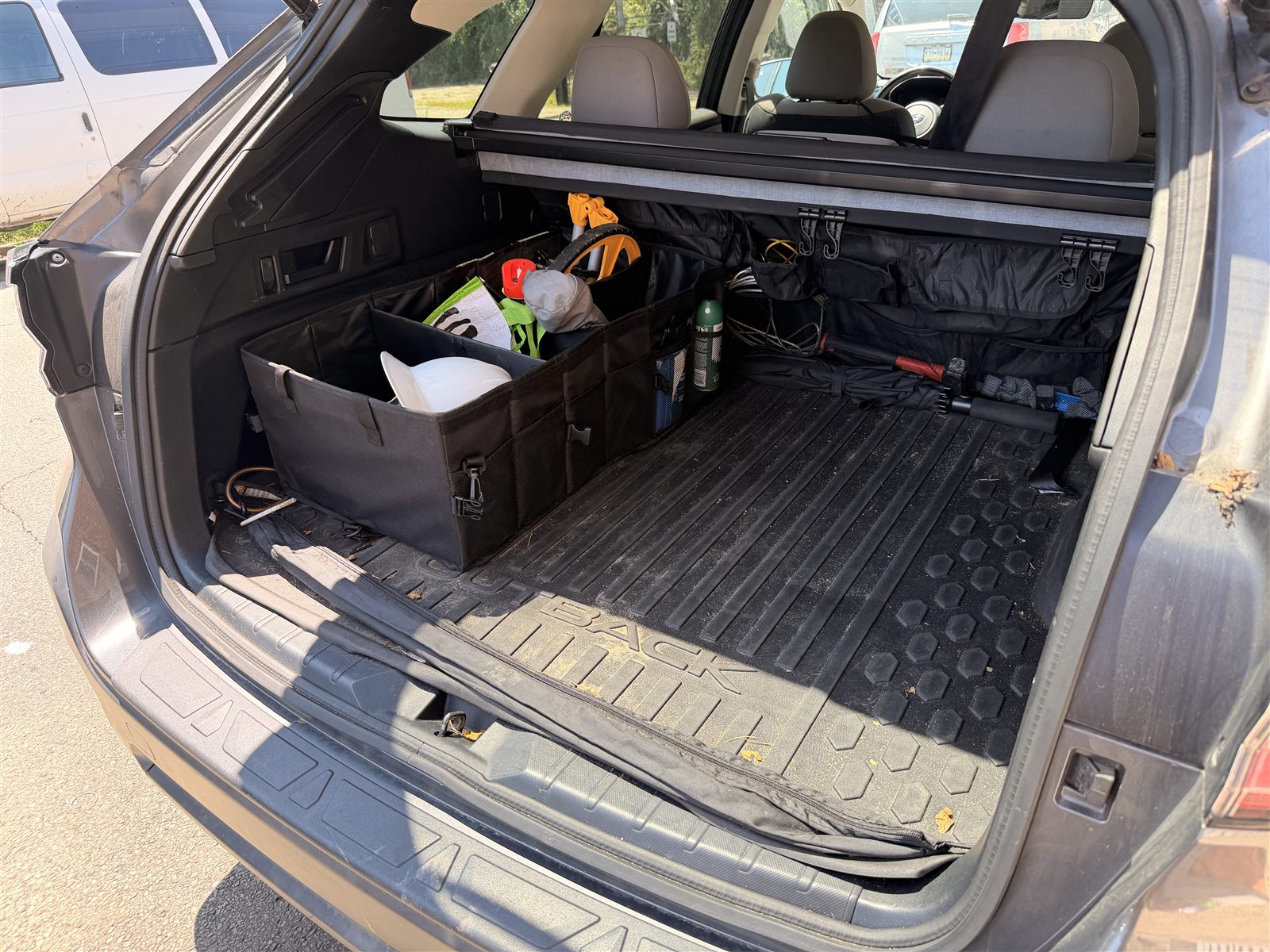
The Real Problem With Subaru Trunks
Open Space Sounds Good… Until You Use It
Subaru trunks are open by design, which works until you start using them daily.
Without compartments, everything shifts. Groceries slide, bags tip over, and smaller items move around after even short drives.
The issue isn’t space. It’s lack of structure.
Different Types of Clutter
Not all trunk clutter is the same, and treating it the same is where setups fall apart.
Daily items like groceries and bags need easy access and tend to move the most.
Occasional gear like sports equipment or tools is bulkier and usually stays put longer.
Emergency items are rarely used but need to stay accessible when you need them.
In real use, the issue isn’t just clutter. It’s mixing everything together. Without separation, small items get lost, larger items shift, and nothing stays organized.
Why Most People Don’t Fix It
Most people leave the trunk as-is because they don’t want a permanent setup.
The space needs to stay flexible, and fixed solutions can get in the way. There’s also uncertainty around what actually works, so it’s easier to deal with the mess.
In real use, the goal isn’t a perfect system. It’s something simple that works without limiting the space.
What a Good Trunk Setup Should Do
If you want a simple setup that actually works:
- Everyday items → [Drive Auto Products Trunk Organizer]
- More structure → [Rubbermaid ActionPacker Storage Box]
- To reduce sliding → [Motor Trend FlexTough Cargo Liner]
Keep Items From Sliding
Stability matters more than capacity.
Most trunks have enough space, but without structure, everything moves. Even light items shift during normal driving, which turns a full trunk into a mess.
In real use, keeping items in place makes a bigger difference than adding more storage. A setup that limits movement is easier to use and keeps things where you expect them.
Adding grip underneath makes a noticeable difference → [Motor Trend FlexTough Cargo Liner]
Make Items Easy to Access
Access matters more than how much you can fit.
Stacking everything vertically might use space efficiently, but it makes daily use harder. You end up moving multiple items just to reach one thing.
In real use, a flatter layout works better. Keeping items visible and within reach saves time and keeps the trunk usable without constant rearranging.
Stay Flexible for Different Uses
Your trunk needs to change with how you use it.
One day it’s groceries, the next it’s gear or something bulky. Fixed setups can get in the way and limit what you can carry.
In real use, flexibility matters more than a perfect layout. A setup that can adjust or clear out quickly keeps the space usable without adding friction.
Be Easy to Reset
A good setup should be easy to clear out and start over.
After a trip, things build up fast. If it takes too much effort to clean or reorganize, it won’t get done.
In real use, simple setups win. Being able to remove items quickly and reset the space keeps the trunk usable day to day.
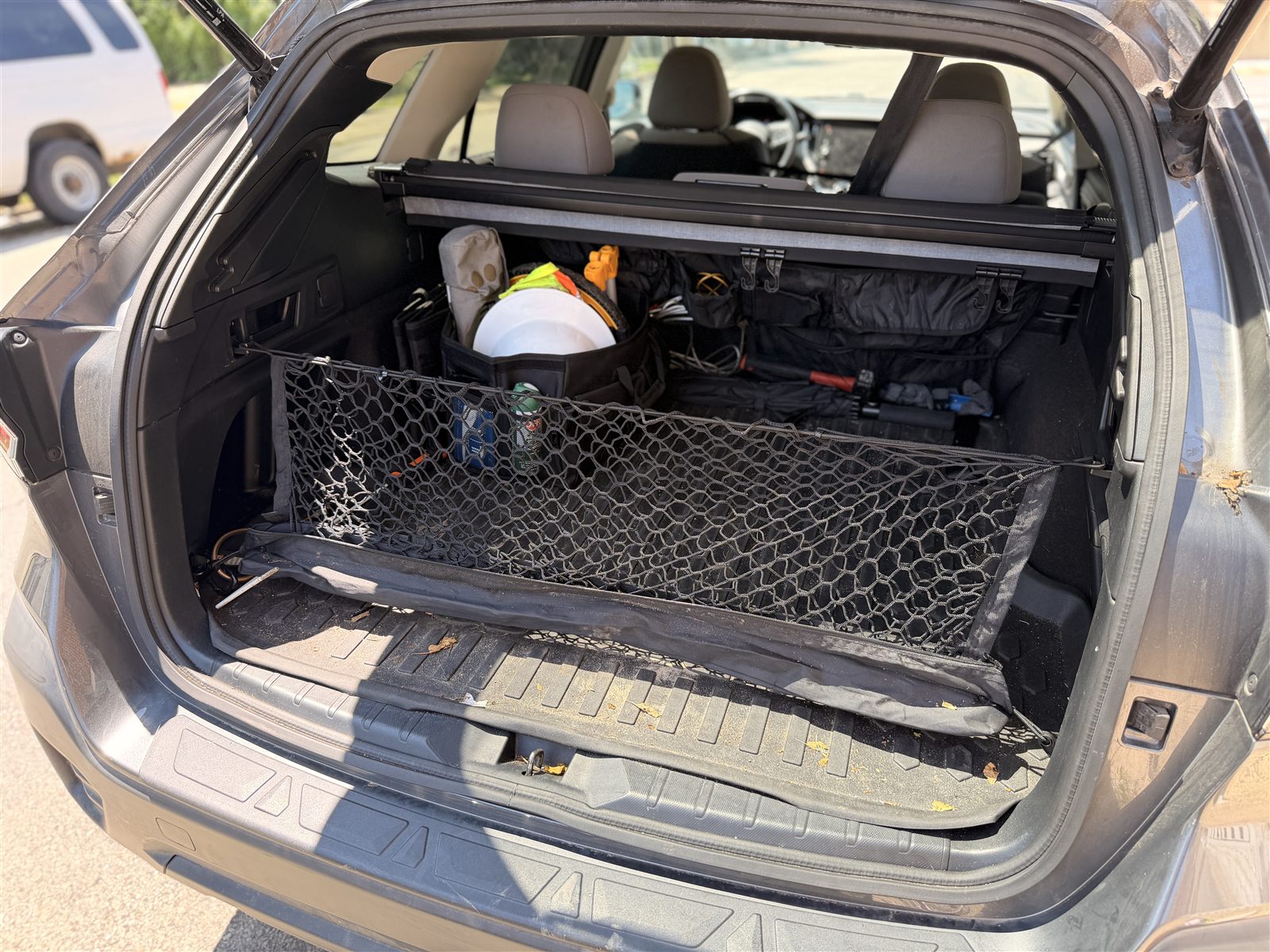
Common Trunk Storage Approaches
Open Storage (No Organization)
Open storage keeps the trunk fully flexible. You can load anything, anytime, without working around a setup.
The downside shows up in daily use. Without structure, items slide, tip over, and mix together. Small items get lost, and you end up moving things just to find what you need.
In real use, it works best when the trunk is mostly empty. Once you start carrying regular items, it becomes inefficient quickly.
That’s usually where interior clutter starts too, especially when smaller items move from the trunk into the cabin instead of having a dedicated place.
Bins and Containers
Bins add structure and make it easier to separate items.
They work well for keeping groceries, tools, or smaller gear in place instead of sliding around. Everything has a defined spot, which makes the trunk easier to manage day to day.
The tradeoff is space. Oversized bins can waste room and limit flexibility, especially when you need to carry larger items.
In real use, the benefit comes from sizing. Bins that fit the space and match what you carry make a noticeable difference.
This is where simple bins make the biggest difference → [Rubbermaid ActionPacker Storage Box]
Soft Organizers
Soft organizers add structure without locking you into a fixed setup.
They’re flexible and collapsible, so you can adjust or remove them easily depending on what you’re carrying. That makes them useful for everyday items that change often.
The tradeoff is support. They don’t hold their shape as well, so heavier items can shift or cause the organizer to sag.
In real use, they work best for lighter, frequently used items where flexibility matters more than rigidity.
For most people, a flexible option like this works better day to day → [Drive Auto Products Trunk Organizer]
Built-In or Semi-Permanent Setups
These setups create a clean, stable layout that keeps everything in place.
They work well if you carry the same types of items regularly. Once installed, there’s less movement and less need to reorganize.
The tradeoff is flexibility. Fixed layouts can get in the way when you need to carry larger or different items.
In real use, they make sense for consistent routines, but can feel limiting when your needs change.
| Approach | Best For | Organization Level | Flexibility | Ease of Use | Main Tradeoff |
| Open Storage | Occasional or light use | Low | Very High | Simple | Items slide and mix together |
| Bins and Containers | Daily items and mixed use | Medium | Medium | Easy once set up | Can waste space if not sized well |
| Soft Organizers | Light, changing items | Medium | High | Easy to adjust | Less support for heavier items |
| Built-In / Semi-Permanent | Consistent gear (tools, camping) | High | Low | Very stable | Limits flexibility for larger loads |
Real-World Setup Styles (What Actually Works)
Simple Daily Setup (Most People)
For most people, simple works best.
Using one or two containers keeps everyday items contained while leaving the rest of the trunk open. That balance gives you structure without losing usable space.
In real use, this setup is easy to manage. Items stay in place, access is quick, and resetting the trunk takes minimal effort.
It’s not about maximizing storage. It’s about keeping things organized without getting in the way.
Hybrid Setup (Best Balance)
A hybrid setup combines structure with open space.
Using a couple of bins alongside open areas lets you keep smaller items contained while still having room for larger or changing loads. It creates dedicated zones without locking the trunk into one layout.
In real use, this gives you control without losing flexibility. Everyday items stay organized, and the rest of the space stays usable when your needs change.
Gear-Focused Setup
This setup is built around specific gear like camping, sports, or tools.
It uses more structure to keep items in place and easy to access. Everything has a defined spot, which works well when you carry the same equipment regularly.
The tradeoff is flexibility. More structure means less room to adjust when your load changes.
In real use, it works best when your trunk setup doesn’t change much.
Based on real use:
- Simple setup → [Drive Auto Products Trunk Organizer]
- More structure → [Rubbermaid ActionPacker Storage Box]
H2: Subaru Model Differences (Important for Setup)
Outback
The Outback has the longest cargo area, which makes it the easiest to organize.
The extra length gives you more layout options. You can separate items, create zones, or leave space open without everything feeling cramped.
In real use, this flexibility makes a big difference. It’s easier to keep items stable while still having room for larger or changing loads.
Forester
The Forester has more vertical space, which makes stacking easier.
You can load items higher without running out of room, which works well for bins or bulkier gear. The tradeoff is less length, so spreading items out isn’t as easy as in the Outback.
In real use, it favors vertical organization over long, spread-out layouts.
Crosstrek
The Crosstrek has a smaller cargo area, so space needs to be used more carefully.
There’s less room for loose items or oversized containers. Without tighter organization, things pile up quickly and become harder to access.
In real use, it rewards efficient layouts. Keeping items contained and avoiding wasted space makes a noticeable difference.
Layout Strategies That Actually Work
Side-to-Side Layout
This layout places bins along the sides and keeps the center open.
It works well because it controls smaller items without blocking the main cargo space. You still have room in the middle for larger items when needed.
In real use, it’s a simple way to add structure while keeping the trunk flexible and easy to load.
Back-to-Front Layout
This layout keeps frequently used items near the hatch and less-used items deeper in the trunk.
It works because it reduces how often you need to unload the trunk to reach something. Daily items stay within reach, while long-term gear stays out of the way.
In real use, it saves time and keeps the trunk functional without constant rearranging.
Zoned Layout
A zoned layout separates the trunk by use.
Create a daily items zone for things you grab often, a gear zone for bulkier or occasional items, and an emergency zone for items that need to stay accessible but out of the way.
In real use, this keeps everything predictable. You know where things are, and items don’t mix or get lost. It adds structure without locking the trunk into a fixed setup.
Common Mistakes That Make Trunks Worse
Overfilling the Space
Filling the trunk completely makes it harder to use.
With no room to move things, items get stacked and buried. You end up unloading multiple items just to reach one.
In real use, leaving some open space makes the setup more usable and easier to manage.
Keeping the rest of the interior easier to clean matters too, especially once dirt, wet gear, or daily mess starts spreading beyond the trunk area.
Using Containers That Don’t Fit Well
Containers that don’t match the trunk waste space.
Oversized bins create awkward gaps and limit how much you can actually carry. Undersized ones slide around and don’t hold items in place.
In real use, the fit matters more than the container itself. When it matches the space, everything stays more stable and the layout works better.
No Dedicated Zones
Without zones, everything ends up mixed together.
Daily items, gear, and emergency supplies all shift and overlap, which makes the trunk harder to use and slower to navigate.
In real use, even simple separation makes a difference. When items have a consistent place, they stay easier to find and manage.
Ignoring Height vs Length
How you use the space matters as much as how much you have.
Stacking uses height but makes access harder. Spreading items out uses length but keeps things easier to reach.
In real use, it depends on the vehicle. Taller spaces handle stacking better, while longer spaces work better with a flatter layout. Balancing both keeps the trunk usable without constant rearranging.
What Actually Works (Based on Real Use)
Keep One Area Always Clear
Leave part of the trunk open.
A clear area gives you space for unexpected items without having to rearrange everything. It keeps the setup flexible and easier to use.
In real use, this makes a big difference. You can add or remove items quickly without disrupting the rest of the layout.
This becomes even more important if you regularly travel with pets or larger gear that needs flexible cargo space.
Use Fewer Containers Than You Think
Too many containers make the trunk harder to use.
Over-organization leads to wasted space and more effort to access items. You end up moving bins around instead of quickly grabbing what you need.
In real use, fewer containers work better. Enough to keep things in place, but not so many that they limit the space.
Adjust Setup Based on Routine
Your setup should match how you use the trunk during the week.
Weekday use is usually lighter and more routine, while weekends often involve gear, trips, or larger loads. Keeping the same setup for both can get in the way.
In real use, small adjustments make it easier to manage. Shift or remove items as needed so the space works for what you’re doing.
Setup Tips Most People Miss
Small adjustments make a big difference in how the setup works.
- Test before committing. Use it for a few days and see what actually gets used or gets in the way.
- Check visibility. Avoid stacking items high enough to block your rear view.
- Balance weight. Keep heavier items low and stable to prevent shifting.
- Keep it easy to remove. If it’s hard to take out, it won’t stay flexible.
- Revisit after a week. Real use will show what needs to change.
Most issues come from locking into a setup too early instead of adjusting based on use.
FAQs
What’s the best way to organize a Subaru trunk?
It depends on how you use it, but a hybrid setup usually works best. Some structure with open space.
Do trunk organizers actually help?
Yes, if they fit the space and match what you carry.
How do you keep items from sliding?
Placement and using the right containers. Stability matters more than adding more storage.
Should everything be in bins?
No. Leave some space open to keep the trunk flexible.
Is a permanent setup worth it?
Only if your use stays consistent. Otherwise, it can get limiting.
Final Thoughts
There’s no perfect setup, just what fits how you use your trunk.
More structure adds stability. More flexibility keeps the space usable. The right balance depends on what you carry.
Keep it simple. Stable, easy to access, and easy to adjust.
If you already know the type of setup you prefer:
Quick Recap
• Best rigid storage: Rubbermaid ActionPacker Storage Box (Amazon)
• Best soft organizer: Drive Auto Products Trunk Organizer (Amazon)
• Best cargo liner: Motor Trend FlexTough Cargo Liner (Amazon)
- Flexible → [Drive Auto Products Trunk Organizer]
- More stable → [Rubbermaid ActionPacker Storage Box]
It also helps to think about how the rest of the vehicle works with the trunk setup. Interior organization, floor protection, and dog setups all affect how usable the space feels day to day.
• Floor mats for Subaru Outback
Leave a Reply