Tag: All Models

  • Subaru Roof Tent Setup

    Disclosure: This article contains affiliate links. I may earn a commission at no extra cost to you.

    Our Roof Tent vs Ground Tent guide covers whether a roof tent is the right choice. This one assumes you’ve already decided and covers what actually happens next — mounting it correctly, using it for the first time, and keeping it in good shape.
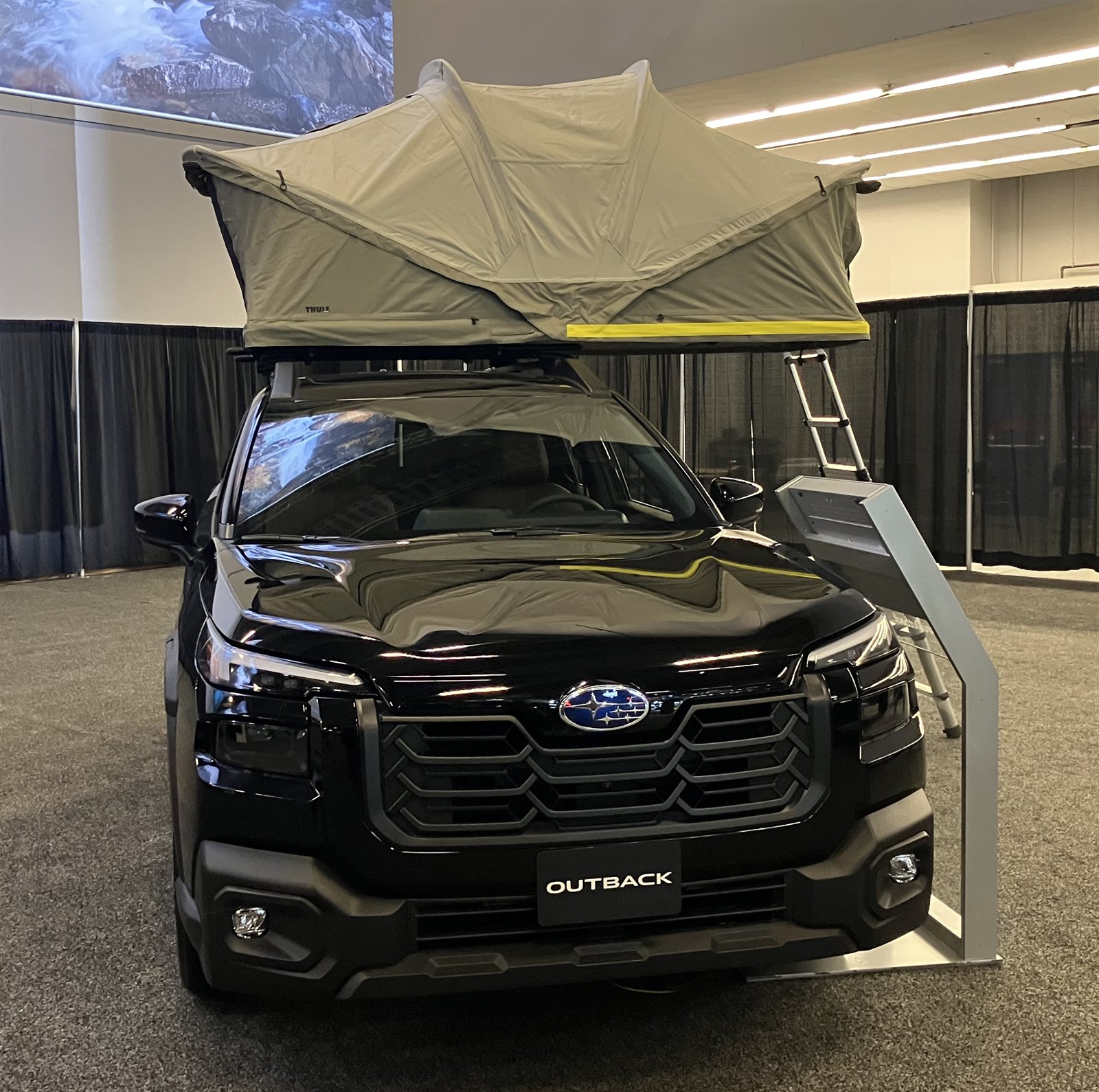
    Black Subaru Outback with a Thule roof tent fully deployed, ladder extended
    Photo: Bull-Doser, public domain, via Wikimedia Commons

    Confirm Your Crossbars Can Actually Support It

    This is the step that gets skipped and shouldn’t be — a roof tent is one of the heaviest common crossbar accessories, and mounting one on crossbars rated below its weight is a real safety issue, not a minor technicality. Check both the tent’s weight and your crossbar’s dynamic (driving) rating before ordering anything. See our How Much Weight Can Subaru Crossbars Hold? guide.

    Positioning on the Crossbars

    Center the tent’s weight between the crossbars rather than favoring one end — most tents ship with a mounting template or clear guidance for this. Getting the position right the first time matters more for a roof tent than almost any other crossbar accessory, since it’s not something you’ll want to readjust often once it’s loaded and in regular use.

    Practice Setup and Breakdown at Home First

    The first time deploying and folding a roof tent should not be at a campsite in the dark or in bad weather. Practice the full cycle — open, ladder out, mattress unrolled, then fully broken back down — at home first, ideally more than once, so it’s familiar before it actually matters.

    What Changes About Daily Driving

    Once mounted, expect a real fuel economy hit, more wind noise, and a permanently increased vehicle height — worth remembering at parking garages, drive-thrus, and your own garage door. Most roof tents aren’t practical to remove and reinstall for every trip, so plan for these tradeoffs as ongoing, not occasional.

    Basic Maintenance

    Check mounting hardware periodically for looseness, especially after the first few hundred miles of driving with it installed — vibration can work fasteners loose faster than a static accessory would. Let the tent fully dry before folding it down after a wet trip to avoid mildew building up in storage between uses.

    Common Mistakes

    • Skipping the crossbar rating check. The single most important step, and the easiest one to skip.
    • Learning the setup process for the first time at a campsite. Practice at home so it’s second nature before it matters.
    • Packing it away wet. Leads to mildew and odor that’s genuinely hard to fully remove once it sets in.

    FAQs

    How long does it take to set up a roof tent?
    Most fold out in under a minute once you’re familiar with it — longer the first few times before the process is second nature.

    Do I need to check anything before driving with it installed?
    Yes — check mounting hardware periodically, especially after the first few hundred miles, since vibration can loosen fasteners faster than expected.

    Can I remove it between trips?
    Technically, but most roof tents are heavy and awkward enough that frequent removal and reinstallation isn’t realistic for most owners — plan for it to stay mounted.

    Final Thoughts

    A roof tent is a genuinely good setup once it’s properly mounted and you’re comfortable with the routine — the real work is upfront: confirming crossbar capacity, positioning it correctly, and practicing setup before the first real trip.

    Related Guides

  • Subaru Adventure Setup: What Actually Works

    Disclosure: This article contains affiliate links. I may earn a commission at no extra cost to you.

    This site covers a lot of ground — road trips, camping, dogs, family setups, storage, roof accessories. This one doesn’t re-explain any of it. It’s a single starting point that connects the pieces, so you can find the specific guide for whatever kind of adventure you’re actually planning instead of piecing it together from scratch.

    Start With What Kind of Trip This Actually Is

    A weekend trip, a family road trip, and a camping trip all call for genuinely different setups — see our Best Weekend Trip Setup, Subaru Family Road Trip Setup, or Subaru Family Camping Setup guides depending on which one matches. Over-preparing for a short trip or under-preparing for a longer one is the most common planning mistake on this whole site.

    Sleeping: Inside the Vehicle or a Tent

    For solo or couple trips, sleeping inside the vehicle is genuinely comfortable with the right setup — see the model-specific sleeping guides. For families or anyone who wants more space, a tent (roof or ground) is the better call — see our Roof Tent vs Ground Tent comparison.

    Cargo: What Fits and What Needs to Go on the Roof

    Know your actual interior capacity first — see the What Fits guides for your model — before deciding whether roof storage is genuinely necessary. Most people don’t need it as early as they expect.

    Organization: Match the System to How Often You’ll Use It

    Free DIY fixes solve most occasional needs — see Interior Storage Ideas. Real upgrades (organizers, drawer systems) are worth it once you know the need is frequent and genuine — see Storage Upgrades That Actually Help.

    If Dogs or Kids Are Coming Along

    Both change the setup meaningfully — see Most Useful Accessories for Dog Owners or Most Useful Accessories for Families depending on who’s along for the trip.

    Common Mistakes

    • Planning gear before planning the trip type. A weekend trip, a family road trip, and a camping trip need genuinely different setups.
    • Buying roof storage before checking actual interior capacity. Most people have more room than they think.
    • Over-organizing for a trip you’ll take once. Match the system’s cost and permanence to how often you’ll actually use it.

    FAQs

    Where should I start planning an adventure setup?
    With the trip type — a weekend trip, family road trip, and camping trip all need different gear and organization.

    Do I need roof storage for most trips?
    Usually not — check your actual interior capacity first using the model-specific “What Fits” guides before assuming you need it.

    Final Thoughts

    There’s no single “adventure setup” that fits every trip — the right gear depends on trip type, group, and how often you’ll actually use each piece. Start with the trip type, then work through sleeping, cargo, and organization from there.

    Related Guides

  • Subaru Storage Upgrades That Actually Help

    Disclosure: This article contains affiliate links. I may earn a commission at no extra cost to you.

    Our Interior Storage Ideas guide covers free and cheap DIY fixes. This one is the opposite end — genuine upgrades worth spending real money on once you know a basic fix isn’t enough anymore.

    Quick Picks

    When a Storage Upgrade Is Actually Worth It

    An upgrade makes sense once a basic fix is genuinely failing you — bins you’re constantly re-organizing, gear that never has a fixed spot, or the same frustration coming up trip after trip. If a $10 fix from our Interior Storage Ideas guide is still working, there’s no real reason to spend more yet.

    A Drawer System Is the Biggest Single Upgrade

    For frequent, gear-heavy use, a drawer system solves the organization-degrading-over-time problem that bins eventually run into, plus adds real security for tools or valuables. It’s a genuine investment, not a minor purchase — see our full Drawer System vs Storage Bins comparison before committing.

    A Sturdier Organizer Beats a Better DIY Bin

    Once a cardboard box or basic bin has proven the need is real, a proper structured trunk organizer holds its shape better, doesn’t collapse when partially loaded, and generally lasts years instead of months.

    Common Mistakes

    • Upgrading before confirming the problem is real. Try a free fix first — see our Interior Storage Ideas guide.
    • Buying a drawer system for occasional use. The cost and permanent space commitment only pay off for frequent, gear-heavy needs.
    • Choosing capacity over durability. A smaller, sturdier organizer usually outlasts a larger, flimsier one.

    FAQs

    When should I upgrade from basic bins?
    Once a basic fix is genuinely failing — constant re-organizing, no fixed spot for gear, or repeated trip-to-trip frustration.

    Is a drawer system worth the cost?
    For frequent, gear-heavy use, yes. For occasional use, a sturdier organizer or bins usually cover it for much less money. See our full comparison.

    Final Thoughts

    Storage upgrades are worth it once a free or basic fix has genuinely proven insufficient — not before. A sturdier organizer, a cargo net, or a full drawer system for frequent heavy use are the real steps up once you’re at that point.

    Related Guides

  • Subaru Mods That Improve Everyday Usability

    Disclosure: This article contains affiliate links. I may earn a commission at no extra cost to you.

    This isn’t a storage list — see our Subaru Storage Upgrades That Actually Help guide for that. This is about small changes that make the vehicle easier to use day to day, across a mix of categories rather than one specific problem.

    Quick Picks

    A Wireless Charging Mount Removes a Daily Annoyance

    Fumbling for a charging cable every time you get in the car is a small friction point that happens literally every drive — an auto-clamping wireless mount turns docking the phone into one motion instead of two. It’s a genuinely disproportionate usability improvement for the cost.

    A Cargo Net Handles What Bins Can’t

    Not everything needs a dedicated bin — a stretched cargo net over loose items keeps them from sliding around without the setup effort of full organization. It’s the middle ground between “everything gets its own container” and “everything rolls around loose.”

    Seat Gap and Console Fixes Solve Small, Constant Friction

    A seat gap filler and a console organizer both solve the same kind of problem — small items that shouldn’t need active management but currently do. See our Subaru Daily Driver Setup guide for more on this category specifically.

    Common Mistakes

    • Treating usability mods as optional extras. The best ones remove genuine daily friction, not just add features.
    • Buying a cheap wireless mount that drops connection. A reliable auto-clamping design matters more here than in almost any other accessory category — check reviews specifically for connection stability.
    • Using a cargo net where a bin would actually work better. Nets suit loose, irregular items — not everything.

    FAQs

    Is a wireless charging mount worth it over a regular one?
    For most people, yes — the auto-clamping, cable-free convenience is a real daily improvement over plugging in a cable every drive.

    What’s the difference between this list and storage upgrades?
    This one covers general usability across mixed categories; storage upgrades focus specifically on organizing gear. See our Storage Upgrades guide for that side.

    Final Thoughts

    The best usability mods aren’t flashy — they remove one small piece of daily friction each. A wireless mount, a cargo net, and the console/seat-gap fixes together add up to a noticeably smoother daily experience for relatively little cost.

    Related Guides

  • Most Useful Subaru Accessories for Camping

    Disclosure: This article contains affiliate links. I may earn a commission at no extra cost to you.

    Between the sleeping guides, the tent comparison, and the storage articles already on this site, there’s a lot of camping-specific content to sort through. This pulls the essentials into one starting point for camping specifically.

    Somewhere to Sleep

    Whether that’s inside the vehicle or a separate tent depends on group size and how often you camp — see our Roof Tent vs Ground Tent guide if you’re leaning toward a tent, or the model-specific sleeping guides if you’re planning to sleep inside the vehicle itself.

    Shade and Shelter at the Site

    A roof-mounted awning turns the area next to the vehicle into usable, covered space in a few minutes — see our Best Awning for Subaru guide for specific picks.

    A Cooler That Keeps Food Separate

    An RTIC cooler keeps food contained and separate from sleep and cook gear, which matters more on a multi-day trip than it does for a quick outing.

    Organized Gear Storage

    Collapsible bins organized by category (see our Subaru Camping Storage Ideas guide) cover most people’s needs; a drawer system is worth it only for frequent, gear-heavy campers — see our Drawer System vs Storage Bins comparison to decide.

    Common Mistakes

    • Buying gear before deciding on a sleeping setup. The tent-vs-vehicle decision affects almost everything else you’ll pack.
    • Skipping an awning and regretting it the first rainy trip. Cheap relative to how often it actually gets used once owned.
    • Over-investing in storage before a few real trips. Bins solve most people’s needs — see what you actually use before upgrading to a drawer system.

    FAQs

    What’s the first camping accessory to buy?
    Whatever solves your sleeping setup first — everything else (storage, shade, cooking) organizes around that decision.

    Do I need a drawer system for camping?
    Only if you camp frequently enough that the organization time savings outweigh the cost — most occasional campers do fine with bins.

    Final Thoughts

    Start with the sleeping decision, add an awning and a cooler, and organize the rest with bins until you know whether you camp often enough to justify more. That covers most people’s real camping needs without overbuying up front.

    Related Guides

  • Most Useful Subaru Accessories for Dog Owners

    Disclosure: This article contains affiliate links. I may earn a commission at no extra cost to you.

    Between the dog setup guides and the barrier/crate comparisons already on this site, there’s a lot to sort through. This pulls the highest-value picks into one starting point for dog owners specifically, with the reasoning for why each matters.

    A Cargo Liner Is the First Real Investment

    Muddy paws, shed fur, and general wear add up faster with a dog than almost any other regular cargo use — a heavy-duty waterproof cargo liner takes that wear instead of the factory carpet. For most dog owners, this is the single highest-value first purchase.

    Barrier or Crate Depends on the Dog

    A barrier keeps a dog contained to the cargo area without the fuller enclosure of a crate; a crate offers more security for anxious or larger dogs but takes up more space. Neither is universally right — see our Dog Barrier vs Dog Crate for Subaru guide to decide based on your specific dog.

    Seat Covers for Dogs Who Ride in the Back Seat

    For dogs riding in the back seat rather than the cargo area, a hammock-style seat cover protects the upholstery and prevents a dog from ending up on the floor during hard braking. See our Best Dog Seat Covers for Subaru guide for the full comparison.

    Don’t Forget Water and Cleanup Basics

    A collapsible travel water bowl and a stash of cleanup bags in the door pocket or console organizer solve the two most common “wish I’d brought that” moments on a dog-inclusive trip — cheap, small, and easy to forget until you need them.

    Common Mistakes

    • Skipping the cargo liner and cleaning fur out of factory carpet instead. The liner is cheaper than the long-term cleaning effort and wear it prevents.
    • Choosing a crate before checking whether a barrier would work. A crate takes real cargo space a barrier doesn’t — worth confirming your dog actually needs the extra containment.
    • Forgetting water and cleanup basics until you’re already at a stop. Keep them stocked in the vehicle rather than packing them fresh each trip.

    FAQs

    What’s the first accessory to buy for a dog-owning Subaru?
    A cargo liner — it protects against the most common and cumulative wear from regular dog transport.

    Should I get a barrier or a crate?
    Depends on the dog’s size and temperament — see our full Dog Barrier vs Dog Crate breakdown.

    Final Thoughts

    A cargo liner protects the vehicle, a barrier or crate keeps the dog contained safely, and a seat cover handles dogs riding up front — between those three plus basic water and cleanup supplies, most dog-owner needs are covered.

    Related Guides