Disclosure: This article contains affiliate links. I may earn a commission at no extra cost to you.
Many Crosstrek, Forester, and Outback owners eventually choose between J-cradles and saddle carriers when setting up a kayak-hauling system. Both work well, but they prioritize different things: J-cradles maximize roof space and make carrying two kayaks easier, while saddles are simpler to load and provide excellent support, especially for heavier kayaks. The right choice comes down to how many kayaks you carry, how easy loading needs to be, and how you typically use your roof.
J-Cradle vs Saddle at a Glance
| Factor | J-Cradle | Saddle |
|---|---|---|
| Kayak Transport | Excellent | Good |
| Loading Effort | Moderate | Easier |
| Kayak Support | Good | Excellent |
| Heavy Kayaks | Moderate | Better |
| Additional Roof Gear | Easier | More Limited |
| Best For | Multiple kayaks, maximizing roof space | Single kayaks, easier loading |
How Each Style Works
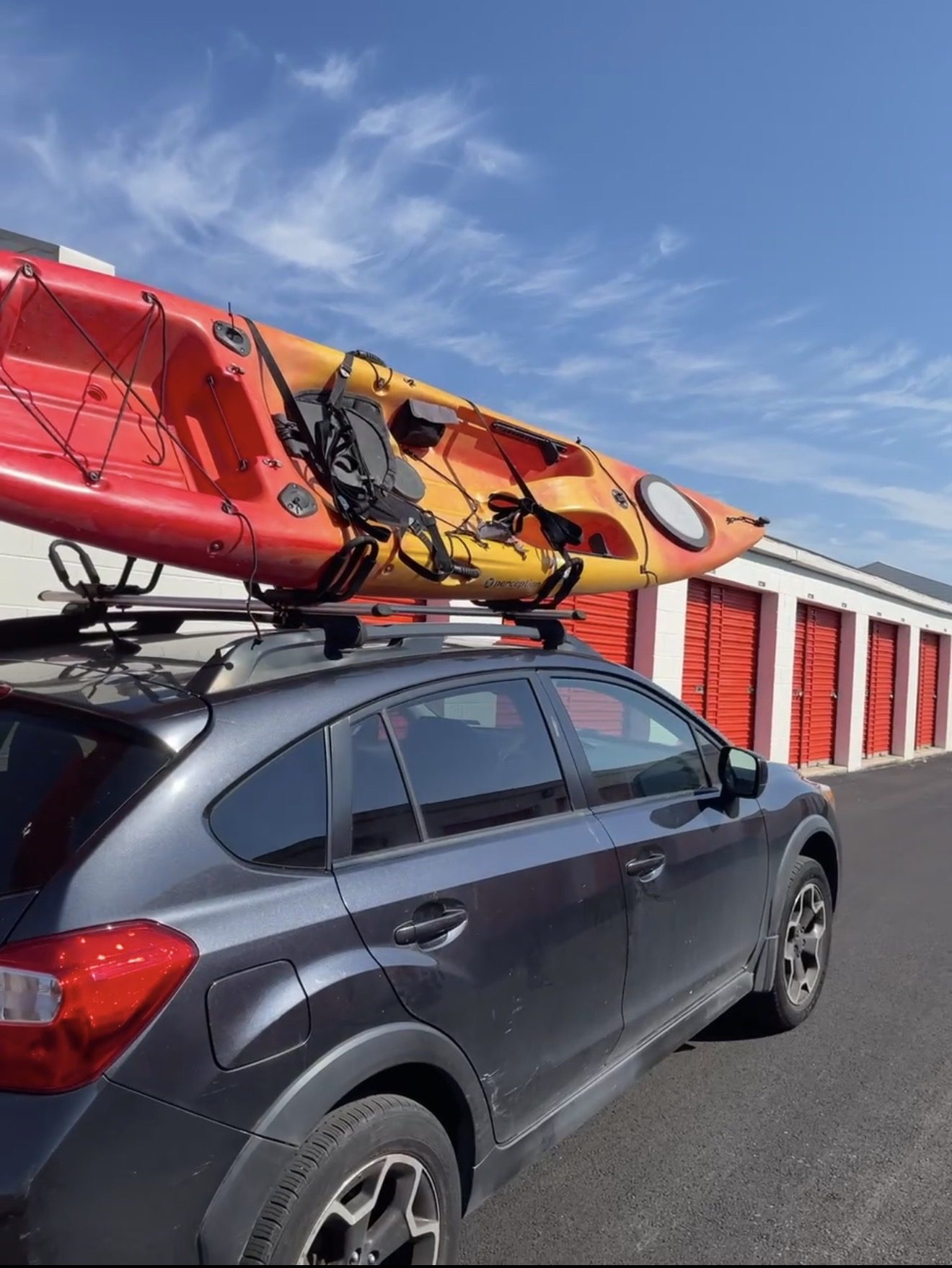
J-cradles hold a kayak on its side at an angle rather than flat against the crossbars, using straps that wrap around both the carrier and the kayak. This upright position uses roof width efficiently, leaving more room for a second kayak or other gear — especially valuable on a Crosstrek, where roof space is tighter than on a Forester or Outback. The tradeoff: positioning the kayak on its side adds an extra step when loading, and it increases the kayak’s height on the roof.
Saddles support the hull from below with the kayak resting flat, which most owners find easier to load solo — the kayak can be lifted straight up and centered without rotating it. Saddles also provide more continuous hull support across multiple contact points, which matters more for longer touring kayaks. The tradeoff: saddles use more roof width per kayak, so fitting two becomes tighter sooner than with J-cradles.
Loading Effort by Model
The Crosstrek’s lower roof height makes loading easier regardless of carrier style, so the usual saddle advantage matters less here. The Forester’s taller roof makes the difference more noticeable — reaching across the roof to rotate a kayak into a J-cradle takes more lifting, so many owners find saddles easier to work with, especially for heavier kayaks. The Outback sits lower than the Forester while offering one of the longest roofs in the lineup, giving it enough flexibility to work equally well with either style.
One Kayak vs Two Kayaks
A single kayak works well with either style. The difference shows up once a second kayak enters the picture — J-cradles use roof width more efficiently, which is why couples and families who regularly paddle together tend to prefer them, while saddles can still work for two boats but hit the roof-width limit sooner. For a single kayak, saddles usually offer the simplest, most user-friendly setup; for two, J-cradles usually offer more flexibility.
Wind Noise and Fuel Economy
J-cradles typically create more aerodynamic drag and wind noise since the kayak rides upright and presents more surface area to the airflow — noticeable mainly at highway speed. The added height can also matter for garage or parking-deck clearance. Saddles keep the kayak lower and flatter against the roof, which usually means less turbulence and a smaller height increase.
Common Mistakes
- Choosing based on price alone. Loading convenience and roof-space efficiency usually matter more for everyday use than the sticker price.
- Ignoring kayak weight. Recreational, fishing, and touring kayaks vary a lot in weight — consider how much you’ll actually be lifting, and whether you usually load alone.
- Underestimating loading effort. A setup that seems manageable once can get frustrating fast if you’re using it every weekend.
- Forgetting about roof height. A carrier that works fine on a Crosstrek can feel very different on a Forester.
- Buying more carrier than you need. Match the carrier to your typical trips rather than paying for capacity you rarely use.
FAQs
Are J-cradles better than saddle carriers?
It depends on your priorities — J-cradles maximize roof space for multiple kayaks, while saddles are easier to load and support the hull better.
Which carrier is better for a Forester?
Many owners prefer saddles on a Forester since the kayak stays flat and doesn’t need to be rotated across the taller roof.
Which carrier is better for an Outback?
Either works well — the Outback’s long roof and lower loading height make it flexible enough for both styles.
Can I carry two kayaks with saddle carriers?
Yes, but roof width becomes a limiting factor sooner than with J-cradles.
Do J-cradles create more wind noise?
Usually yes, since the kayak rides upright and presents more surface area to the airflow.
Which carrier is best for most Subaru owners?
For a single kayak, most owners prefer saddles. For two kayaks or maximizing roof space, J-cradles are usually the better choice.
Final Thoughts
For most Crosstrek, Forester, and Outback owners, the choice comes down to roof space versus loading convenience. The Yakima JayLow Kayak Carrier is a strong J-cradle pick for owners hauling two kayaks or maximizing roof space; the MALONE Saddle Up Pro Kayak Carrier is the easier-loading saddle option for a single kayak. If your roof needs also extend beyond kayaks, a Thule Motion 3 Roof Box is worth a look for overflow storage.
Related Guides
• Best Crossbars for Subaru Outback
• Factory vs Aftermarket Crossbars for Subaru
Leave a Reply