Disclosure: This article contains affiliate links. I may earn a commission at no extra cost to you.
Quick Picks
- Cargo liner for dog gear and mess
- Waterproof seat cover
- Portable water bottle/bowl
For many Subaru owners, dogs are part of everyday life. From daily errands to weekend trips, a practical setup makes traveling easier for both you and your pet. The Crosstrek, Forester, and Outback all work well for dog owners, but the best setup depends on your dog’s size, your passengers, and how you use the cargo area — organization usually matters more than overall cargo space.
Why Subarus Work Well for Dog Owners
A relatively low cargo floor makes it easy for dogs to enter and exit without jumping too high, and flexible cargo/rear-seat configurations let owners choose whichever setup fits a given trip. That flexibility matters most for everyday practicality — many owners drive with their dog several times a week (vet appointments, daycare, hikes, errands), so a setup that’s easy to clean, quick to load, and simple to maintain is usually more valuable than one built only for occasional travel.
Where Dogs Typically Ride
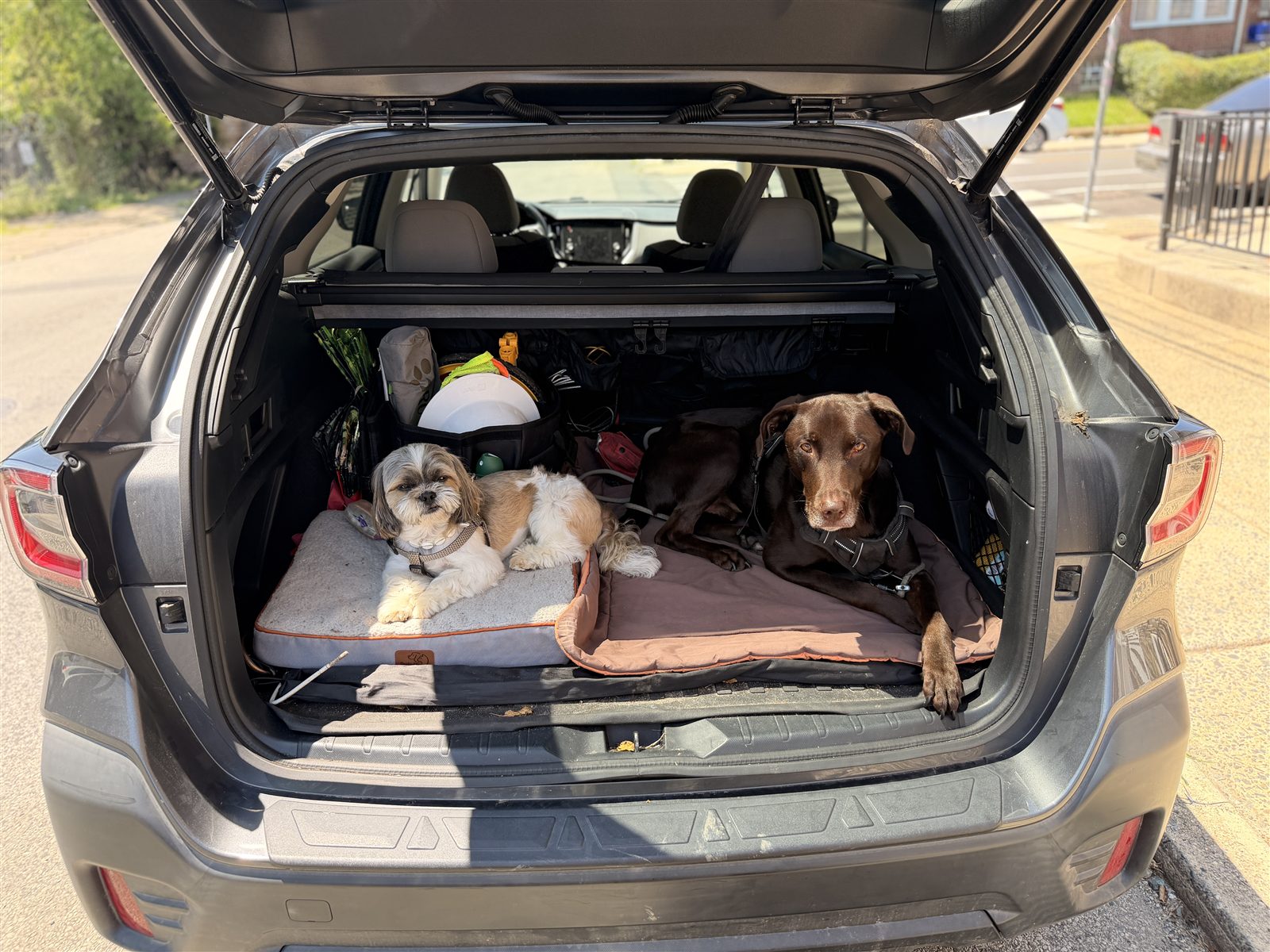
The cargo area is the preferred spot for many medium and large dogs — it gives more room to stand, turn around, and lie down while keeping the rear seats free for passengers, often paired with a cargo liner or a dog barrier or crate. Smaller dogs frequently ride on the rear seat with a seat cover, travel harness, or pet hammock, which keeps them close while preserving the cargo area for luggage or gear. Traveling with multiple dogs usually needs more planning: two smaller dogs may share the rear seat comfortably, but larger dogs often need the full cargo area to travel safely.
How Much Space Does a Dog Actually Need?
Small breeds need very little space and travel comfortably on either the rear seat or cargo area — their setup is usually determined more by passenger needs than available room. Medium-sized dogs benefit from enough space to stand, turn around, and lie down, and generally do well in either location depending on how much gear is along. Large breeds travel most comfortably with the full cargo area to themselves. Multiple dogs require weighing how much room is left for passengers and cargo once everyone’s accounted for.
Traveling With Kids, Luggage, and Pet Gear
Family road trips often combine children, pets, luggage, snacks, and outdoor gear in one vehicle — the real challenge is usually organization, not overall capacity. Child seats reduce the flexibility of the rear seating area, which makes the cargo area the preferred spot for many dogs when kids are along, keeping passenger seating available while giving the dog more room. Strollers, diaper bags, pet beds, and food containers can quickly consume cargo space; organizing them into dedicated sections keeps them from interfering with your dog’s riding area and makes loading and unloading easier. For longer vacations, managing cargo space and keeping essentials accessible matters more than raw capacity — see Subaru Family Road Trip Setup for the full in-cabin comfort breakdown.
Managing Supplies and Long Road Trips
Keeping food, water, leashes, waste bags, and medications in one dedicated spot makes every trip easier to manage. The supplies you use most — leashes, water, treats, cleanup bags — should always be the easiest to reach, since accessibility usually matters more than how much gear you’re carrying. On long drives, plan rest stops every few hours so your dog can stretch, relieve themselves, and burn off energy; offer water in small amounts at each stop rather than letting them drink heavily right before getting back on the road. Vehicle temperature can shift quickly in warm or cold weather even with climate control running, so keep an eye on comfort throughout the trip — a predictable routine tends to make repeat trips less stressful for everyone.
Crosstrek vs Forester vs Outback
The Crosstrek works well for small and medium-sized dogs while staying easy to park and maneuver — space gets tighter with larger dogs, multiple pets, or family luggage, so efficient packing matters more than the vehicle’s overall size. The Forester offers an excellent balance of passenger room and cargo space; its taller cargo area gives many dogs extra headroom and the upright design makes loading easier, which works well for families with one or two dogs. The Outback has the longest cargo floor of the three, making it the strongest choice for large breeds, multiple dogs, or families balancing passenger comfort with cargo flexibility.
| Feature | Crosstrek | Forester | Outback |
|---|---|---|---|
| Small Dog Travel | Excellent | Excellent | Excellent |
| Large Dog Travel | Good | Excellent | Excellent |
| Multiple Dogs | Fair | Very Good | Excellent |
| Family + Dog Travel | Good | Excellent | Excellent |
| Road Trip Comfort | Good | Very Good | Excellent |
Common Mistakes
- Packing too much gear. It’s easy to fill the cargo area with items you rarely use, leaving little room left for your dog.
- Leaving no dedicated space for the dog. Plan the dog’s spot first, then pack around it.
- Poor cargo organization. Loose gear makes the available space feel smaller than it is.
- Blocking access to supplies. Keep leashes, water, and cleanup bags on top, not buried under other gear.
- Ignoring temperature and comfort. Check on your dog regularly, especially in warm or cold weather.
What Actually Works
Most owners assume they need a larger vehicle when the real issue is organization — cluttered cargo areas make available space feel smaller than it actually is, and a simple packing system usually helps more than added capacity. Keep the supplies you use most within easy reach, store all pet supplies in one dedicated spot, and favor flexible cargo layouts you can reconfigure trip to trip. For most Crosstrek, Forester, and Outback owners, simplicity wins over maximizing space.
FAQs
Is a Crosstrek big enough for a dog?
Yes, for small to medium dogs — larger dogs and multiple pets are more comfortable in a Forester or Outback.
Which Subaru is best for large dogs?
The Outback, thanks to its long cargo floor, with the Forester close behind.
Can dogs ride in the cargo area of a Subaru?
Yes — it’s the preferred spot for many medium and large dogs, often with a cargo liner or barrier.
How do you organize dog supplies in a Subaru?
Keep everything in one dedicated spot, with the most-used items — leashes, water, cleanup bags — on top and easy to reach.
Can you travel with dogs and children in a Crosstrek?
Yes, though space gets tighter — the cargo area usually works best for the dog once a car seat is installed.
How often should dogs stop during long drives?
Roughly every few hours, for a stretch, bathroom break, and some water.
Which Subaru is best for multiple dogs?
The Outback, followed by the Forester — both offer more cargo room than the Crosstrek.
Final Thoughts
All three Subarus handle dog travel well — the right layout depends more on your dog’s size and how much else you’re carrying than on which model you drive. Better organization, not more space, is usually what makes everyday travel and road trips easier.
Related Guides
• Best Dog Seat Covers for Subaru
• Dog Barrier vs Dog Crate for Subaru
Leave a Reply