Disclosure: This article contains affiliate links. I may earn a commission at no extra cost to you.
Traveling with a dog is easier when your Subaru matches your everyday needs. The best setup depends on your dog’s size, temperament, cargo needs, and how you use your Crosstrek, Forester, or Outback.
Both dog barriers and crates have advantages. This guide compares their tradeoffs to help you choose the setup that best fits your dog and your daily routine.

What Is A Dog Barrier?
How Dog Barriers Work
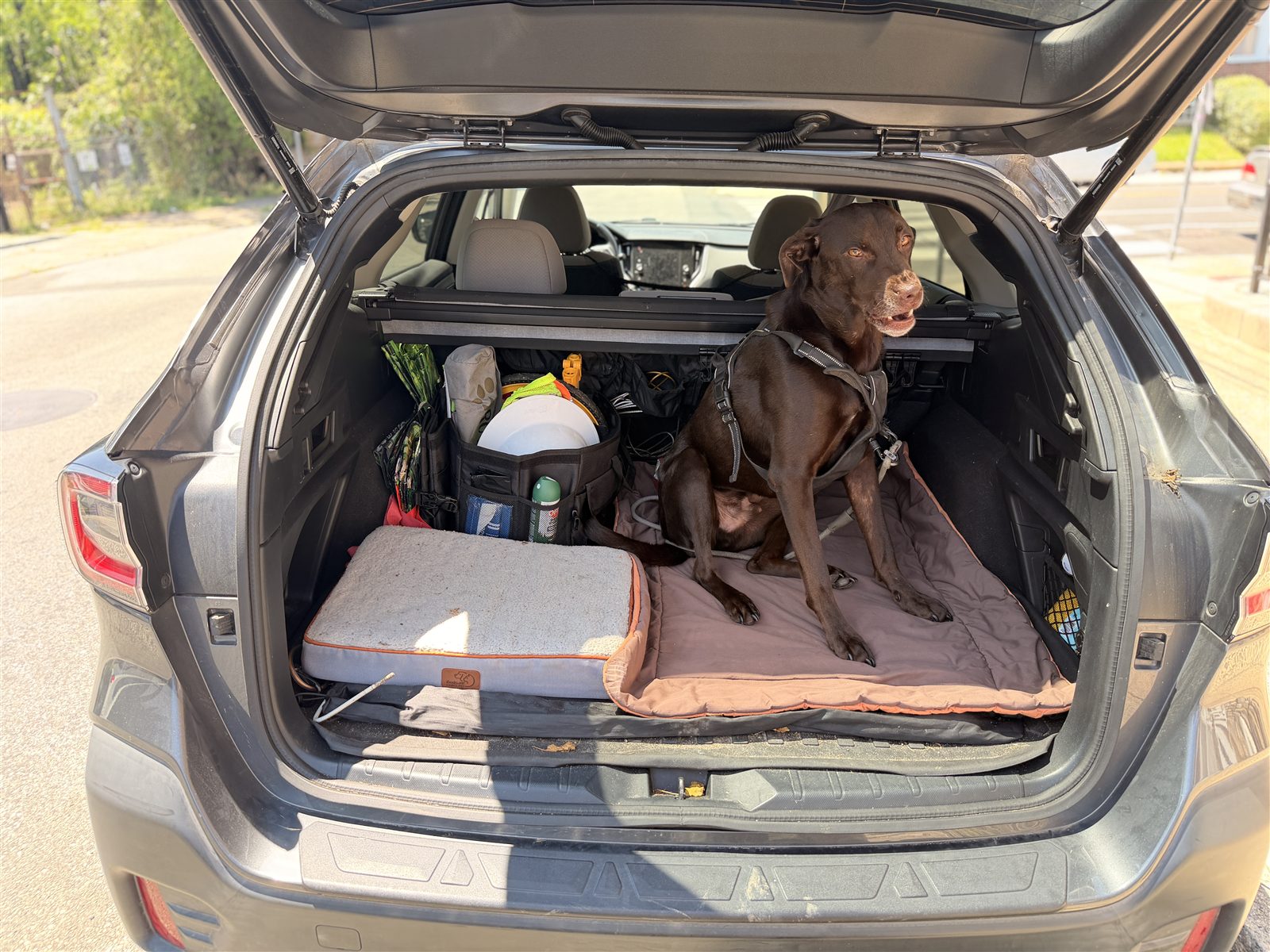
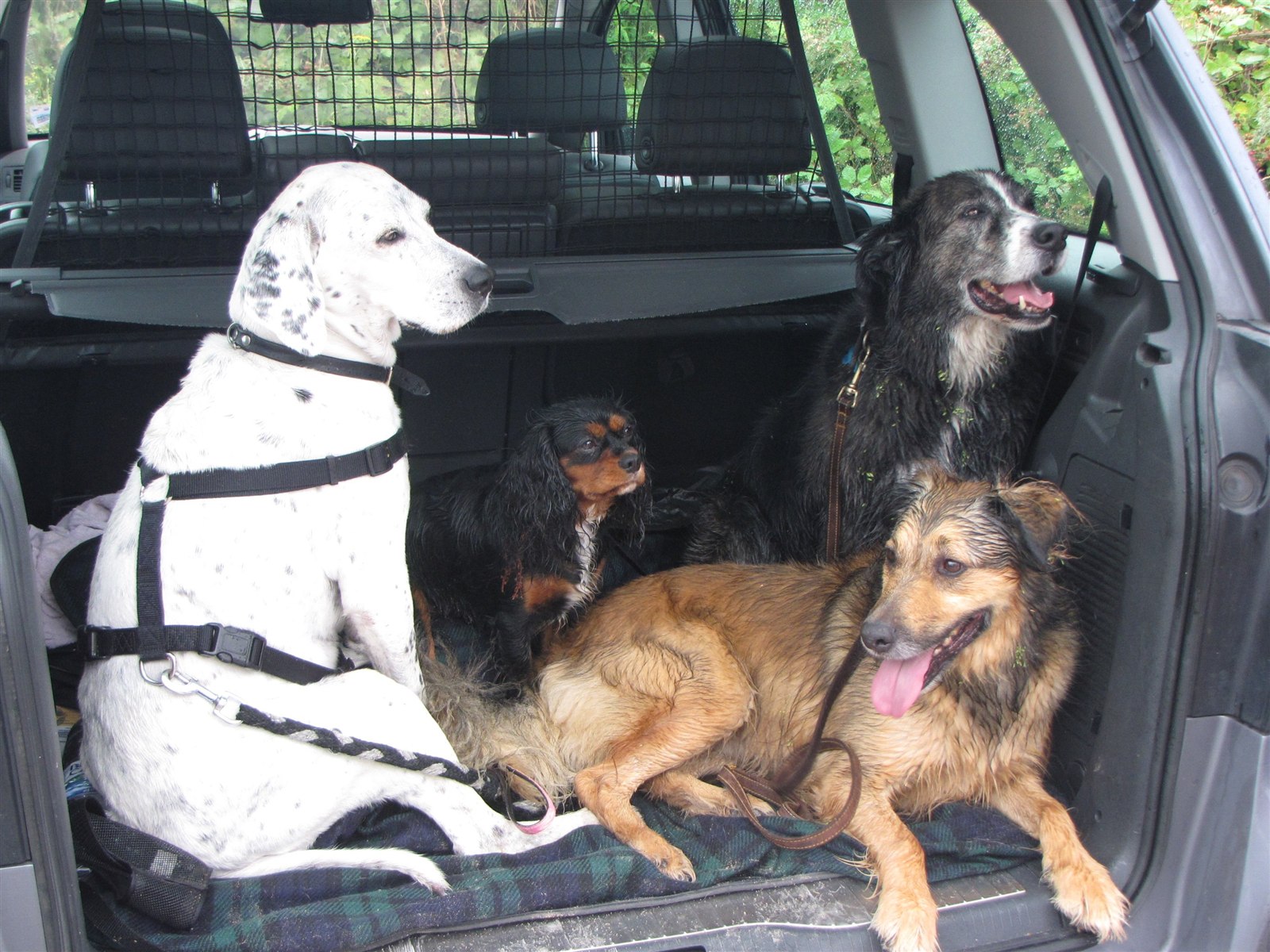
A dog barrier separates the passenger compartment from the cargo area, allowing a dog to move around the rear cargo space while helping prevent access to the rear seats. Most barriers mount behind the rear seats or directly behind the front seats, depending on the vehicle layout.
Unlike a crate, a barrier does not physically restrain the dog. It simply limits where the dog can move inside the vehicle.
Common Barrier Locations
Most Subaru owners install a barrier directly behind the rear seats, allowing the dog to travel in the cargo area while keeping the rear seats available for passengers.
Some owners fold the rear seats and position a barrier behind the front seats to create a larger enclosed area for bigger dogs or multiple dogs.
Benefits Of A Barrier Setup
A barrier gives dogs more room to stand, turn around, and lie down than many crates while keeping the cabin separated. It also makes loading larger dogs easier and leaves the cargo area more adaptable for changing travel needs.
For owners who frequently travel with large dogs, barriers provide a practical balance between containment and usable space.
Limitations Of A Barrier Setup
A barrier does not prevent a dog from moving freely within the cargo area, and loose gear may still shift during travel. It also offers less containment than a properly secured crate.
For anxious dogs or dogs that need strict confinement, a barrier may not provide enough control.

What Is A Dog Crate?
How Crates Work In A Subaru
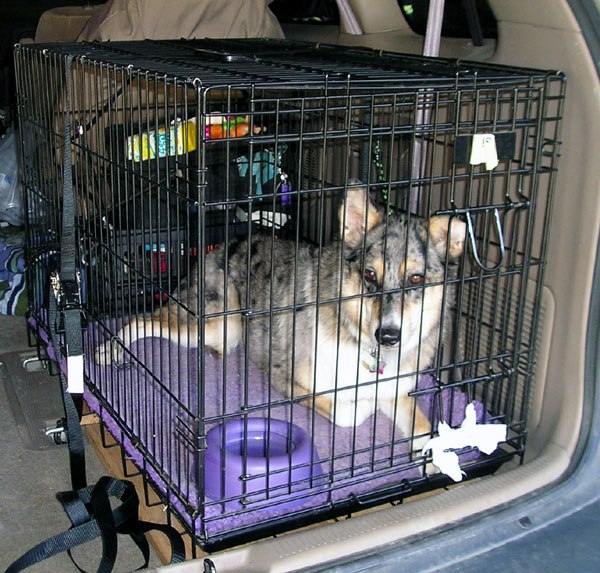
A travel crate provides an enclosed space designed to keep a dog contained during transportation. In most Crosstrek, Forester, and Outback models, crates are placed in the cargo area and secured to help minimize movement while driving.
Choosing the correct crate size is important to ensure both comfort and proper fit inside the vehicle.
Benefits Of Crate Travel
Crates provide excellent containment and help prevent dogs from moving throughout the vehicle. They also reduce distractions for the driver and can provide a familiar resting place during longer trips.
For dogs already comfortable with crate training, travel often becomes more predictable.
Limitations Of Crate Travel
Crates occupy a significant portion of the cargo area, leaving less room for luggage, groceries, or outdoor gear. Larger crates may also limit visibility or make loading bulkier items more difficult.
Owners should verify that the crate fits both the dog and the available cargo space before purchasing.
Why Some Dogs Prefer Crates
Many crate-trained dogs feel more relaxed inside an enclosed space because it provides a familiar environment with fewer outside distractions. This can reduce anxiety during longer drives and help some dogs settle more quickly.
Not every dog prefers a crate, so comfort often depends on the dog’s temperament and previous training.
Dog Barrier vs Dog Crate
Safety
A properly secured crate generally provides better containment during sudden stops, while a barrier simply limits where the dog can move within the vehicle. Both should be installed correctly to work as intended.
Containment
Crates offer the highest level of containment by keeping the dog inside an enclosed space. Barriers allow more freedom of movement but keep the dog separated from passengers.
Cargo Space Usage
A barrier leaves most of the cargo area available for the dog, while a crate permanently occupies a portion of that space. For larger dogs, the difference in usable cargo capacity can be significant.
Passenger Flexibility
Barrier setups generally provide more flexibility because they can be removed quickly or used alongside folded seats. Crates often require more planning when passengers or additional cargo are involved.
Ease Of Daily Use
Barriers are typically easier to live with for owners who frequently switch between carrying dogs, passengers, groceries, or gear. Crates require more space and may need to be removed when not in use.
Cleaning And Maintenance
Barrier setups are generally easier to clean because the cargo floor remains accessible. Crates require cleaning both the crate itself and the surrounding cargo area, especially after muddy or wet trips.
| Feature | Dog Barrier | Dog Crate |
| Containment | Moderate | High |
| Cargo Space Impact | Low | High |
| Daily Convenience | Excellent | Good |
| Road Trips | Very Good | Excellent |
| Family Travel | Excellent | Good |
| Cleaning | Easy | Moderate |
Which Option Works Best For Different Dogs?
Small Dogs
Small dogs typically travel well with either a barrier or a crate. A crate provides secure containment, while a barrier allows more freedom if the dog rides comfortably in the cargo area.
Medium Dogs
Medium-sized dogs can do well with either setup. Owners who prioritize flexibility often prefer a barrier, while those wanting greater containment may choose a crate.
Large Dogs
Large breeds usually benefit from a barrier because it provides more usable floor space. Finding a crate that fits both the dog and the cargo area can be more challenging, especially in a Crosstrek.
Multiple Dogs
A barrier often works better for multiple compatible dogs because it provides a larger shared space. Crates may be preferable if the dogs need to remain separated during travel.
High-Energy Dogs
High-energy dogs often benefit from the additional containment of a crate, particularly if they tend to pace or become distracted while the vehicle is moving.
Anxious Dogs
Many anxious dogs travel better in a crate because the enclosed space feels familiar and secure. Others may be more comfortable with the extra room provided by a barrier, depending on their temperament.
Daily Driving Considerations
School Runs And Errands
For short trips with frequent stops, a barrier is often more convenient because it keeps the cargo area accessible without taking up permanent space.
Grocery Trips
A barrier makes it easier to adjust the cargo area for both groceries and your dog. Crates reduce available cargo space and may limit what you can carry.
Commuting With A Dog
Owners who commute with their dog every day often value a setup that is quick to load and easy to maintain. The better choice depends on whether flexibility or containment is the higher priority.
Weekend Activities
Trips to parks, trails, or the beach often involve muddy paws and outdoor gear. Both setups work well, but barriers generally leave more flexibility for changing cargo needs.
Road Trip Considerations
Long-Distance Travel
Long trips require enough room for your dog to remain comfortable over several hours. A barrier provides more space to move, while a crate offers greater containment throughout the drive.
Managing Water, Food, And Supplies
Keep food, water, leashes, and cleanup supplies organized and easy to reach regardless of which setup you choose. Accessible supplies make rest stops quicker and less stressful.
Rest Stops And Breaks
Regular stops allow dogs to exercise, drink water, and relieve themselves. Whether using a barrier or crate, maintaining a consistent routine helps make longer trips more comfortable.
Comfort During Multi-Hour Drives
Comfort depends on having enough room to change positions, proper ventilation, and regular breaks. The best setup is one that allows your dog to travel safely while remaining relaxed throughout the trip.
Traveling With Dogs And Families
Dogs And Children In The Same Vehicle
Traveling with both dogs and children requires making the best use of the available seating and cargo space. Larger dogs often ride more comfortably in the cargo area, leaving the rear seat available for child seats and passengers.
Cargo Space Competition
Luggage, coolers, sports equipment, and pet supplies all compete for cargo space. Barrier setups generally leave more flexibility, while crates reserve a fixed portion of the cargo area.
Strollers, Groceries, And Dog Gear
Strollers, diaper bags, groceries, and pet supplies can quickly fill the cargo area. Owners who regularly carry a variety of items often appreciate the flexibility a barrier provides over a permanent crate.
Maintaining Passenger Comfort
A good setup keeps passengers comfortable without reducing the dog’s available space. Planning where people, pets, and cargo will go before loading the vehicle helps make everyday trips and road trips less crowded.
Cargo Space Tradeoffs
How Much Space A Barrier Uses
A barrier itself takes up very little cargo space. Instead, it divides the cabin while allowing the dog to use most or all of the cargo area.
How Much Space A Crate Uses
A crate permanently occupies part of the cargo area based on its size. Larger crates provide better containment but leave less room for luggage, groceries, or outdoor gear.
Flexibility When Cargo Needs Change
Barrier setups are generally easier to adapt when carrying different combinations of passengers, pets, and cargo. Crates provide consistent containment but are less convenient to rearrange for changing needs.
When Space Becomes A Limitation
Space limitations are most noticeable when traveling with large dogs, multiple passengers, or bulky cargo. In these situations, choosing between the flexibility of a barrier and the containment of a crate often comes down to which tradeoff better fits your everyday use.
| Cargo Scenario | Barrier | Crate |
| Daily Errands | Best Choice | Good |
| Family Travel | Best Choice | Good if space allows |
| Large Dog | Excellent | Good if crate fits |
| Multiple Dogs | Good | Best if dogs need separation |
| Road Trips | Excellent | Excellent |
Crosstrek vs Forester vs Outback Considerations
Crosstrek Dog Transport Considerations
The Crosstrek can accommodate both barriers and crates, but cargo space is more limited than in the Forester or Outback. Larger crates may leave little room for luggage, making a barrier a more practical option for many owners with medium or large dogs.
Forester Dog Transport Considerations
The Forester offers a good balance of cargo space and cabin height, making it well suited for either setup. Many owners have enough room for a crate while still carrying some cargo, and a barrier works well when maximum flexibility is needed.
Outback Dog Transport Considerations
The Outback’s long cargo floor provides the greatest flexibility for transporting dogs. It accommodates larger crates more easily than the Crosstrek and also gives barrier setups plenty of usable space for large breeds or multiple dogs.
Which Subaru Handles Crates Best?
The Outback generally handles crates the best thanks to its longer cargo area, with the Forester close behind. The Crosstrek can still work well, but crate size becomes a more important consideration.
Which Subaru Benefits Most From A Barrier?
Barrier setups work well in all three models, but they provide the greatest benefit in the Crosstrek by maximizing usable cargo space. They are also a good choice in the Forester and Outback for owners who frequently switch between carrying dogs, passengers, and cargo.
| Subaru | Barrier Setup | Crate Setup | Best For |
| Crosstrek | Excellent | Good | Small to medium dogs, flexible cargo |
| Forester | Excellent | Very Good | Large dogs, families, mixed cargo |
| Outback | Excellent | Excellent | Large dogs, road trips, multiple dogs |
Common Mistakes To Avoid
Choosing Based Only On Cost
The least expensive option is not always the best long-term choice. Durability, ease of use, and how well the setup fits your travel habits often matter more than the initial price.
Ignoring Dog Size
A setup that works well for a small dog may not be practical for a large breed. Consider how much room your dog needs to stand, turn around, and lie down comfortably.
Underestimating Crate Size Requirements
Many owners focus on the crate itself without considering how much cargo space it occupies. Always confirm that both the crate and your dog fit comfortably inside your Subaru.
Forgetting About Cargo Needs
Dogs are rarely the only passengers on a trip. Luggage, groceries, camping gear, and everyday items all require space, so choose a setup that matches your typical cargo needs.
Prioritizing Storage Over Usability
Maximizing storage means little if the setup is difficult to use every day. The best arrangement balances dog comfort, passenger space, and convenient access to cargo.
What Actually Works (Based On Real Use)
Most Owners Prefer Simplicity
For everyday driving, simple setups are usually the easiest to live with. The fewer adjustments required between trips, the more likely the setup will remain in use.
Barriers Usually Maximize Cargo Flexibility
Barriers leave the cargo area open, making it easier to adapt the space for groceries, luggage, or outdoor gear while still giving the dog room to travel.
Crates Often Provide Better Containment
For dogs that benefit from a secure, enclosed space, a properly sized crate generally offers the highest level of containment and a more predictable travel environment.
Family Travel Changes The Equation
Traveling with children, luggage, and a dog often shifts the priority from maximum containment to making the best use of available space. The right setup depends on how the vehicle is used most often.
The Best Setup Depends On The Dog
There is no single solution for every Subaru owner. Your dog’s size, temperament, training, and your everyday travel routine should determine whether a barrier or crate is the better fit.
FAQs
Is a dog barrier safer than a crate?
Not necessarily. A properly secured crate generally provides better containment.
Do dog barriers work in a Subaru Outback?
Yes. The Outback’s cargo area works well with most barrier setups.
Can a large dog fit in a crate inside a Crosstrek?
Sometimes, but crate size and cargo space can become limiting.
Do crates reduce cargo space significantly?
Yes. Crates occupy a substantial portion of the cargo area.
Are barriers good for road trips?
Yes. They maximize cargo flexibility while separating the dog from passengers.
Can you use both a crate and a barrier?
Yes. Some owners use both for added containment and separation.
Which is better for anxious dogs?
Many anxious dogs travel better in a crate if they are crate-trained.
Which is easier for daily driving?
A barrier is usually easier because it keeps the cargo area more flexible.
What works best for families with dogs?
A barrier often provides the best balance of passenger and cargo space.
Which Subaru is best for traveling with dogs?
The Outback offers the most flexibility, with the Forester close behind.
Final Thoughts
Choose the setup that fits your dog and how you use your Subaru. Barriers offer more flexibility, while crates provide greater containment.
Your dog’s size, temperament, passengers, and cargo needs should guide the decision. As your needs change, you can always adapt your setup with other dog travel and cargo solutions.
Recommended products:
• PetSafe Happy Ride Metal Dog Barrier
• Mammoth Guardian Dog Kennel
• Amazon Basics Portable Folding Soft Dog Crate
Related Guides
• Traveling With Dogs in a Subaru
• Best Dog Seat Covers for Subaru
Leave a Reply