Disclosure: This article contains affiliate links. I may earn a commission at no extra cost to you.
Our Interior Storage Ideas guide covers free and cheap DIY fixes. This one is the opposite end — genuine upgrades worth spending real money on once you know a basic fix isn’t enough anymore.
Best premium daily organizer:Fortem trunk organizer — sturdier and better-structured than a basic bin.
Best for loose-item control:Elastic cargo net — a real step up from letting gear roll around loose.
When a Storage Upgrade Is Actually Worth It
An upgrade makes sense once a basic fix is genuinely failing you — bins you’re constantly re-organizing, gear that never has a fixed spot, or the same frustration coming up trip after trip. If a $10 fix from our Interior Storage Ideas guide is still working, there’s no real reason to spend more yet.
A Drawer System Is the Biggest Single Upgrade
For frequent, gear-heavy use, a drawer system solves the organization-degrading-over-time problem that bins eventually run into, plus adds real security for tools or valuables. It’s a genuine investment, not a minor purchase — see our full Drawer System vs Storage Bins comparison before committing.
A Sturdier Organizer Beats a Better DIY Bin
Once a cardboard box or basic bin has proven the need is real, a proper structured trunk organizer holds its shape better, doesn’t collapse when partially loaded, and generally lasts years instead of months.
Common Mistakes
Upgrading before confirming the problem is real. Try a free fix first — see our Interior Storage Ideas guide.
Buying a drawer system for occasional use. The cost and permanent space commitment only pay off for frequent, gear-heavy needs.
Choosing capacity over durability. A smaller, sturdier organizer usually outlasts a larger, flimsier one.
FAQs
When should I upgrade from basic bins? Once a basic fix is genuinely failing — constant re-organizing, no fixed spot for gear, or repeated trip-to-trip frustration.
Is a drawer system worth the cost? For frequent, gear-heavy use, yes. For occasional use, a sturdier organizer or bins usually cover it for much less money. See our full comparison.
Final Thoughts
Storage upgrades are worth it once a free or basic fix has genuinely proven insufficient — not before. A sturdier organizer, a cargo net, or a full drawer system for frequent heavy use are the real steps up once you’re at that point.
Disclosure: This article contains affiliate links. I may earn a commission at no extra cost to you.
A drawer system and a set of storage bins solve the same basic problem — keeping gear organized and accessible — at very different price points and levels of permanence. One is a real investment aimed at frequent, gear-heavy use; the other is flexible, cheap, and easy to change your mind about. Most people don’t need the drawer system, but some genuinely do.
Quick Picks
Best drawer system:Tuffy Security Drawer with Shelf — a genuine locking, heavy-duty drawer built for regular use, not just extra storage.
Best storage bins:Hard storage bins — the flexible, lower-cost option that covers most people’s actual needs.
What a Drawer System Actually Gets You
A drawer system is a semi-permanent platform that slides out for access instead of requiring you to dig down into a stacked pile of bins. The real advantages are organization that doesn’t degrade over time (gear stays in its assigned spot instead of migrating), security (locking drawers keep tools or valuables out of sight and out of reach), and a flat top surface that works as a sleeping platform or work surface. The real cost isn’t just money — it’s permanently giving up some cargo height and flexibility, since the system stays installed rather than coming out between uses.
What Storage Bins Actually Get You
Bins are flexible in a way a drawer system isn’t — they come out entirely when you need the full cargo area, cost a fraction as much, and let you change your organization system as your actual needs change. The tradeoff is exactly what a drawer system solves: gear tends to migrate and pile up over time, there’s no built-in security, and accessing something at the bottom of a stack means moving everything on top of it first.
Who Actually Needs a Drawer System
Frequent campers or overlanders who are packing and unpacking the same gear on a near-weekly basis get real value from a drawer system — the time saved on organization adds up fast at that frequency. Tradespeople or anyone carrying tools that need to stay secured also benefit from the locking option specifically. For occasional campers, or anyone who wants the cargo area fully open most of the time, bins solve the same problem for a fraction of the cost and commitment.
Comparison
Drawer System
Storage Bins
Cost
High
Low
Flexibility
Semi-permanent
Fully removable
Security
Locking option available
None built-in
Best for
Frequent use, tools, overlanding
Occasional campers, changing needs
Common Mistakes
Buying a drawer system before trying bins first. A cheaper trial run often reveals whether the organization problem is real or just occasional.
Underestimating the lost cargo height. A drawer system takes up real vertical space permanently — worth measuring before committing.
Assuming bins are automatically the “starter” option. For a lot of people, bins solve the problem completely and there’s no reason to ever upgrade.
FAQs
Is a drawer system worth it for occasional camping? Usually not — the cost and permanent space commitment pay off more for frequent, gear-heavy use than occasional trips.
Does a drawer system fit any Subaru? Most are sold as universal-fit for mid-size SUVs, but measure your specific cargo area before buying — fit varies more than with simple bins.
Can I still sleep in the vehicle with a drawer system installed? Often yes — many drawer systems have a flat top that works as a sleeping platform, though it changes the total usable height compared to bins that come out entirely.
Final Thoughts
Most people’s actual storage problem is solved by bins — cheap, flexible, and good enough. A drawer system is a real upgrade for frequent, gear-heavy use or anyone who needs secured storage, but it’s a genuine commitment, not just a fancier bin.
Disclosure: This article contains affiliate links. I may earn a commission at no extra cost to you.
Not every storage problem in a Subaru needs a purchased organizer. Before spending money, it’s worth knowing which problems can be solved with stuff already sitting around the house — and which ones genuinely need a dedicated product. This is a list of ideas, not a shopping list. If you’d rather skip straight to buying the fix, see our Best Interior Organizers for Subaru guide instead.
Reusable Bags Solve More Than People Expect
A few canvas totes or reusable grocery bags make surprisingly effective trunk dividers. Set two or three side by side in the cargo area and loose items — shoes, tools, sports gear — stay grouped instead of sliding around loose. It costs nothing if you already have them, and it’s the fastest fix for the single most common trunk complaint: stuff rolling around every time you brake or turn.
A Tension Rod Turns the Trunk Into Actual Compartments
A cheap spring-loaded tension rod (the kind sold for closets) wedged across the narrower part of the cargo area creates a real divider — bags and bins on one side stay separated from groceries or gear on the other. It costs a few dollars, takes thirty seconds to install, and does roughly the same job as a dedicated cargo divider that costs 10x more.
Seat-Back Pockets Aren’t Just for Kids
An old over-the-door shoe organizer or hanging magazine rack, strapped to the back of a front seat, works as a functional pocket organizer for anything that needs to be within reach — napkins, chargers, a first aid kit, sunscreen. It’s not as clean-looking as a purpose-built seatback organizer, but it costs nothing and holds more.
A Cardboard Box Beats No System at All
Before buying a collapsible storage bin, a sturdy cardboard box does the same job for testing whether a dedicated organizer is actually worth it. If it turns out you use the box every week, that’s the signal to upgrade to something more durable. If it sits empty, you just saved the money.
Know When DIY Stops Being Worth It
DIY fixes have real limits. Canvas bags and cardboard boxes don’t secure a load on rough roads or hard braking the way a strapped-down bin does, and they wear out faster than purpose-built products. Once a DIY fix is something you’re re-doing every week instead of a one-time setup, that’s the actual signal to upgrade — not a fixed timeline, just whether the free version is still holding up. See our Best Interior Organizers for Subaru guide when you get there.
Common Mistakes
Buying an organizer before trying a free fix first. Most storage problems are cheaper to solve than people assume.
Using bins or boxes that aren’t secured. An unsecured container becomes a real hazard under hard braking — wedge it in or strap it down.
Overcomplicating a problem a single tension rod solves. Not every storage problem needs a multi-part system.
FAQs
Do I need to buy organizers, or can I DIY it? For a lot of common problems, DIY works fine — reusable bags, a tension rod, or a spare box solve most of the basic sliding-cargo complaint. Dedicated organizers earn their cost once a DIY fix needs constant re-doing.
What’s the cheapest way to stop items from sliding in the trunk? A tension rod wedged across the cargo area, or two reusable bags set side by side as makeshift dividers — both cost only a few dollars.
When should I upgrade from DIY to a real organizer? When the free fix stops holding up — if you’re re-securing a load every trip or a cardboard box is falling apart, that’s the point a dedicated product actually pays for itself.
Final Thoughts
Most interior storage problems in a Subaru don’t need a purchase to start — they need five minutes and something already sitting in a closet. Try the free version first. If it holds up, you’re done. If it doesn’t, at least you’ll know exactly what to look for in a dedicated product instead of guessing.
Many Subaru owners focus on cargo space, but grocery hauling is often more about organization than capacity. Keeping groceries stable, separated, and easy to access makes every shopping trip easier. Whether you drive a Crosstrek, Forester, or Outback, groceries often share space with strollers, pet gear, sports equipment, and everyday supplies — how you use the cargo area matters as much as its size.
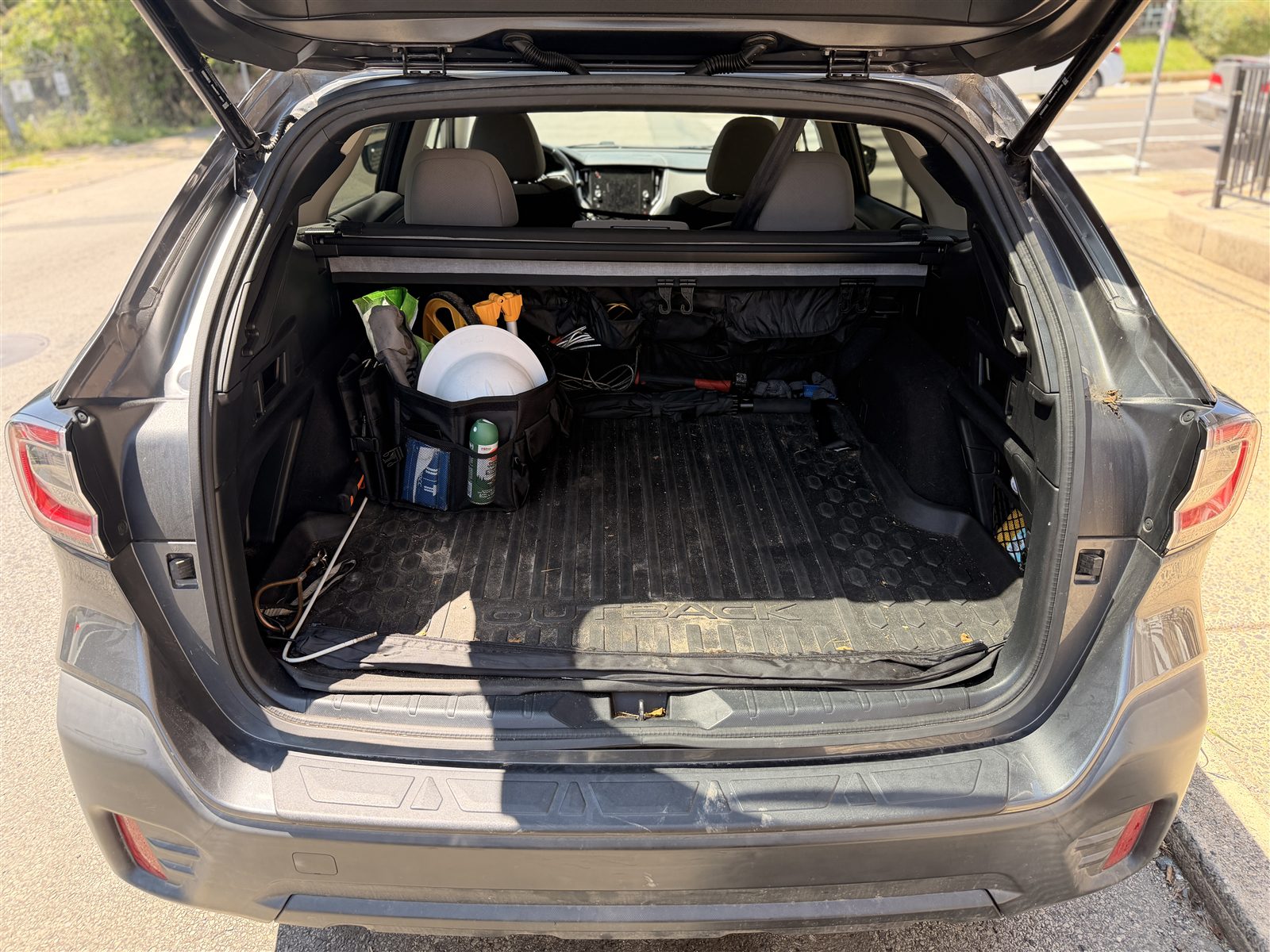
A collapsible cargo organizer in daily use — keeping groceries and gear separated and upright.
Why Organization Matters More Than Space
Groceries can slide around during turns, braking, and acceleration — cargo organizers and a cargo net help keep items contained and reduce movement, which also protects fragile items like eggs and produce from getting crushed under heavier groceries. Grouping refrigerated items together with an insulated bag makes them easier to find and prioritize once you’re home, especially in warm weather or on multi-stop errand runs. An organized cargo area also saves real time at every stop — grouped groceries mean less searching and fewer trips carrying bags back and forth.
How Much Grocery Capacity Do You Actually Need?
Most weekly grocery trips fit comfortably in a Crosstrek, Forester, or Outback without folding seats or sacrificing passenger space — for everyday shopping, organization matters more than total capacity. Bulk-shopping and warehouse-club trips take up meaningfully more room; the Outback generally handles these most easily, followed closely by the Forester, while the Crosstrek can still manage bulk purchases but reaches its practical limits sooner. Keep in mind that most owners aren’t starting with an empty cargo area — strollers, sports equipment, pet supplies, and travel accessories often occupy space before groceries are even loaded, so keeping nonessential items organized or removed makes a bigger difference than which Subaru you drive.
Category
Crosstrek
Forester
Outback
Small Household
Excellent
Excellent
Excellent
Family Grocery Run
Good
Excellent
Excellent
Bulk Shopping
Fair
Very Good
Excellent
Grocery + Stroller
Fair
Very Good
Excellent
Grocery + Dog
Fair
Very Good
Excellent
Grocery Hauling With Kids and Pets
Car seats mainly affect passenger space, but with rear seats occupied, most grocery storage has to stay in the cargo area — the Crosstrek can feel more limited on larger shopping trips, while the Forester and Outback offer more flexibility for carrying both kids and groceries. A stroller can take up a significant portion of the cargo area too, especially in a Crosstrek; keeping it positioned near the rear hatch preserves easier access and more room for groceries. When sharing space with a dog, separating food and pet areas and keeping both accessible avoids the two competing for the same spot. In all cases, avoid placing bags on seats, filling footwells, or blocking access to child seats — see Subaru Family Road Trip Setup for more on balancing family and cargo needs.
Crosstrek vs Forester vs Outback
All three models handle everyday grocery shopping well — the best choice depends less on groceries alone and more on everything else that shares cargo space. The Crosstrek works well for smaller households and excellent maneuverability during busy shopping trips. The Forester balances cargo space and everyday practicality, with strong accessibility for loading and unloading. The Outback offers the most flexible cargo area for larger shopping loads — its longer cargo floor handles bulk purchases, coolers, and pet supplies with fewer compromises, which is useful for owners who regularly combine shopping with travel or family activities.
Common Mistakes
Overloading one side of the cargo area. Uneven weight makes loading less efficient and items more likely to shift during the drive.
Mixing heavy and fragile items. Cases of water and canned goods can easily crush eggs, bread, and produce — keep fragile groceries separate.
Ignoring temperature-sensitive foods. Group frozen and refrigerated items together and unload them first.
Allowing bags to slide around. A cargo organizer or net solves this in most vehicles.
What Actually Works
Most owners need better organization, not more space — a cluttered cargo area makes available room feel smaller than it is. Easy access to what you use most matters more than maximum capacity, and keeping groceries contained meaningfully improves everyday usability. A flexible cargo setup that handles groceries during the week, sports gear on weekends, and vacation loads when needed is more valuable than one built for a single purpose. The most effective setups are usually the simplest: a clean cargo area, a few reusable organizers, and a consistent loading routine outperform more complicated systems for most owners.
FAQs
Which Subaru has the most grocery space?
The Outback generally offers the most usable cargo space, followed closely by the Forester.
Is the Crosstrek large enough for family grocery shopping?
Yes — most families can handle weekly grocery trips comfortably in a Crosstrek.
How do you keep grocery bags from sliding around?
Use cargo organizers, storage bins, or a cargo net, or group bags tightly together.
Can a Forester handle bulk grocery trips?
Yes — the Forester has ample space for large grocery runs and warehouse-club purchases.
How do you transport frozen groceries during summer?
Group them together in an insulated bag and unload them first when you get home.
Do cargo organizers help with groceries?
Yes — they keep bags contained and prevent shifting during the drive.
What is the best Subaru for everyday family errands?
All three work well, but the Outback offers the most flexibility for families juggling groceries, kids, and pets at once.
Final Thoughts
Grocery hauling in a Subaru comes down to organization more than raw cargo space. A simple system — an organizer, a cargo net, and consistent habits — makes every trip easier, regardless of which model you drive.
Disclosure: This article contains affiliate links. I may earn a commission at no extra cost to you.
Adding a cargo box gives Crosstrek, Forester, and Outback owners extra storage, but many wonder whether one person can install it alone.
Most cargo boxes are lighter than people expect. The bigger challenge is managing their size and reaching the roof.
For many owners, solo installation is completely possible with the right technique. The goal is simply to install the box safely without unnecessary stress or damage.
Can One Person Lift A Cargo Box Alone?
Many cargo boxes can be installed by one person, but the answer depends more on size and vehicle height than weight alone.
Most Empty Cargo Boxes Are Lighter Than People Expect
Most empty cargo boxes are relatively lightweight. Many owners are surprised that the box itself is not especially heavy when unloaded.
The challenge usually comes from maneuvering a large object overhead rather than lifting the weight.
Size Matters More Than Weight
Long cargo boxes can be awkward to carry and position. Their length makes them difficult to balance, especially when trying to align mounting points with the crossbars.
For many owners, handling the size of the box is harder than handling its weight.
Vehicle Height Changes Everything
Vehicle height plays a major role in installation difficulty. Crosstreks are generally easier to load than Foresters, while taller vehicles often require step stools or additional reach.
Even lightweight boxes become more challenging when they must be lifted above shoulder height.
Some Situations Still Require Two People
Large boxes, taller vehicles, and limited storage space can make a two-person installation much easier. Having a second person helps prevent scratches and simplifies aligning the box with the crossbars.
For many owners, occasional installation is manageable alone, but larger setups are often easier and safer with two people.
Prepare Before You Lift
A little preparation makes installing a cargo box much easier and helps reduce the chance of damage or injury.
Empty The Cargo Box First
Always remove gear before lifting the box. An empty cargo box is easier to handle and puts less strain on you and the roof rack system.
Position The Vehicle Properly
Park on a flat surface with plenty of space around the vehicle. Good positioning makes it easier to move around the Subaru and access both sides during installation.
Open Doors For Better Access
Opening the doors can provide additional reach and make it easier to steady yourself while positioning the box. This is especially helpful on taller vehicles.
Plan The Lift Before Starting
Know where you are grabbing the box and how you will place it on the crossbars before lifting. Having a plan helps avoid awkward movements and makes installation smoother.
Safe Ways To Lift A Cargo Box Alone
Installing a cargo box by yourself is possible for many owners, but using a controlled approach makes the process much easier.
Side Lift Method
Many owners lift the box from the side and place one edge on the crossbars first. Once supported, the box can be rotated and centered more easily.
This method works particularly well on Crosstreks and lower Outbacks.
Rear Lift Method
Another approach is lifting the box from behind the vehicle and sliding it forward onto the crossbars. This can help maintain balance and reduce awkward movements.
Longer boxes are often easier to manage from the rear.
Sliding The Box Across Crossbars
Once one end is resting on the bars, the box can often be slid into its final position. This reduces the amount of overhead lifting required and makes alignment easier.
Why Slow And Controlled Movements Matter
Rushing increases the chance of dropping the box or scratching the vehicle. Slow, deliberate movements make installation easier and help protect both the cargo box and your Subaru.
Crosstrek vs Forester vs Outback
Crosstrek Considerations
The Crosstrek’s lower ride height makes it easier for one person to reach the roof. Smaller cargo boxes are generally manageable, and less overhead lifting is required.
Many owners find solo installation less intimidating on a Crosstrek.
Forester Considerations
The Forester offers excellent roof space, but its taller height can make lifting and positioning a cargo box more challenging.
The Outback combines a relatively low roof with a long cargo area, providing plenty of room for positioning larger boxes.
Its height and roof length make solo loading practical for many owners.
Which Subaru Is Easiest To Load Alone?
For most owners, the Crosstrek is the easiest to work with because of its lower roof height. The Outback is a close second thanks to its long roof and moderate height. The Forester’s added height provides excellent utility but can make solo installation more difficult.
Ultimately, box size and lifting technique usually matter more than the vehicle itself.
Feature
Crosstrek
Forester
Outback
Vehicle Height
Lowest
Tallest
Moderate
Roof Access
Easiest
Hardest
Easy
Loading Convenience
Excellent
Good
Very Good
Large Box Handling
Good
Fair
Very Good
Overall Ease
Best
Moderate
Very Good
Why Box Size Matters
Small And Medium Boxes
Small and medium cargo boxes are usually manageable for one person. Their shorter length makes them easier to control and position on the crossbars.
For many Crosstrek, Forester, and Outback owners, these sizes are the most practical for solo installation.
Large Boxes
Large cargo boxes remain light enough for many owners to handle alone, but their added length can make them awkward to lift and align.
Taking your time and using a controlled approach becomes more important as box size increases.
XL Boxes
XL boxes can be difficult to install alone, even when empty. Their size makes them harder to balance and increases the risk of bumping the vehicle or losing control during the lift.
Many owners find that having a second person makes installation much easier.
Why Length Can Be Harder Than Weight
Most empty cargo boxes weigh less than people expect. The challenge is usually not the weight but the length and bulk of the box.
A long cargo box acts like a large object that is difficult to balance, making positioning and alignment more challenging than the actual lift.
Box Size
Difficulty Level
Small
Easy
Medium
Easy
Large
Moderate
XL
Difficult
Common Mistakes To Avoid
Trying To Lift A Loaded Box
Always empty the cargo box before removing or installing it. Even a small amount of gear can add unnecessary weight and make the box harder to control.
An empty box is much safer and easier to manage.
Rushing The Installation
Trying to move too quickly increases the chance of dropping the box or misaligning it on the crossbars.
Slow, controlled movements usually lead to a smoother installation.
Scratching The Vehicle
Large cargo boxes can easily contact the roof, doors, or rear hatch during installation.
Working carefully and planning your movements helps prevent accidental damage.
Overestimating Strength
Most installation problems come from awkward size rather than heavy weight. If the box feels difficult to control, there is no downside to asking for help.
For larger boxes, two people often make the process easier and safer.
Ignoring Weather Conditions
Wind, rain, and slippery surfaces can make handling a cargo box much more difficult. Strong gusts are especially challenging because large boxes act like sails.
Whenever possible, install or remove the box in calm weather and on level ground.
When Two People Make More Sense
Larger Cargo Boxes
Large and XL cargo boxes are often awkward to handle alone. A second person makes lifting, positioning, and aligning the box much easier.
For many owners, two people simply reduce stress and the chance of damaging the vehicle.
Taller Vehicles
The Forester’s taller roof and lifted Subaru models require more overhead lifting, which can make solo installation challenging.
Having another person helps maintain control and improves safety.
Limited Mobility Or Back Problems
Owners with shoulder, neck, or back issues should avoid forcing a solo installation. Even lightweight boxes can be awkward to maneuver.
Getting help is usually easier than risking injury.
Frequent Installations
If you regularly install and remove your cargo box, using two people can save time and reduce wear and tear on both the box and the vehicle.
Many owners eventually develop a routine that makes seasonal changes quicker and easier.
Storage Considerations
Removing The Box Between Trips
Many Crosstrek, Forester, and Outback owners remove their cargo box when it is not needed. This reduces wind noise, improves fuel economy, and keeps the vehicle easier to live with.
Seasonal removal is often more practical than leaving the box installed year-round.
Keeping The Box Easy To Access
A cargo box is more likely to be used if it can be reached easily. Storing it in a garage or other convenient location simplifies installation and removal.
Easy access also encourages owners to remove the box when it is not needed.
Why Storage Height Matters
Storing the box too high can make installation more difficult and increase the risk of dropping or damaging it.
Keeping the box at a comfortable height reduces lifting and makes solo installations easier.
Reducing Installation Stress
Good storage habits can make seasonal changes much less frustrating. Having a clear area and an organized storage plan helps simplify installation and removal.
For many owners, reducing the effort involved makes cargo boxes more convenient to use.
What Actually Works (Based On Real Use)
Most Owners Can Handle Small And Medium Boxes Alone
Small and medium cargo boxes are usually manageable for one person. Their lighter weight and shorter length make installation much easier.
For many Crosstrek, Forester, and Outback owners, solo installation is completely realistic.
Large Boxes Are Easier With Two People
Large and XL boxes are more awkward than heavy. A second person helps with alignment and reduces the risk of accidental damage.
Even experienced owners often prefer having help with larger boxes.
Height Matters More Than Weight
The challenge is usually reaching the roof, not lifting the box itself. Vehicle height and box length often have a bigger impact than the actual weight.
This is especially noticeable on taller vehicles and with larger cargo boxes.
Taking Your Time Prevents Damage
Slow, controlled movements make installation easier and help avoid scratches or dropped boxes.
For most owners, patience matters more than strength.
FAQs
Can one person install a cargo box?
Yes. Most small and medium boxes can be installed by one person.
How much does an empty cargo box weigh?
Most empty cargo boxes weigh between 30 and 60 pounds.
Can I lift a cargo box onto a Subaru Outback alone?
Yes. Many owners can install small and medium boxes on an Outback by themselves.
Is the Forester harder to load than the Crosstrek?
Generally yes. The Forester’s taller roof makes lifting more challenging.
Can one person handle a large cargo box?
Sometimes, but large boxes are usually easier with two people.
Should the cargo box be empty before installation?
Yes. Always remove the contents before lifting the box.
How do I avoid scratching my Subaru?
Move slowly, plan the lift, and avoid rushing the installation.
Do I need two people to remove a cargo box?
Not always. Small boxes are often manageable alone, while larger boxes are easier with help.
Which Subaru is easiest to load by yourself?
The Crosstrek is generally the easiest because of its lower roof height.
What size cargo box is easiest to manage alone?
Small and medium cargo boxes are usually the easiest for solo installation.
Final Thoughts
For most Crosstrek, Forester, and Outback owners, installing a cargo box alone is entirely possible with the right size box and some patience.
The best approach depends on your vehicle, box size, and comfort level. Some setups are easy to manage solo, while others are simply easier with two people.
As your needs change, factors like box size, storage, and roof height become just as important as cargo capacity.
More Space Doesn’t Automatically Mean Better Organization
Adding cargo capacity does not automatically make packing easier. Without a plan, gear can become difficult to find and the interior can quickly become cluttered.
For many Crosstrek, Forester, and Outback owners, organizing items by frequency of use is more important than simply maximizing available space.
Accessibility Matters During Long Trips
Items needed throughout the day should be easy to reach without unloading half the vehicle. Snacks, jackets, pet supplies, and emergency gear are often better kept inside the cabin or near the rear hatch.
Thoughtful placement becomes especially important during family vacations, camping trips, and multi-day travel.
Proper Packing Improves Convenience
A well-packed Subaru is easier to live with on the road. Keeping heavier items secure and placing frequently used gear in accessible locations helps reduce frustration during stops.
For most owners, convenience comes from balancing cargo capacity with organization rather than trying to fill every available inch of space.
What Should Go In A Cargo Box?
Luggage
Luggage is one of the best uses for a cargo box. Suitcases and duffel bags are bulky but relatively lightweight, making them ideal for freeing up cabin space during family trips and vacations.
Sleeping bags, blankets, and pillows take up a surprising amount of space but weigh very little. Many Crosstrek, Forester, and Outback owners use their cargo box primarily for these soft items.
Strollers And Bulky Family Items
Strollers, pack-and-plays, and other family gear can quickly fill the cargo area. A roof box provides extra room without overcrowding the cabin, making longer trips more comfortable.
Sports Equipment
Skis, snowboards, fishing gear, and other outdoor equipment are common cargo box items. Keeping dirty or bulky gear outside the cabin helps protect interior space and improve passenger comfort.
What Should Stay Inside The Vehicle
Frequently used items, valuables, electronics, medications, snacks, and emergency supplies are usually better kept inside the vehicle. Easy access becomes especially important during long drives and road trips.
For most owners, the cargo box works best for bulky, lightweight items, while everyday essentials remain within reach inside the cabin.
Item Type
Cargo Box
Cabin
Suitcases
✓
Sleeping Bags
✓
Camping Chairs
✓
Coolers
✓
Electronics
✓
Pets
✓
Valuables
✓
Pack Heavy Items First
Keep Weight Low And Centered
Heavier items should be placed near the center of the cargo box and positioned as low as possible. This helps maintain vehicle stability and reduces unnecessary stress on the roof rack system.
Avoid Loading Everything To One Side
Uneven loading can affect balance and make the vehicle feel less stable. Distributing weight evenly across the cargo box helps improve handling and keeps the load more secure.
Follow Roof Weight Limits
Every Crosstrek, Forester, and Outback has roof load limits that include the weight of the crossbars, cargo box, and gear. Staying within those limits is more important than maximizing every inch of storage space.
Balance Matters More Than Maximum Capacity
Filling a cargo box to its maximum capacity is not always the best approach. A balanced load is usually easier to live with and can improve handling, stability, and overall driving comfort.
For most owners, proper weight distribution matters more than carrying the largest possible load.
Organize By Frequency Of Use
Items Needed Every Day
Snacks, water bottles, chargers, jackets, and other frequently used items are usually best kept inside the vehicle. Easy access reduces the need to open the cargo box during short stops and rest breaks.
Items Needed At Your Destination
Camping gear, luggage, extra clothing, and sports equipment are often only needed once you arrive. These items are good candidates for the cargo box because they free up interior space without sacrificing convenience.
Emergency Supplies
First-aid kits, flashlights, jumper cables, medications, and roadside equipment should remain easy to reach. Keeping emergency items inside the cabin or rear cargo area is usually more practical than storing them on the roof.
Why Accessibility Matters
A well-organized setup makes travel easier. Separating frequently used items from destination gear reduces unnecessary unpacking and helps keep the vehicle more comfortable and organized.
For most Crosstrek, Forester, and Outback owners, packing by frequency of use is just as important as maximizing storage space.
Packing For Different Types Of Trips
Weekend Trips
For short trips, many Crosstrek, Forester, and Outback owners only need a few bags and basic gear. Keeping frequently used items inside the vehicle and placing luggage in the cargo box helps maximize passenger comfort.
Family Vacations
Family travel often involves strollers, toys, coolers, and extra luggage. A cargo box can free up valuable cabin space, making long drives more comfortable for both adults and children.
Camping Trips
Camping gear tends to be bulky rather than heavy. Tents, sleeping bags, chairs, and pads are ideal cargo box items, while food, cooking supplies, and frequently used gear are often easier to access inside the vehicle.
Winter Travel
Winter trips usually require bulky jackets, boots, and snow gear. Keeping wet or dirty equipment outside the cabin helps preserve interior space and makes cleanup easier after the trip.
Road Trips With Pets
Traveling with dogs often means carrying crates, beds, food, and other supplies. Moving luggage and bulky gear to the roof creates more room inside the cabin and helps pets travel more comfortably.
Different trips require different packing strategies, but the goal is usually the same: maximize usable space while keeping important items easy to reach.
Trip Type
Common Cargo Box Items
Weekend Trips
Duffel bags, luggage
Family Vacation
Strollers, toys, luggage
Camping
Tents, chairs, sleeping bags
Winter Travel
Boots, jackets, snow gear
Road Trip With Pets
Beds, crates, pet supplies
Common Packing Mistakes
Overloading The Box
Trying to maximize every inch of space can lead to excessive weight and unnecessary stress on the roof rack system. Staying within the vehicle and cargo box weight limits is more important than filling the box completely.
Putting Frequently Used Items At The Bottom
Burying snacks, jackets, or other commonly used items beneath luggage and gear can make travel frustrating. Keeping frequently needed items accessible helps avoid constant unpacking during stops.
Carrying Too Much Weight Up High
Heavy gear placed on the roof raises the vehicle’s center of gravity and can affect handling. Many owners reserve the cargo box for bulky, lightweight items and keep heavier items inside the vehicle whenever possible.
Ignoring Weight Distribution
Loading one side more heavily than the other can affect balance and stability. Distributing weight evenly across the cargo box helps improve driving comfort and keeps the load secure.
Wasting Space
Poor organization can leave empty gaps while making the cargo box harder to use. Grouping similar items and packing efficiently often creates more usable space without adding extra gear.
For most Crosstrek, Forester, and Outback owners, thoughtful packing matters more than simply carrying the maximum amount of cargo.
Crosstrek vs Forester vs Outback
Crosstrek Considerations
The Crosstrek has the smallest cargo area of the three models, so owners often see the biggest improvement from adding a cargo box. Extra roof storage can make weekend trips and family travel much easier without sacrificing passenger space.
Forester Considerations
The Forester already offers generous interior room, but a cargo box provides additional flexibility for camping gear, sports equipment, and family vacations. The taller roof also makes loading and unloading relatively easy.
Outback Considerations
The Outback combines a spacious interior with a long roof, making it especially well suited for larger cargo boxes. Many owners use the extra space to keep the cabin comfortable during longer trips.
Which Subaru Benefits Most From A Cargo Box?
All three models benefit from additional roof storage, but the greatest advantage often goes to the Crosstrek because of its smaller cargo area. The Forester and Outback already provide more interior space, though both become even more versatile with a well-packed cargo box.
Ultimately, the biggest benefit depends less on the vehicle and more on how often you travel and how much gear you typically carry.
What Actually Works (Based On Real Use)
Soft Bags Usually Use Space More Efficiently
Soft duffel bags and flexible storage bags conform to the shape of the cargo box better than rigid suitcases. Many Crosstrek, Forester, and Outback owners find they can fit more gear without increasing box size.
Frequently Used Items Should Be Easy To Reach
Items needed during the trip are best kept inside the vehicle or near the top of the load. Easy access reduces the need to unpack the cargo box during fuel stops and rest breaks.
Heavy Gear Should Stay Low And Centered
Keeping heavier items low and evenly distributed helps maintain stability and improves overall driving comfort. Bulky, lightweight gear is usually better suited for the roof.
Packing Smart Matters More Than Having A Bigger Box
A larger cargo box does not automatically make travel easier. Thoughtful organization and efficient packing often provide more usable space than simply choosing the biggest box available.
For most owners, how you pack matters more than how much space you have.
FAQs
What should I put in a cargo box?
Bulky, lightweight items like luggage, camping gear, sleeping bags, strollers, and sports equipment.
What should not go in a cargo box?
Valuables, electronics, medications, and frequently used items are usually better kept inside the vehicle.
How much weight can I put in a cargo box?
Follow the cargo box and vehicle roof weight limits. Capacity varies by setup.
Should heavy items go in the cargo box?
Generally no. Heavy gear is usually better kept low inside the vehicle.
Can I put a cooler in a cargo box?
Yes, as long as it fits and stays within weight limits.
Should electronics stay inside the vehicle?
Yes. Electronics are easier to access and better protected inside the cabin.
How do I maximize cargo box space?
Use soft bags, pack efficiently, and avoid wasting space.
How do I organize luggage in a cargo box?
Place less frequently used items at the bottom and keep similar items grouped together.
Can I overload a cargo box?
Yes. Exceeding weight limits can affect safety and vehicle handling.
Which Subaru benefits most from a cargo box?
The Crosstrek typically sees the biggest benefit because of its smaller cargo area.
Final Thoughts
For most Crosstrek, Forester, and Outback owners, smart packing matters more than having a bigger cargo box.
The right setup depends on your gear and how you travel. As your needs change, factors like box size, weight distribution, and roof rack setup become just as important as storage space.
_China_(11).jpg)