Disclosure: This article contains affiliate links. I may earn a commission at no extra cost to you.
Adding a cargo box is an easy way to gain storage, but many Crosstrek, Forester, and Outback owners wonder how much it affects fuel economy. Cargo boxes can reduce MPG, and the impact depends more on speed and aerodynamics than weight — highway driving typically shows the biggest difference. For most owners, the tradeoff is worth it: extra storage makes road trips and everyday travel more comfortable and practical.
_China_(8).jpg)
Why Cargo Boxes Reduce MPG
Aerodynamic drag has a bigger effect on fuel economy than the weight of the box itself — even an empty box changes airflow and adds resistance, and box shape and overall height usually matter more than how much gear is inside. Losses are most noticeable at highway speed, where the vehicle works harder to overcome the added drag; many owners barely notice a difference around town but see a real impact on long highway trips. Some reduction in MPG is a normal tradeoff for the extra storage, not a sign something’s wrong with your setup.
How Much MPG Loss Is Typical
City driving usually shows little change — lower speeds mean less aerodynamic drag, so the impact stays modest. Highway driving produces the largest reduction, since higher speeds increase resistance more noticeably. Extended road trips show a measurable decrease compared to driving without a box, with the exact amount depending on speed, weather, and how heavily it’s loaded. Results vary setup to setup — vehicle speed, box shape, crossbar design, wind conditions, and total load all play a role.
| Driving Situation | Typical MPG Impact |
|---|---|
| City Driving | Minimal |
| Mixed Driving | Small |
| Highway Driving | Moderate |
| Long Road Trips | Most Noticeable |
What Affects Fuel Economy Most
Vehicle speed matters most — aerodynamic drag rises sharply as highway speeds increase, which is why a cargo box’s MPG impact is so speed-dependent. Larger boxes generally create more drag than smaller ones, but shape often matters more than size: lower-profile, streamlined boxes disturb airflow less than taller, boxier designs. Crossbars play a role too — lower-profile aerodynamic bars create less drag than wider, less streamlined designs. Weight still matters, but for most owners aerodynamic drag has the bigger effect on the final MPG number.
Does Box Size Matter?
Small and medium cargo boxes generally have less impact thanks to their lower profile and smaller surface area. Large boxes typically create more drag and bigger MPG losses at highway speed, though the difference isn’t always dramatic and depends heavily on the specific design. Two boxes with similar capacity can affect fuel economy differently — a taller box usually creates more resistance than a longer, lower-profile one, which is why overall shape matters more than the cubic-foot rating on the box. Choosing a size that matches your typical needs, rather than the largest one available, gives the best balance of cargo space and efficiency.
Crosstrek vs Forester vs Outback
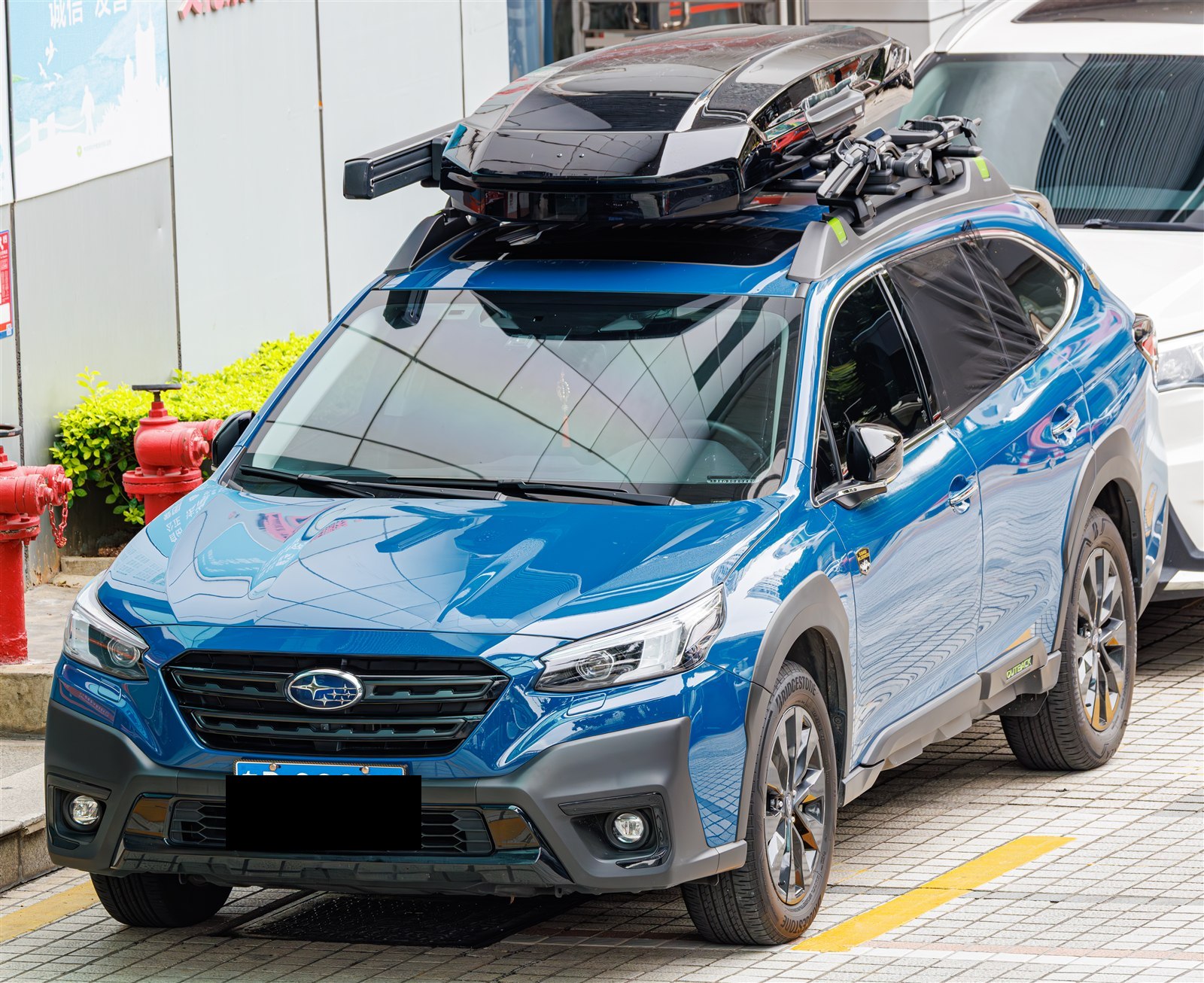
The Crosstrek’s smaller size and lower profile help minimize drag, but a cargo box also represents a larger share of its total frontal area, so losses can still be noticeable on the highway. The Forester’s taller shape gives it excellent interior space but exposes the box to more airflow, so fuel economy losses tend to be more apparent, especially with larger or taller boxes. The Outback’s longer, lower-profile roof generally works well with cargo boxes, letting longer, lower-profile boxes sit more effectively. No model consistently loses the least MPG — box shape and driving speed matter more than which Subaru you drive, and a streamlined setup keeps the impact reasonable across all three.
Should You Remove It When Not in Use?
Many owners leave the box installed year-round for convenience, but it affects fuel economy, wind noise, garage clearance, and overall height every day it’s on, not just on trips. Others remove it when not needed to cut wind noise, improve efficiency, and simplify parking and garage access. The right call usually comes down to how often you actually use the extra space — and whether you have somewhere practical to store it (garage space, wall mounts, or a ceiling system) when it’s off the car.
Common Mistakes
- Driving faster than necessary. Higher speeds magnify a cargo box’s drag more than the weight inside it ever will.
- Using a larger box than needed. Oversized boxes add drag you don’t need — size to your typical trips, not the occasional one.
- Carrying unnecessary weight. Extra gear still makes the vehicle work harder — keep only what you actually need inside.
- Leaving unused accessories installed. Empty bike racks and kayak carriers still create drag — remove what you’re not using.
Is the Tradeoff Worth It?
Most families accept some MPG loss in exchange for storage that makes it easier to bring strollers, luggage, and outdoor gear without overcrowding the cabin. A cargo box frees up interior space so you don’t have to pack as tightly, and moving bulky items to the roof gives passengers more legroom and a less cluttered cabin — a real comfort upgrade on long drives. For most Crosstrek, Forester, and Outback owners, that added versatility is worth more than squeezing out a few extra MPG. Speed matters more than weight, a properly sized box keeps the penalty modest, and for most owners, convenience simply outweighs the cost.
FAQs
How much MPG does a cargo box reduce?
Most owners see a small reduction, with highway driving showing the biggest impact.
Does highway speed affect fuel economy more than city driving?
Yes — higher speeds have a much greater effect on MPG than city driving does.
Do larger cargo boxes reduce MPG more?
Generally yes, though box shape and height often matter more than raw capacity.
Does weight or aerodynamics matter more?
Aerodynamics usually has the bigger impact.
Should I remove my cargo box when not using it?
For many owners, yes — removing it improves MPG and reduces wind noise.
Which Subaru loses the most MPG with a cargo box?
There’s no consistent answer — box design and driving speed matter more than the vehicle itself.
Are cargo boxes worth the fuel economy penalty?
For most owners, yes — the added storage and passenger comfort usually outweigh a modest MPG hit.
Do crossbars affect MPG too?
Yes — crossbar shape and exposed overhang both contribute to additional drag.
Final Thoughts
Cargo boxes do affect MPG, but for most Crosstrek, Forester, and Outback owners, the tradeoff is worth it. The best setup depends on how you use your Subaru — choosing the right box size and shape usually matters more than chasing maximum fuel economy.
Related Guides
• How to Stop Cargo Box Wind Noise
• How Far Forward Should a Cargo Box Sit?
• Cargo Box Height Garage Clearance Guide
• Best Cargo Box for Subaru Outback
Leave a Reply