Tag: All Models

  • Subaru Camping Storage Ideas

    Disclosure: This article contains affiliate links. I may earn a commission at no extra cost to you.

    Our Interior Storage Ideas for Subaru guide covers everyday storage. Camping storage is a different problem — it’s not about daily clutter, it’s about organizing enough gear for a multi-day trip so you’re not digging through everything every time you need one item.

    Quick Picks

    • Best for category separation: Collapsible storage bins — one per gear category, flattens down for the drive home.
    • Best for fragile or heavy gear: Hard storage bins — worth the extra space for cookware and anything that needs real protection.
    • Best cooler: RTIC cooler — keeps food separate from everything else, which matters more on a multi-day trip than it does for daily use.

    Separate by Category, Not by Person

    Organizing camping gear by category — cook gear, sleep gear, clothes, safety and first aid — works better than organizing it by person, because most tasks at a campsite involve one category at a time. Making dinner means you need the cook bin, not everyone’s individual bags. This is the single biggest organizational shift from everyday storage, where “whose bag is this” actually matters.

    Keep Wet and Dirty Gear Away From Everything Else

    Muddy boots, a wet tent, or used cookware shouldn’t share space with clean clothes or dry sleeping gear — a dedicated bin or bag for anything wet or dirty, packed separately from day one, saves a genuinely unpleasant cleanup later. This matters more on the way home than on the way out, since gear picks up moisture and dirt over the course of a trip.

    Pack for Setup Speed, Not Just Capacity

    What you need first at a campsite (tent, cook gear) should be the easiest to reach, not buried under what you need last (sleeping bags, pajamas). Packing in reverse-use order — last-needed items in first, first-needed items in last, closest to the hatch — cuts real time off setup at the site.

    What Goes Where for a Quick Morning Departure

    Whatever gets used last before leaving a site — the tent, sleeping bags, cook gear from breakfast — inevitably gets packed last and ends up on top. Planning for that instead of fighting it (leaving room near the hatch specifically for these last-packed items) makes breaking camp faster than trying to force everything back into its “ideal” original spot.

    Common Mistakes

    • Organizing by person instead of by category. Most campsite tasks need one gear category, not one person’s full bag.
    • Packing wet or dirty gear next to clean gear. Separate them from the start rather than sorting it out later.
    • Ignoring use-order when packing. What you need first at the site should be easiest to reach, not buried under everything else.

    FAQs

    What’s the best way to organize gear for a camping trip?
    By category (cook, sleep, clothes, safety) rather than by person — it matches how gear actually gets used at a campsite.

    Should wet gear go in the same bin as everything else?
    No — keep it separate from day one to avoid a bigger cleanup problem by the end of the trip.

    How is camping storage different from everyday storage?
    Camping storage is about categories and use-order for a multi-day trip; everyday storage is about quick access to a handful of small daily items. See our Interior Storage Ideas for Subaru guide for the everyday version.

    Final Thoughts

    Camping storage works best organized by category and packed in reverse-use order — not by trying to fit everything as tightly as possible. A little planning before the trip saves real time at the campsite, both setting up and breaking camp.
    Related Guides

  • Best Awning for Subaru

    Disclosure: This article contains affiliate links. I may earn a commission at no extra cost to you.

    A roof-mounted awning solves a problem tents don’t: shade and dry space right next to the vehicle, up in minutes, without needing a separate structure. It’s one of the cheaper roof-rack accessories that makes a real difference at a campsite — mainly because it turns the area next to the car into usable space instead of just parking.

    Quick Picks

    What an Awning Actually Solves

    Shade and weather protection right at the vehicle — cooking, eating, or just sitting without full sun or a surprise rain shower ending the afternoon. It’s not a replacement for a tent; it’s a covered space that works whether you’re sleeping in a roof tent, a ground tent, or just parked for the day.

    Mounting and Weight Considerations

    Most awnings mount directly to crossbars, so the first real question isn’t which awning to buy — it’s whether your crossbars can support one. Awnings are lighter than roof tents, so this is less often a dealbreaker than it is for a roof tent, but it’s still worth checking your specific crossbar rating before ordering. See our Roof Weight Limits guide if you’re not sure.

    Size and Coverage

    Awnings are typically sold by coverage area, roughly matched to how many people need to fit underneath. A smaller awning is easier to deploy solo and puts less strain on the mounting hardware; a larger one covers a family or a shared group but takes a bit more effort to set up and needs more clearance to fully extend.

    Setup Time and Wind

    Most pull-out awnings deploy in a few minutes with basic guy-lines and stakes for stability — not a permanent installation, but not instant either. Wind is the real practical limit: awnings need to come down (or at least be securely staked) in genuinely windy conditions, since the same large flat surface that provides shade also catches wind like a sail.

    Common Mistakes

    • Skipping the crossbar weight check. Cheap and light doesn’t mean “mounts on anything” — confirm compatibility first.
    • Buying the largest awning available “just in case.” A bigger awning means more setup effort and more surface area to manage in wind, not just more shade.
    • Leaving it deployed in high wind. The most common cause of awning damage or a bent mounting arm.

    FAQs

    Do I need a roof tent to use an awning?
    No — an awning works independently, whether you’re sleeping in a roof tent, a ground tent, or not camping overnight at all.

    Will an awning fit on factory crossbars?
    Usually, as long as the crossbars are rated for the awning’s weight — check the specific rating rather than assuming.

    How long does it take to set up an awning?
    A few minutes for most pull-out styles, including stakes and guy-lines for stability.

    Is an awning worth it if I already have a tent?
    Yes for most camping styles — a tent covers sleeping, an awning covers everything you do while awake at the site (cooking, sitting, waiting out rain).

    Final Thoughts

    An awning is one of the cheaper roof-rack accessories that makes a genuine difference at a campsite — shade and dry space in a few minutes, with no impact on how you sleep. Confirm crossbar compatibility first, pick a size that matches your actual group, and it’s a low-effort addition to almost any camping setup.

    Related Guides

  • Roof Tent vs Ground Tent for Subaru Owners

    Disclosure: This article contains affiliate links. I may earn a commission at no extra cost to you.

    A roof tent and a ground tent solve the same problem — somewhere to sleep on a camping trip — in genuinely different ways, and the right choice depends more on how often you camp and what your crossbars can carry than on which one is objectively “better.” Neither wins outright; they trade off against each other in predictable ways.

    Quick Picks

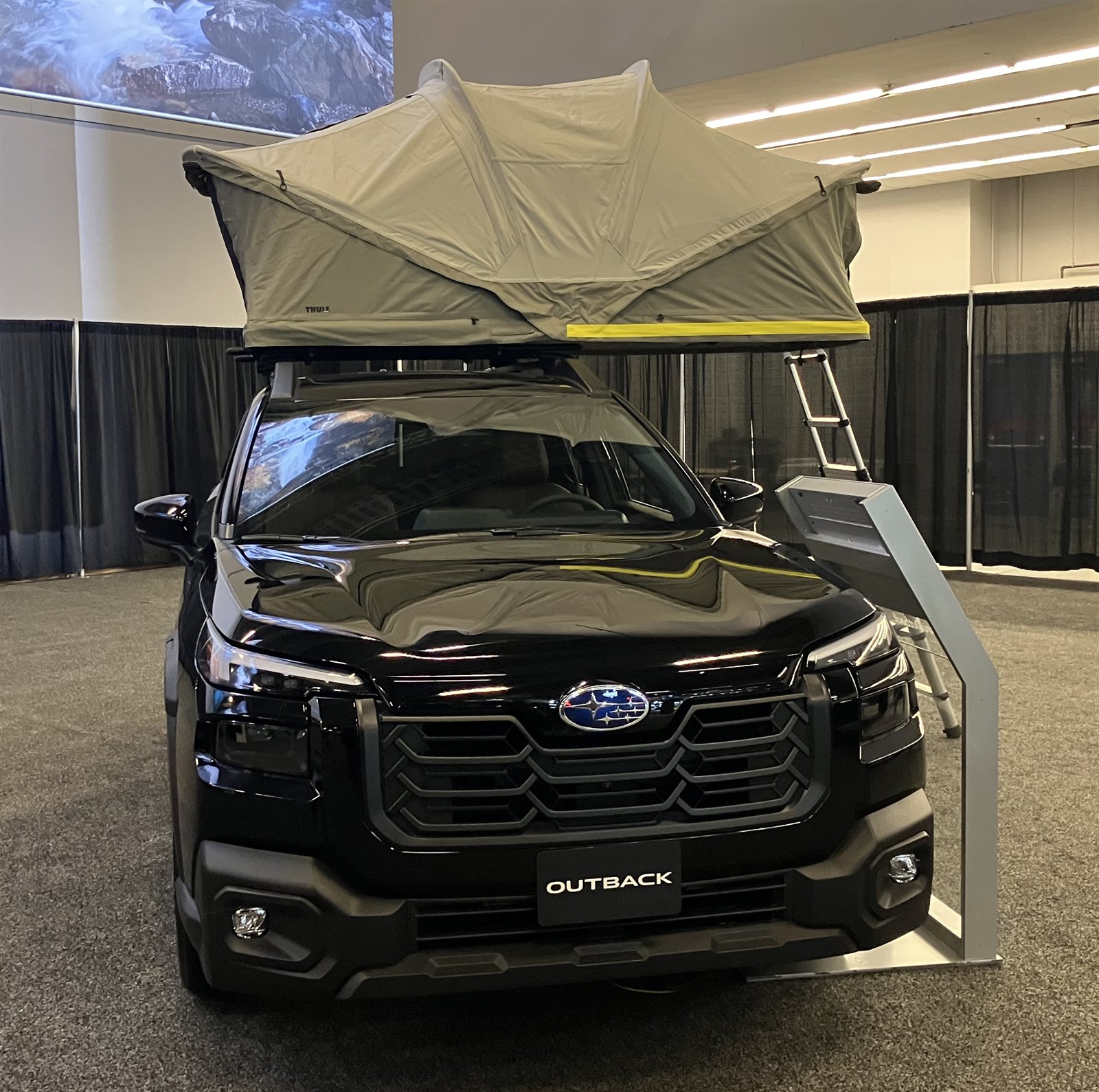
    Black Subaru Outback with a Thule roof tent fully deployed, ladder extended
    Photo: Bull-Doser, public domain, via Wikimedia Commons

    Setup Speed and Effort

    Roof tents win this category outright — most fold out in under a minute, no stakes, no finding level ground. A ground tent, even an “instant” cabin-style one, takes longer to pitch and requires a reasonably flat, clear site. If you camp often enough that setup time adds up, or you tend to arrive at a site after dark, that difference is worth more than it sounds.

    Cost and Commitment

    Ground tents are cheaper to buy and cheaper to replace if damaged. Roof tents run several times the cost of a comparable ground tent, plus they need compatible crossbars rated for the weight — not a given on every setup. For occasional camping, a ground tent is the lower-risk way to find out how much you actually enjoy it before committing to roof-tent money.

    Comfort and Capacity

    Ground tents scale to a family more easily and cheaply — a 6-person cabin tent costs a fraction of a roof tent rated for the same number of sleepers. Roof tents are typically sized for 2-3 people, which makes them a better fit for couples or smaller families than for a full family trip. Roof tents do have one real comfort edge: you’re off the ground, away from rocks, roots, and crawling insects, with a built-in mattress that doesn’t need separate padding.

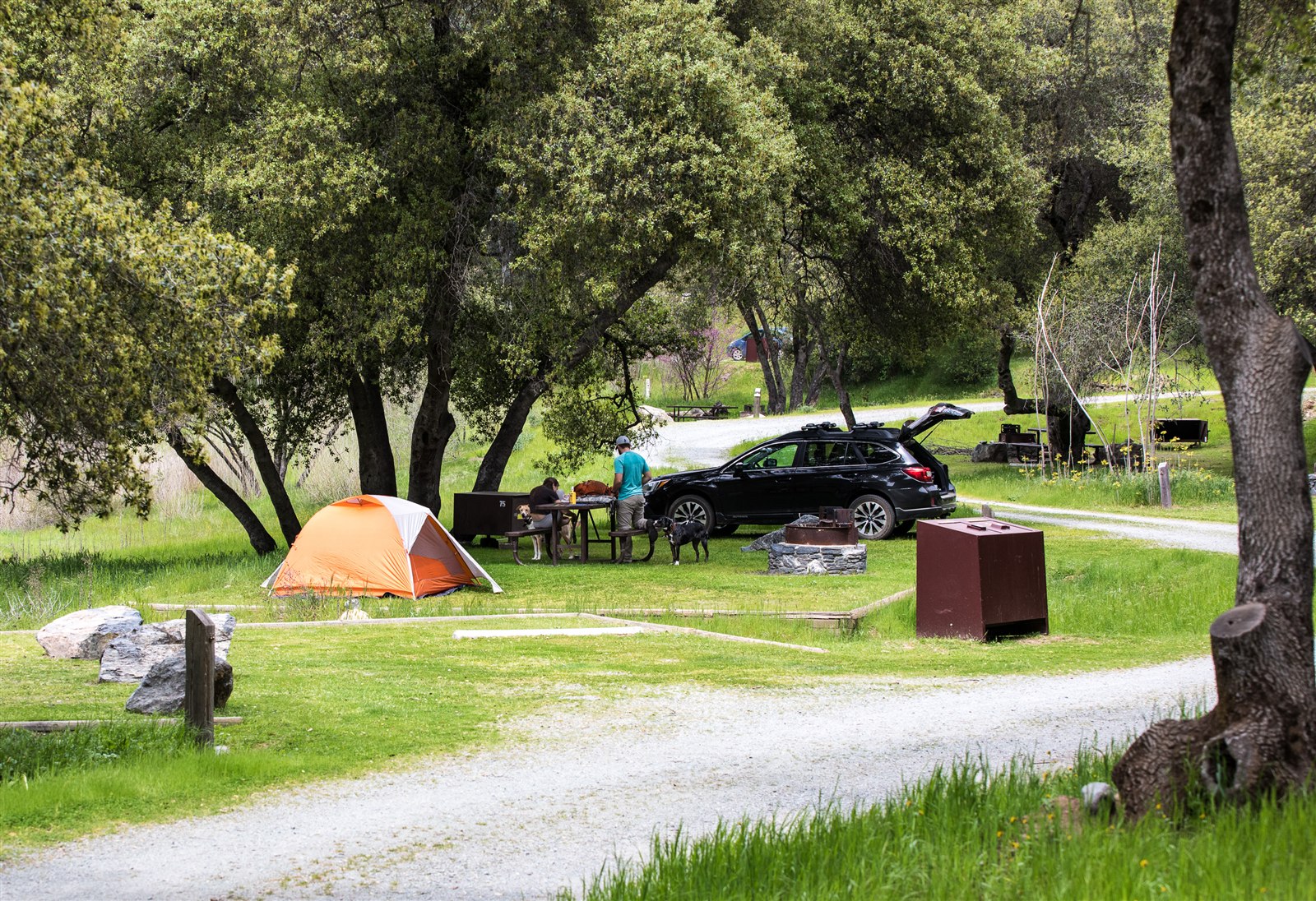
    Subaru Outback parked at a campsite with a ground tent and dogs nearby

    What It Does to Your Daily Driving

    A roof tent, once mounted, tends to stay mounted — most are heavy enough that removing and reinstalling it for every trip isn’t realistic. That means daily driving with it on: real fuel economy loss, wind noise, and a permanent height increase to remember at parking garages and drive-thrus. A ground tent has zero impact on daily driving since it lives in the trunk between trips, not on the roof.

    Which One Actually Fits Your Camping Style

    Roof TentGround Tent
    Setup speedFastestSlower, needs a clear site
    CostHigh, plus rated crossbarsLow
    Best group size2-3 peopleScales to families cheaply
    Daily driving impactReal (stays mounted)None
    Best forFrequent campers, couplesOccasional trips, families, first-time buyers

    Common Mistakes

    • Buying a roof tent before confirming crossbar weight ratings. Not every crossbar setup can support one — check before buying, not after.
    • Choosing a roof tent for a family of four. Most are sized for 2-3 people; a ground tent handles a larger family for less money.
    • Underestimating the daily-driving tradeoff. A mounted roof tent isn’t a weekend-only accessory — it affects every drive until it comes off.

    FAQs

    Is a roof tent worth it for occasional camping?
    Usually not — the cost and daily-driving tradeoff pay off more for frequent campers than occasional ones. A ground tent is the lower-commitment starting point.

    Can any Subaru support a roof tent?
    Only with crossbars rated for the tent’s weight — check your specific crossbar and roof weight limits before buying. See our Roof Weight Limits guide.

    Does a roof tent hurt gas mileage?
    Yes, noticeably, since it typically stays mounted rather than coming off between trips — similar to any large roof-mounted accessory.

    Which is better for a family?
    A ground tent, in almost every case — cheaper, sized for more people, and no daily-driving tradeoff.

    Final Thoughts

    Neither option is a clear upgrade over the other — they fit different camping styles. Frequent campers and couples get real value from a roof tent’s speed and comfort. Occasional campers and families are usually better served by a ground tent’s lower cost, larger capacity, and zero impact on daily driving.

    Related Guides

  • Subaru Family Camping Setup

    Disclosure: This article contains affiliate links. I may earn a commission at no extra cost to you.

    Our Subaru Outback Car Camping Setup guide covers sleeping inside the vehicle — a setup that works well for one or two people. Once kids are involved, that changes: three or four people generally don’t fit inside any of the three models comfortably, so most families end up using a tent for sleeping and the Subaru as the gear hauler and basecamp support instead. That’s a different setup with different priorities.

    Quick Picks

    • Best family tent: CORE Instant Cabin Tent — sets up fast, which matters more with kids waiting than tent quality alone.
    • Best cooler: Soft-sided cooler — packs around other gear better than a rigid cooler once the trunk fills up with a family’s worth of stuff.
    • Best for gear separation: Collapsible storage bins — one per person or per category keeps a family’s gear from turning into one undifferentiated pile.
    Subaru Outback parked at a campsite with a tent and dogs nearby

    Why Most Families Need a Tent, Not Just the Vehicle

    Sleeping inside the vehicle works because it’s compact — exactly the quality that makes it a poor fit for a family. Once you’re past two people, the math stops working: there isn’t enough flat sleeping surface in any of the three models, even with seats folded. A tent solves this cleanly and also separates “sleeping space” from “gear space,” which matters more with a family’s volume of stuff than it does for a solo trip. See our Roof Tent vs Ground Tent for Subaru Owners guide for how to choose between the two.

    Keeping Kids’ Gear Separate From Adult Gear

    A family’s camping gear is really several smaller kits — one per kid, plus shared gear, plus adult gear — and mixing them into one pile is where most on-site frustration comes from. A dedicated bin per person or per category (clothes, sleep gear, toys) means anyone can grab exactly what they need without unpacking everything else first.

    Cooking and Eating for a Group vs Solo Cooking

    Solo or two-person cooking is forgiving — a single pot and a cooler cover most of it. Feeding a family means more food volume, more dishes, and more actual cook time, which usually means a dedicated camp kitchen setup (stove, prep space, a real cooler) rather than the minimal single-burner approach that works fine for a solo trip. Budget more setup time for this than you’d expect on the first family trip — it gets faster with repetition.

    Setting Up a Basecamp the Subaru Can Support

    With the vehicle freed from being a sleeping space, it becomes a genuinely useful basecamp anchor instead — parked with the hatch as covered shade or shelter, gear staged in the cargo area within reach, and the roof rack available for a supplemental awning if the site doesn’t offer natural shade. See our Best Awning for Subaru guide if that’s part of your setup.

    What Changes Across Outback, Forester, and Crosstrek for Family Camping

    Since the vehicle is now a gear hauler rather than a bedroom, the differences that mattered for sleeping-in-the-car camping matter less here. The Outback’s longer floor is still the most useful for staging a family’s volume of gear before it gets distributed to the tent. The Forester’s height makes accessing stacked bins from the hatch easier without crouching. The Crosstrek can support a smaller family, but its limited volume means less margin for the “bring extra just in case” gear most family trips accumulate.

    Common Mistakes

    • Trying to sleep a family of four inside the vehicle. It doesn’t work comfortably past two people — plan for a tent from the start.
    • Mixing everyone’s gear into one pile. Slows down every single task at the campsite, not just setup.
    • Underestimating cook time for a group. A single-burner solo setup isn’t enough once you’re feeding more than two people.

    FAQs

    Can a family sleep inside a Subaru while camping?
    Comfortably, generally not past two people. Most families use a tent for sleeping and the vehicle for gear and basecamp support.

    Should we get a roof tent or a ground tent for family camping?
    Depends on setup speed, budget, and how often you’ll use it — see our full Roof Tent vs Ground Tent breakdown.

    What’s the biggest difference between solo car camping and family camping?
    The vehicle’s role changes — from sleeping space to gear hauler and basecamp support — which changes almost everything else about the setup.

    Final Thoughts

    Family camping isn’t a bigger version of solo car camping — it’s a different setup built around a tent and a basecamp instead of sleeping inside the vehicle. Once that shift is made, the actual gear and organization choices get a lot more straightforward.

    Related Guides

  • How to Pack a Subaru for a Family Vacation

    Disclosure: This article contains affiliate links. I may earn a commission at no extra cost to you.

    Having the right gear and packing it correctly are two different problems. Most family packing frustration isn’t a missing product — it’s the order things go in. Load the wrong item first and everything after it either gets crushed, buried, or has to come back out. This is about sequence, not shopping.

    Pack Heavy, Rarely-Needed Items First

    Whatever you won’t touch until you arrive — the cooler that’s staying sealed, a suitcase that isn’t being opened mid-drive — goes in first, against the back seats. It’s the heaviest, least-accessed layer, and putting it in last means it ends up on top of things you actually need during the trip.

    Keep Kid Essentials Accessible, Not Buried

    Snacks, a change of clothes, entertainment, and anything else that gets requested mid-drive should go in last, closest to the hatch or within reach of the back seat — not underneath the heavy layer. A backseat organizer solves this more reliably than trying to remember where you packed something.

    Load Passengers Last, Not First

    Getting everyone buckled in before the trunk is actually finished is one of the most common causes of re-packing mid-departure — something doesn’t fit, and now it has to get shuffled around while people are already waiting in their seats. Finish loading and confirm everything fits before anyone gets in.

    Leave Room You’ll Actually Use on the Way Home

    Souvenirs, dirty laundry, and gear that doesn’t pack down the same way it did on the way there all take up more room on the return trip. Packing the car to its absolute limit on the way out often means something doesn’t fit on the way back — leaving a little slack is worth more than maximizing outbound capacity.

    What This Looks Like Differently Across the Three Models

    The Outback’s long floor rewards packing back-to-front in layers, since there’s enough length to actually stack a heavy layer and an accessible layer without them competing for the same space. The Forester’s extra height rewards vertical stacking — heavy items on the floor, lighter items stacked above rather than spread out. The Crosstrek needs the most disciplined sequence of the three: there’s little room to fix a packing mistake mid-trip, so getting the order right the first time matters more than in either of the other two models.

    Common Mistakes

    • Packing in the order things get carried out of the house. That’s rarely the order you actually need things in the car — plan the load order separately from the pack order.
    • Burying kid essentials under heavier luggage. Leads to full re-packs mid-trip when something is needed and can’t be reached.
    • Packing to 100% capacity on the way out. Leaves no room for what accumulates on the way home.

    FAQs

    What should go in the car first?
    The heaviest, least-needed items — things that won’t be touched again until you arrive.

    How do I keep kids’ stuff from getting buried?
    Pack it last, closest to reach, or use a dedicated backseat organizer so it isn’t competing for space with luggage at all.

    Should I pack the car before or after everyone gets in?
    Before. Finishing the trunk first avoids the mid-departure re-pack that happens when something doesn’t fit with everyone already seated.

    Does the packing order really change between Outback, Forester, and Crosstrek?
    The principle is the same across all three, but the margin for error is smallest in the Crosstrek — its tighter cargo area punishes a wrong packing order more than the Outback’s longer floor does.

    Final Thoughts

    Most family packing problems aren’t a gear problem — they’re an order-of-operations problem. Heavy and rarely-needed items first, kid essentials last, passengers only once the trunk is actually finished, and a little slack left for the trip home. That sequence solves more than any organizer will on its own.

    Related Guides

  • Best Weekend Trip Setup for a Subaru

    Disclosure: This article contains affiliate links. I may earn a commission at no extra cost to you.

    A weekend trip doesn’t need a road-trip setup — it needs speed. Two or three days of gear is a fraction of what a week-long trip requires, and the biggest mistake most people make is over-preparing: dragging out packing cubes, cargo organizers, and a full system for a load that would fit in two bags. The goal for a short trip is minimizing the time spent packing and unpacking, not maximizing what the vehicle can carry.

    Why Weekend Trips Don’t Need a Full Road-Trip Setup

    A full road-trip setup earns its complexity over several days — the extra organization pays for itself because you’re living out of the vehicle for a while. Over two or three days, that same setup is mostly overhead: time spent organizing gear you’ll only touch once or twice before you’re already unpacking it again at home. For a weekend trip, simple beats optimized.

    What Actually Goes in the Car for 2-3 Days

    One soft duffel bag per traveler is usually enough — soft bags compress into whatever space is left rather than claiming a fixed footprint the way rigid luggage does. A single day bag or backpack for anything you’ll want without digging through the main bag (phone charger, snacks, a jacket) covers the rest. That’s genuinely most of what a weekend trip needs.

    Skip These for a Weekend Trip

    • A full packing-cube system. Genuinely useful for a week or longer; overkill for sorting two days of clothes.
    • A roof cargo box. If it doesn’t fit in the trunk for a weekend, the trip probably needs re-planning, not more roof storage.
    • Multiple coolers or bins. One soft-sided cooler covers most weekend food/drink needs without eating into passenger space.

    The One Thing Worth Setting Up Even for a Short Trip

    A grab-and-go bag that lives in the car (or by the door, ready to load) with the basics already inside — phone charger, a phone mount, a reusable water bottle — removes the “what am I forgetting” scramble that eats up more time on a short trip than actual packing does. It’s the one piece of weekend-trip prep that’s worth doing once and reusing every time, rather than rebuilding it before every trip.

    Common Mistakes

    • Treating a weekend trip like a road trip. More organization than the trip actually needs just adds packing time without adding real benefit.
    • Packing rigid luggage for a short trip. Soft bags compress better and take up less committed space for a load this size.
    • Rebuilding the same grab-and-go kit every single trip. Set it up once and leave it packed between trips.

    FAQs

    Do I need a roof box for a weekend trip?
    Almost never. If a 2-3 day trip’s gear doesn’t fit in the trunk, the issue is usually what’s being packed, not a lack of cargo space.

    What’s the fastest way to pack for a weekend trip?
    One soft bag per person plus a shared day bag for essentials — resist the urge to bring the full road-trip organization system for a short trip.

    Is it worth keeping a permanent grab-and-go bag in the car?
    Yes — it’s the single highest-leverage thing on this list, since it removes the pre-trip scramble every single time instead of just once.

    Final Thoughts

    Weekend trips reward simplicity, not optimization. A soft bag, a day bag, and a grab-and-go kit that stays packed between trips covers almost everyone’s actual needs — save the full organizational system for the trips long enough to need it.

    Related Guides