Disclosure: This article contains affiliate links. I may earn a commission at no extra cost to you.
This site covers a lot of family-relevant gear across different articles. This one pulls the highest-value picks into a single starting point for families specifically, with the reasoning for why each one matters more when kids are regularly in the vehicle.
Backseat Organization Comes First
A hanging backseat organizer is the single highest-impact accessory for families specifically — it contains snacks, toys, and loose items in one place instead of letting them migrate under seats, which cuts more actual cleanup time than any other single purchase. See our Best Backseat Organizers for Subaru guide for the full lineup.
Protect the Seats You’ll Reinstall for Years
A car seat gets installed and reinstalled constantly over years of use, and that repeated pressure and buckle contact wears factory upholstery faster than normal use would. A car seat protector takes that wear instead — cheap relative to the years of protection it provides. See our Best Car Seat Protector for Subaru guide.
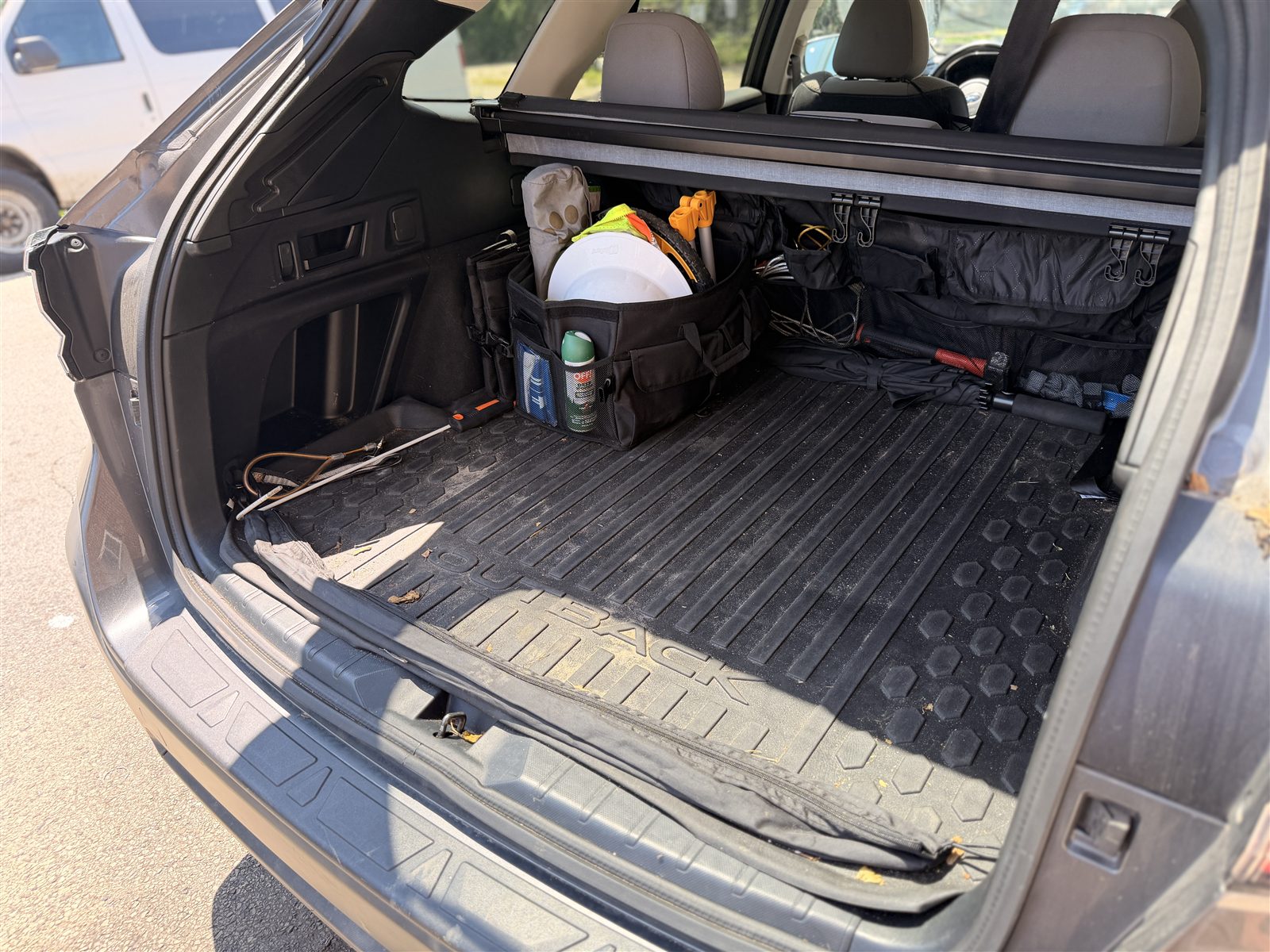
A Trunk Organizer That Handles Groceries and Sports Gear
Families generate more trunk traffic than almost any other use case — groceries, sports equipment, school pickup gear, all cycling through regularly. A dedicated trunk organizer keeps it from becoming one undifferentiated pile. See our Subaru Grocery Hauling Setup guide for more.
Sun Protection for Kids in Back Seats
Kids in rear-facing or booster seats can’t easily reposition themselves out of direct sun the way an adult can. A rear window sunshade is a small, cheap fix for a genuinely common complaint on longer drives.
Common Mistakes
Buying road-trip-scale organization for daily family use. See our Subaru Daily Driver Setup guide — daily needs and trip needs call for different gear.
Skipping the car seat protector. Small upfront cost against years of repeated installation wear.
Underestimating how fast trunk clutter accumulates with kids. A dedicated organizer pays for itself quickly once in place.
FAQs
What’s the single best accessory for a family Subaru? A backseat organizer — it has the biggest day-to-day impact on cleanup and general clutter of anything on this list.
Is a car seat protector really necessary? Not strictly necessary, but genuinely worth it given how much wear repeated car seat installation puts on factory upholstery over years of use.
Final Thoughts
Families put a Subaru through more daily wear and clutter than almost any other use case — a backseat organizer, a car seat protector, a trunk organizer, and a sunshade cover most of the real recurring friction points for a relatively small combined cost.
Disclosure: This article contains affiliate links. I may earn a commission at no extra cost to you.
Having the right gear and packing it correctly are two different problems. Most family packing frustration isn’t a missing product — it’s the order things go in. Load the wrong item first and everything after it either gets crushed, buried, or has to come back out. This is about sequence, not shopping.
Pack Heavy, Rarely-Needed Items First
Whatever you won’t touch until you arrive — the cooler that’s staying sealed, a suitcase that isn’t being opened mid-drive — goes in first, against the back seats. It’s the heaviest, least-accessed layer, and putting it in last means it ends up on top of things you actually need during the trip.
Keep Kid Essentials Accessible, Not Buried
Snacks, a change of clothes, entertainment, and anything else that gets requested mid-drive should go in last, closest to the hatch or within reach of the back seat — not underneath the heavy layer. A backseat organizer solves this more reliably than trying to remember where you packed something.
Load Passengers Last, Not First
Getting everyone buckled in before the trunk is actually finished is one of the most common causes of re-packing mid-departure — something doesn’t fit, and now it has to get shuffled around while people are already waiting in their seats. Finish loading and confirm everything fits before anyone gets in.
Leave Room You’ll Actually Use on the Way Home
Souvenirs, dirty laundry, and gear that doesn’t pack down the same way it did on the way there all take up more room on the return trip. Packing the car to its absolute limit on the way out often means something doesn’t fit on the way back — leaving a little slack is worth more than maximizing outbound capacity.
What This Looks Like Differently Across the Three Models
The Outback’s long floor rewards packing back-to-front in layers, since there’s enough length to actually stack a heavy layer and an accessible layer without them competing for the same space. The Forester’s extra height rewards vertical stacking — heavy items on the floor, lighter items stacked above rather than spread out. The Crosstrek needs the most disciplined sequence of the three: there’s little room to fix a packing mistake mid-trip, so getting the order right the first time matters more than in either of the other two models.
Common Mistakes
Packing in the order things get carried out of the house. That’s rarely the order you actually need things in the car — plan the load order separately from the pack order.
Burying kid essentials under heavier luggage. Leads to full re-packs mid-trip when something is needed and can’t be reached.
Packing to 100% capacity on the way out. Leaves no room for what accumulates on the way home.
FAQs
What should go in the car first? The heaviest, least-needed items — things that won’t be touched again until you arrive.
How do I keep kids’ stuff from getting buried? Pack it last, closest to reach, or use a dedicated backseat organizer so it isn’t competing for space with luggage at all.
Should I pack the car before or after everyone gets in? Before. Finishing the trunk first avoids the mid-departure re-pack that happens when something doesn’t fit with everyone already seated.
Does the packing order really change between Outback, Forester, and Crosstrek? The principle is the same across all three, but the margin for error is smallest in the Crosstrek — its tighter cargo area punishes a wrong packing order more than the Outback’s longer floor does.
Final Thoughts
Most family packing problems aren’t a gear problem — they’re an order-of-operations problem. Heavy and rarely-needed items first, kid essentials last, passengers only once the trunk is actually finished, and a little slack left for the trip home. That sequence solves more than any organizer will on its own.
Disclosure: This article contains affiliate links. I may earn a commission at no extra cost to you.
A weekend trip doesn’t need a road-trip setup — it needs speed. Two or three days of gear is a fraction of what a week-long trip requires, and the biggest mistake most people make is over-preparing: dragging out packing cubes, cargo organizers, and a full system for a load that would fit in two bags. The goal for a short trip is minimizing the time spent packing and unpacking, not maximizing what the vehicle can carry.
Why Weekend Trips Don’t Need a Full Road-Trip Setup
A full road-trip setup earns its complexity over several days — the extra organization pays for itself because you’re living out of the vehicle for a while. Over two or three days, that same setup is mostly overhead: time spent organizing gear you’ll only touch once or twice before you’re already unpacking it again at home. For a weekend trip, simple beats optimized.
What Actually Goes in the Car for 2-3 Days
One soft duffel bag per traveler is usually enough — soft bags compress into whatever space is left rather than claiming a fixed footprint the way rigid luggage does. A single day bag or backpack for anything you’ll want without digging through the main bag (phone charger, snacks, a jacket) covers the rest. That’s genuinely most of what a weekend trip needs.
Skip These for a Weekend Trip
A full packing-cube system. Genuinely useful for a week or longer; overkill for sorting two days of clothes.
A roof cargo box. If it doesn’t fit in the trunk for a weekend, the trip probably needs re-planning, not more roof storage.
Multiple coolers or bins. One soft-sided cooler covers most weekend food/drink needs without eating into passenger space.
The One Thing Worth Setting Up Even for a Short Trip
A grab-and-go bag that lives in the car (or by the door, ready to load) with the basics already inside — phone charger, a phone mount, a reusable water bottle — removes the “what am I forgetting” scramble that eats up more time on a short trip than actual packing does. It’s the one piece of weekend-trip prep that’s worth doing once and reusing every time, rather than rebuilding it before every trip.
Common Mistakes
Treating a weekend trip like a road trip. More organization than the trip actually needs just adds packing time without adding real benefit.
Packing rigid luggage for a short trip. Soft bags compress better and take up less committed space for a load this size.
Rebuilding the same grab-and-go kit every single trip. Set it up once and leave it packed between trips.
FAQs
Do I need a roof box for a weekend trip? Almost never. If a 2-3 day trip’s gear doesn’t fit in the trunk, the issue is usually what’s being packed, not a lack of cargo space.
What’s the fastest way to pack for a weekend trip? One soft bag per person plus a shared day bag for essentials — resist the urge to bring the full road-trip organization system for a short trip.
Is it worth keeping a permanent grab-and-go bag in the car? Yes — it’s the single highest-leverage thing on this list, since it removes the pre-trip scramble every single time instead of just once.
Final Thoughts
Weekend trips reward simplicity, not optimization. A soft bag, a day bag, and a grab-and-go kit that stays packed between trips covers almost everyone’s actual needs — save the full organizational system for the trips long enough to need it.
Disclosure: This article contains affiliate links. I may earn a commission at no extra cost to you.
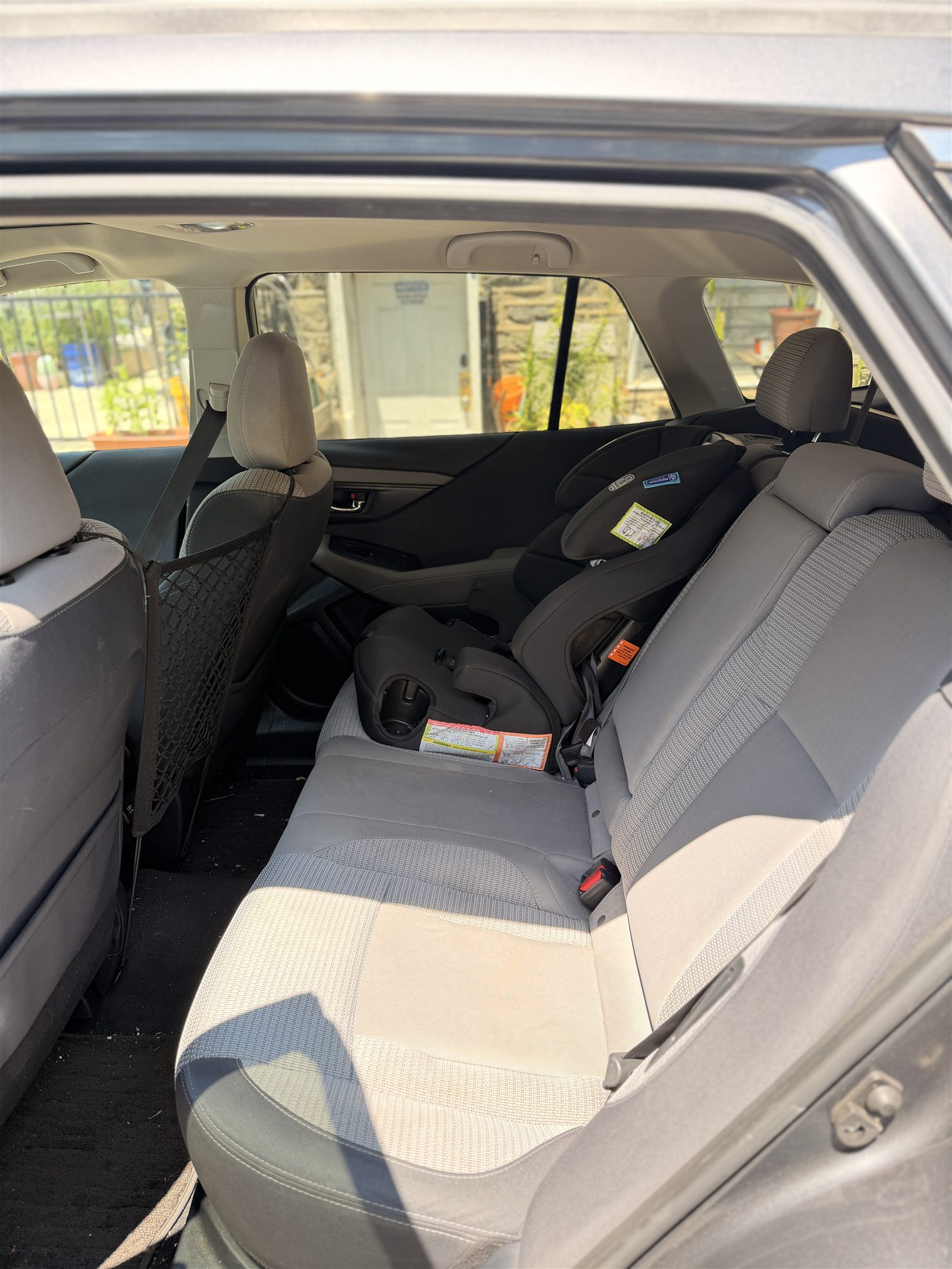
Many Crosstrek, Forester, and Outback owners spend years transporting children and living with car seats installed full-time. Over time, spills, crumbs, dirt, and seat wear can add up.
A car seat protector helps create a barrier between the child seat and the upholstery, making cleanup easier and reducing everyday wear.
The right choice depends on your seat material, child-seat setup, and how your Subaru is used. This guide focuses on the features and protection that matter most in real-world family use.
A child car seat installed in the rear seat — the kind of everyday wear a seat protector is meant to prevent.
Why Subaru Owners Use Car Seat Protectors
Protecting Against Seat Compression
Child car seats can place significant pressure on seat cushions, especially when installed for months or years at a time. Many Subaru owners use car seat protectors to help distribute that pressure across a larger area.
While a protector cannot eliminate compression entirely, it can help reduce concentrated wear and keep the seating surface looking better over time.
Preventing Food And Drink Messes
Families quickly learn that snacks, juice boxes, water bottles, and spilled drinks often end up around child seats. Once food and liquids work their way into seat seams, cleanup becomes more difficult.
A car seat protector creates an additional barrier that can help contain spills and make routine cleaning faster and easier.
Reducing Dirt And Mud Transfer
Children frequently bring dirt, sand, grass, and mud into the vehicle on shoes, clothing, and gear. These materials often collect around the base of the car seat and can become embedded in the upholstery.
A protector helps keep debris off the seat surface and makes it easier to remove accumulated dirt during regular cleaning.
Preserving Long-Term Interior Condition
Many Crosstrek, Forester, and Outback owners plan to keep their vehicles for years. Protecting the seats from pressure marks, stains, moisture, and everyday wear can help maintain the interior’s appearance over time.
For most families, a car seat protector is less about adding features and more about reducing long-term wear in one of the highest-use areas of the vehicle.
Do You Actually Need A Car Seat Protector?
Cloth Seat Considerations
Cloth seats are generally more resistant to scratches than leather, but they can still experience compression, stains, and embedded dirt beneath a child seat. A car seat protector can make cleanup easier and help reduce long-term wear from daily family use.
For owners with young children who frequently eat and drink in the vehicle, a protector is often worthwhile.
Leather Seat Considerations
Leather and leather-trimmed seats are more susceptible to pressure marks, scuffs, and surface wear from car seats. A protector can help reduce direct contact between the child seat and the upholstery while also containing spills and debris.
Many Subaru owners with leather interiors use protectors primarily to preserve the seat’s appearance over time.
New Vehicle Ownership
Owners of newer Crosstreks, Foresters, and Outbacks often want to minimize wear from the start. Installing a protector before a car seat goes in can help prevent stains, impressions, and dirt buildup before they become permanent.
This is especially appealing for owners who plan to keep the vehicle for many years.
Long-Term Family Use
Families with multiple children may have car seats installed continuously for years. Over time, repeated installation, removal, and everyday use can take a toll on seat surfaces.
In these situations, a car seat protector is often a practical preventative measure that helps keep the interior in better condition throughout years of family use.
Types Of Car Seat Protectors
Full-Seat Protectors
Full-seat protectors cover both the seat cushion and the lower portion of the seatback. They provide broader protection against compression, spills, dirt, and scuff marks.
For families with young children who spend significant time in the vehicle, full-seat designs often offer the most complete coverage.
Seat Base Protectors
Seat base protectors focus only on the area beneath the car seat. They help reduce seat compression and protect against crumbs, spills, and dirt without covering the seatback.
These are often a good choice for owners who want basic protection while maintaining a factory appearance.
Waterproof Protectors
Waterproof protectors add an extra layer of defense against spills, accidents, wet clothing, and muddy shoes. They are especially useful for toddlers and younger children who are more likely to create messes.
For many families, waterproof protection provides one of the biggest practical benefits.
Protectors With Storage Pockets
Some protectors include front-facing storage pockets for wipes, toys, snacks, books, or small travel items. These can improve organization but may add bulk around the seating area.
Storage pockets are most useful for families who frequently travel with young children.
Minimalist Protectors
Minimalist protectors prioritize seat protection without extra features. They are typically thinner, lighter, and less noticeable than larger designs.
For many daily drivers, a simple protector provides enough protection without adding unnecessary complexity.
Which Style Works Best For Most Subaru Owners?
For most Crosstrek, Forester, and Outback owners, a full-seat protector with a durable, easy-to-clean surface offers the best balance of protection and usability.
Families with younger children may benefit from waterproof materials, while owners primarily concerned with seat wear often find a simple minimalist protector handles their needs effectively.
Protector Type
Seat Coverage
Ease Of Cleaning
Storage Features
Best For
Full-Seat Protector
Seat base + lower seatback
Excellent
Usually none
Families wanting maximum protection
Seat Base Protector
Seat base only
Good
None
Basic seat compression protection
Waterproof Protector
Varies by design
Excellent
Sometimes
Toddlers, spills, wet clothing
Protector With Storage Pockets
Usually full coverage
Good
Yes
Road trips and family organization
Minimalist Protector
Basic coverage
Good
None
Owners wanting simple protection
Important Features To Look For
Non-Slip Materials
A car seat protector should stay in place once installed. Non-slip materials help reduce movement between the child seat and the vehicle seat, keeping the setup more stable during daily use.
This is especially important for families that frequently remove and reinstall child seats.
Waterproof Protection
Spills, leaks, wet clothing, and snack accidents are common around child seats. Waterproof materials help prevent moisture from reaching the upholstery and make cleanup much easier.
For many families, waterproof protection is one of the most valuable features.
Easy Cleaning
Child-seat areas tend to collect crumbs, dirt, and sticky messes. Smooth surfaces that can be wiped clean are generally more practical than materials that trap debris.
The easier a protector is to clean, the more likely it is to stay looking good over time.
Seat Coverage
Coverage should match your needs. Larger protectors offer more protection from spills, dirt, and pressure marks, while smaller designs maintain a lower-profile appearance.
Most Subaru owners find that protecting both the seat cushion and lower seatback provides the best balance.
Compatibility With Child Seats
Not every protector works equally well with every child seat. The protector should allow the car seat to sit securely and should not interfere with proper installation.
Before purchasing, verify that the protector is designed for use with child seats and fits the seating layout of your Crosstrek, Forester, or Outback.
Infant Seats vs Convertible Seats
Infant Carrier Setups
Infant carrier seats are typically lighter and designed to be removed from the vehicle regularly. Because the base remains installed for extended periods, seat protection is often concentrated beneath the base itself.
For many families, spills and dirt are less of a concern during this stage than protecting against long-term pressure marks.
Convertible Car Seats
Convertible seats are generally larger, heavier, and remain installed for longer periods. They often place more pressure on the seat cushion and cover a larger portion of the seating surface.
As a result, many Subaru owners find seat protection more beneficial once they transition from an infant carrier to a convertible seat.
Forward-Facing Seats
Forward-facing seats introduce new sources of wear. Children can kick the backs of front seats, track in dirt, and create more food and drink messes during daily travel.
At this stage, many families focus as much on controlling messes and scuff marks as they do on protecting the seat cushion itself.
Booster Seat Considerations
Booster seats generally place less pressure on the vehicle seat than convertible seats, but they still concentrate weight in a smaller area. Spills, crumbs, and dirt also remain common.
For many families, a protector continues to provide value by simplifying cleanup and helping preserve the seat’s appearance through the final years of child-seat use.
Seat Type
Typical Weight On Seat
Wear On Vehicle Seat
Protector Importance
Infant Carrier Base
Low to Moderate
Moderate
Helpful
Convertible Seat
High
High
Very Helpful
Forward-Facing Seat
Moderate to High
High (plus dirt and scuffs)
Very Helpful
Booster Seat
Moderate
Moderate
Helpful
Leather Seats vs Cloth Seats
Protecting Leather Upholstery
Leather and leather-trimmed seats are more prone to visible scuffs, pressure marks, and surface wear from child seats. A car seat protector can help reduce direct contact between the child seat and the upholstery while also protecting against spills and dirt.
For many owners, preserving the appearance of leather seats is a primary reason to use a protector.
Protecting Cloth Upholstery
Cloth seats are generally more resistant to scratches but can absorb spills, trap dirt, and develop stains over time. Crumbs, moisture, and mud often collect beneath child seats and can be difficult to remove completely.
A protector helps create a barrier that simplifies cleanup and reduces long-term wear.
Cleaning Differences
Leather seats are typically easier to wipe clean, while cloth seats often require deeper cleaning when spills soak into the fabric. Regardless of seat material, a protector can help keep messes from reaching the upholstery.
For families with young children, easier cleanup is often one of the biggest practical benefits.
Long-Term Wear Considerations
Years of car seat use can leave lasting impressions on both leather and cloth interiors. Pressure, friction, spills, and trapped debris gradually affect seat appearance regardless of material.
Owners who expect to keep their Crosstrek, Forester, or Outback for the long term often find that a car seat protector helps reduce wear and maintain the interior’s condition over time.
Crosstrek vs Forester vs Outback Considerations
Crosstrek Rear Seat Considerations
The Crosstrek’s rear seat area is slightly more compact, making space efficiency important. Large protectors with oversized side flaps or storage features can take up additional room around child seats.
Most Crosstrek owners benefit from protectors that provide good coverage without adding unnecessary bulk.
Forester Rear Seat Considerations
The Forester offers generous rear-seat space and a tall cabin, making child-seat installation easier for many families. Larger protectors generally fit without affecting passenger comfort or accessibility.
This added space gives owners more flexibility when choosing between basic and full-coverage designs.
Outback Rear Seat Considerations
The Outback provides ample rear-seat room and is commonly used for family travel. Full-size protectors work well, particularly for families using larger convertible seats or multiple child seats.
The extra cabin space also makes cleaning and accessing the seating area easier.
Does Subaru Model Affect Protector Choice?
Usually not dramatically. Most car seat protectors fit properly in the Crosstrek, Forester, and Outback.
The bigger consideration is how much coverage you want and how much space your child-seat setup requires. In most cases, choosing a durable protector with good coverage and child-seat compatibility matters more than the specific Subaru model you drive.
Living With Car Seats Every Day
Daily Loading And Unloading
Car seats are used multiple times every day. Children are lifted in and out, bags are loaded alongside them, and seat belts or harnesses are adjusted constantly.
A protector helps shield the seat from the wear that comes from years of repeated daily use.
Managing Snacks And Drinks
Crumbs, snack wrappers, and spilled drinks are common around child seats. Even careful families eventually deal with food and drink messes.
A protector creates a barrier that makes cleanup easier and helps keep debris from becoming embedded in the upholstery.
Muddy Shoes And Dirty Feet
As children get older, dirty shoes often become a bigger source of interior wear than the car seat itself. Mud, sand, grass, and road salt can collect around the seating area and beneath the seat.
Protectors help contain some of this mess and simplify routine cleaning.
Long-Term Seat Wear
Most families use child seats for many years, often progressing from infant seats to convertible seats and boosters. During that time, seat cushions experience constant pressure, friction, and exposure to spills and dirt.
A car seat protector will not eliminate wear entirely, but it can help reduce the cumulative effects of everyday family use and keep the interior looking better over time.
Common Mistakes To Avoid
Choosing Excessively Thick Protectors
Thicker is not always better. Some heavily padded protectors can interfere with proper child-seat installation or create stability concerns.
For most Subaru owners, a durable protector with moderate padding is usually the better choice.
Ignoring Child Seat Compatibility
Not all protectors are designed for use with every child seat. Before purchasing, verify that the protector allows proper car-seat installation and does not interfere with the manufacturer’s requirements.
Protection should never come at the expense of safety.
Prioritizing Storage Over Protection
Some protectors emphasize storage pockets and extra features while providing minimal seat protection. While storage can be useful, the primary purpose of a protector is protecting the vehicle seat.
Focus on coverage, durability, and ease of cleaning first.
Waiting Until Seat Damage Appears
Many owners consider a protector only after noticing stains, pressure marks, or wear. By that point, some damage may already be difficult to reverse.
If preserving the interior is important, installing protection early is usually the more practical approach.
Forgetting To Clean Under The Protector
A protector can trap crumbs, dirt, moisture, and debris underneath over time. Periodically removing it allows you to clean both the protector and the seat beneath it.
Regular cleaning helps prevent buildup and keeps the seating area in better condition throughout years of child-seat use.
What Actually Works (Based On Real Use)
Most Families Need Simple Protection
Most families are not trying to create a complex seat-protection system. They simply want to protect the upholstery from spills, crumbs, dirt, and long-term wear caused by child seats.
A basic protector often handles these needs effectively.
Waterproofing Matters More Than Storage
Storage pockets can be useful, but they are rarely the main reason owners buy a car seat protector. Protection from spills, leaks, wet clothing, and everyday messes usually provides far more value.
For most families, waterproof materials are worth prioritizing over extra storage features.
Protecting Leather Seats Is Usually The Priority
While protectors can benefit both seat materials, owners with leather or leather-trimmed interiors tend to see the greatest benefit. Pressure marks, scuffs, and visible wear are often more noticeable on leather surfaces.
As a result, preserving the appearance of the upholstery is a common motivation for using a protector.
Easy Cleaning Beats Extra Features
The most useful protectors are often the easiest to clean. Smooth, durable surfaces that wipe down quickly tend to be more practical than models loaded with additional features.
Less time spent cleaning usually means less hassle over years of family use.
Simplicity Usually Wins
The best car seat protectors are often the simplest. Good coverage, waterproof materials, child-seat compatibility, and easy cleaning solve most real-world problems.
For many Crosstrek, Forester, and Outback owners, a straightforward protector provides all the protection needed without adding unnecessary complexity.
FAQs
Are car seat protectors safe to use with child seats?
Yes, provided the protector is designed for child-seat use and does not interfere with proper installation.
Do car seat protectors prevent seat indentations?
They can help reduce pressure marks, but they may not eliminate them entirely.
Are protectors necessary for leather seats?
Not required, but many owners use them to help reduce scuffs, stains, and wear.
Do protectors work on cloth seats?
Yes. They help protect against spills, dirt, crumbs, and long-term wear.
Can a car seat protector affect car seat installation?
Some overly thick designs can. Always verify compatibility and proper installation.
How often should a protector be cleaned?
Inspect it regularly and clean it whenever dirt, crumbs, or spills accumulate.
Do protectors fit all Subaru models?
Most fit Crosstrek, Forester, and Outback seats, but checking dimensions is recommended.
Can a protector help preserve resale value?
Potentially. Reducing stains, wear, and seat damage can help keep the interior in better condition.
Are waterproof protectors worth it?
For most families, yes. They provide valuable protection against spills and moisture.
What type of protector works best for families?
A simple waterproof protector with good seat coverage and child-seat compatibility works best for most families.
Final Thoughts
A car seat protector works best when it addresses your family’s everyday needs. For most Crosstrek, Forester, and Outback owners, easy cleaning, good coverage, and child-seat compatibility matter more than extra features.
As your child-seat setup changes over time, other interior protection and family-organization accessories may also help keep your Subaru easier to maintain and more comfortable to use.
Disclosure: This article contains affiliate links. I may earn a commission at no extra cost to you.
Quick Picks: Best Backseat Organizers for a Subaru
• Best overall: Lusso Gear Back Seat Organizer & Tablet Holder (Amazon)
• Best budget: Helteko Ultra Backseat Organizer (Amazon)
• Best trunk pairing: Drive Auto Products Car Trunk Organizer (Amazon)
Many Subaru owners use backseat organizers to keep everyday items from cluttering the cabin.
Whether you drive a Crosstrek, Forester, or Outback, a simple organizer can make snacks, chargers, wipes, toys, and travel essentials easier to access.
For many owners, the benefit is not more storage. It’s better organization, less clutter, and a more usable interior for daily driving and road trips.
This guide covers what backseat organizers actually solve, which styles work best, and what features are worth considering.
Why Subaru Owners Use Backseat Organizers
Reducing Everyday Clutter
The rear seat area can quickly accumulate toys, water bottles, snacks, tissues, charging cables, and other daily-use items. A backseat organizer gives these items a dedicated storage location, helping keep the cabin cleaner and easier to manage.
For many Crosstrek, Forester, and Outback owners, reducing clutter is the primary reason to add an organizer.
Keeping Frequently Used Items Within Reach
Items that passengers use regularly are most useful when they can be reached without searching through bags or the cargo area. Organizers help keep snacks, wipes, books, tablets, headphones, and travel essentials easily accessible.
This can be especially helpful for families with young children who frequently need items during a drive.
Improving Family Road Trips
On longer trips, easy access becomes even more important. Keeping entertainment, charging cables, drinks, and travel supplies organized can reduce stops and make the cabin more comfortable.
A well-organized rear seat often improves the travel experience more than simply adding extra storage space elsewhere in the vehicle.
Protecting The Interior From Messes
Many backseat organizers also help contain spills, loose items, and muddy gear that would otherwise end up on seats or the floor. Some designs include kick mats that protect the rear of the front seats from dirt and scuff marks.
For families, pets, and frequent road trippers, this added protection can help keep the interior looking cleaner over time.
What A Backseat Organizer Actually Solves
Managing Children’s Items
Children often travel with snacks, toys, books, wipes, tissues, and extra clothing. Without a dedicated storage location, these items can quickly spread throughout the cabin.
A backseat organizer helps keep commonly used items in one place, making them easier to find during daily errands and longer trips.
Organizing Electronics And Chargers
Phones, tablets, headphones, power banks, and charging cables can easily create clutter. A backseat organizer provides dedicated pockets for electronics and accessories, helping prevent tangled cords and misplaced devices.
For families that rely on tablets during road trips, this can make the cabin easier to manage.
Storing Snacks And Drinks
Snacks and drinks are among the most frequently accessed items in a family vehicle. Keeping them organized helps reduce clutter and makes it easier for passengers to find what they need without digging through bags.
This is especially useful on longer drives where frequent access is important.
Keeping Small Items From Rolling Around The Vehicle
Loose items often end up under seats, in footwells, or scattered across the cabin. Water bottles, toys, chargers, sunglasses, and travel accessories can be difficult to locate once they start moving around.
A backseat organizer helps contain these smaller items, making the vehicle easier to keep organized and reducing distractions while driving.
Types Of Backseat Organizers
Seatback Organizers
Seatback organizers attach to the back of the front seats and provide storage for items such as wipes, tissues, books, toys, water bottles, and charging cables.
They are popular because they use otherwise unused space and keep frequently used items within easy reach of rear-seat passengers.
Organizer Systems With Tablet Holders
Some seatback organizers include built-in tablet holders designed for entertainment during longer drives.
For families with young children, tablet holders can reduce the need to hold devices by hand while keeping screens positioned at a comfortable viewing height.
Multi-Pocket Family Organizers
Multi-pocket organizers prioritize storage capacity. They typically include numerous compartments for snacks, drinks, electronics, toys, travel accessories, and small personal items.
These organizers work well for families who regularly carry a variety of items and want dedicated storage locations for each category.
Foldable Storage Organizers
Foldable organizers are designed to collapse when not needed. Many can be moved between vehicles or stored in the cargo area when rear-seat storage is unnecessary.
They are a good option for owners who want additional organization without permanently adding storage accessories to the cabin.
Minimalist Organizers
Minimalist organizers focus on a few essential storage pockets rather than maximizing capacity. They typically hold basic items such as tissues, wipes, water bottles, and charging cables.
For many daily drivers, a simple organizer is easier to manage and less likely to become cluttered.
Which Style Works Best For Most Subaru Owners?
For most Crosstrek, Forester, and Outback owners, a simple seatback organizer with several storage pockets provides the best balance of organization and usability.
Families with children may benefit from models that include tablet storage, while owners who primarily want to control clutter often find that a basic organizer handles most everyday needs without adding unnecessary complexity.
Organizer Type
Storage Capacity
Passenger Comfort
Best Use
Family Friendly
Road Trip Friendly
Seatback Organizer
Moderate
Excellent
Daily use
High
High
Tablet Holder Organizer
Moderate
Good
Kids & entertainment
Very High
Very High
Multi-Pocket Organizer
High
Good
Families carrying lots of items
Very High
High
Foldable Organizer
Moderate
Excellent
Occasional use
Moderate
Moderate
Minimalist Organizer
Low
Excellent
Commuting & daily driving
Moderate
Moderate
What Should You Store In A Backseat Organizer?
Family Travel Essentials
A backseat organizer works best when it holds items that are used regularly during daily driving and road trips. Common examples include wipes, tissues, hand sanitizer, reusable shopping bags, water bottles, and basic travel supplies.
Keeping these essentials organized reduces clutter and makes them easier to find when needed.
Children’s Toys And Activities
Books, coloring supplies, small toys, activity pads, and comfort items are ideal for backseat storage. Giving children a dedicated place for their belongings helps keep the cabin organized and reduces the number of items scattered across seats and floors.
For longer drives, easy access to activities can also help reduce boredom.
Electronics And Charging Accessories
Charging cables, headphones, portable battery packs, tablets, and small electronic accessories are frequently used but easy to misplace.
A dedicated storage location helps prevent tangled cords and makes it easier to keep devices charged during daily use and road trips.
Snacks And Small Personal Items
Packaged snacks, gum, sunglasses, lip balm, tissues, and similar small items are good candidates for organizer storage.
Keeping these items within reach prevents passengers from digging through bags or the cargo area during the drive.
Emergency And Convenience Items
Small emergency and convenience items can also fit well in a backseat organizer. Examples include a compact first-aid kit, flashlight, spare charging cable, medications, and extra face masks.
These items are rarely needed, but having them organized and accessible can be helpful when unexpected situations arise.
Backseat Organizers For Families
Traveling With Toddlers
Families with toddlers often carry wipes, snacks, cups, bibs, small toys, and spare clothing. A backseat organizer helps keep these items accessible without filling seats, footwells, or door pockets.
Having essentials within reach can make diaper changes, snack breaks, and unexpected messes easier to manage.
School-Age Children
School-age children often travel with books, tablets, headphones, water bottles, activity kits, and small personal items. A dedicated organizer gives each item a place and helps children find what they need without searching through bags.
This can reduce clutter and help keep the rear seat area organized during daily driving.
Long Road Trips
On longer trips, backseat organizers help manage the items passengers use most frequently. Snacks, charging cables, entertainment devices, tissues, and travel essentials remain accessible without opening luggage or cargo containers.
Easy access to everyday items can make long hours in the vehicle more comfortable for everyone.
Keeping The Rear Seat Area Organized
The biggest benefit of a backseat organizer is controlling clutter. Instead of loose items accumulating on seats and floors, frequently used gear stays contained in one location.
For many Crosstrek, Forester, and Outback owners, this simple organization improves daily usability more than adding additional storage space.
Backseat Organizers For Daily Drivers
Commuting Supplies
Many Subaru owners use backseat organizers to store items they need throughout the workweek. Water bottles, sunglasses, charging cables, tissues, umbrellas, and reusable shopping bags can stay organized and easy to access.
Keeping these everyday items in one location helps reduce clutter throughout the cabin.
Work-Related Items
Backseat organizers can also help manage work essentials such as notebooks, clipboards, tablets, paperwork, and small electronic accessories.
Rather than leaving items loose on seats or in the cargo area, dedicated storage makes it easier to find what you need during a busy day.
Gym And Recreation Gear
Gym memberships, sports practices, and outdoor activities often come with extra equipment. Items such as headphones, resistance bands, towels, gloves, and small fitness accessories can be stored in an organizer while larger gear remains in the cargo area.
This keeps frequently used items accessible without taking up passenger space.
Everyday Convenience
For many Crosstrek, Forester, and Outback owners, the biggest benefit is simple convenience. Common items stay organized, small accessories stop rolling around the vehicle, and the cabin stays cleaner with less effort.
A backseat organizer is often less about adding storage and more about making existing space easier to use.
Crosstrek vs Forester vs Outback Considerations
Crosstrek Rear Seat Considerations
The Crosstrek’s rear seat area is more compact, making organization especially important. Bulky organizers can reduce knee room or interfere with rear-seat passengers.
Most Crosstrek owners are best served by slim seatback organizers that store essentials without consuming valuable passenger space.
Forester Rear Seat Considerations
The Forester’s upright design and generous rear-seat room provide more flexibility for organizer use. Families often have enough space for larger seatback organizers while maintaining comfortable legroom.
This makes the Forester particularly well-suited for families carrying children’s items, electronics, and travel supplies.
Outback Rear Seat Considerations
The Outback offers ample rear-seat space and is often used for longer road trips. Larger organizers can be useful without significantly affecting passenger comfort.
For families that frequently travel with children, pets, or road-trip gear, the additional interior space makes organization easier to manage.
Does Vehicle Size Affect Organizer Choice?
Yes, but usually not dramatically. The biggest consideration is how much rear-seat space you want to preserve.
Crosstrek owners often benefit from simpler, lower-profile organizers, while Forester and Outback owners can comfortably use larger multi-pocket designs. Regardless of vehicle size, the best organizer is typically the one that keeps essential items accessible without creating additional clutter.
Feature
Crosstrek
Forester
Outback
Rear Seat Space
Good
Very Good
Excellent
Passenger Legroom
Good
Very Good
Excellent
Family Travel Suitability
Good
Excellent
Excellent
Storage Flexibility
Good
Very Good
Excellent
Organizer Compatibility
Best with slim organizers
Works with most organizers
Works with most organizers
Comfort And Usability Considerations
Passenger Legroom
A backseat organizer should improve storage without reducing passenger comfort. Large organizers that protrude into the seating area can limit knee room, especially in a Crosstrek or when front seats are adjusted rearward.
Choosing an organizer that sits flat against the seatback helps preserve usable legroom.
Accessing Stored Items
The best organizers make frequently used items easy to reach. Wipes, charging cables, snacks, headphones, and travel essentials should be accessible without passengers needing to unbuckle or dig through multiple compartments.
Convenience is often more important than maximizing storage capacity.
Avoiding Overstuffed Organizers
An organizer packed with rarely used items can quickly become cluttered and difficult to use. Keeping only regularly needed items in the organizer makes it easier to stay organized and find things quickly.
For most families, a partially filled organizer works better than one packed to capacity.
Keeping The Cabin Comfortable
A well-organized cabin feels more spacious and less stressful. Limiting loose items on seats and floors helps maintain passenger space while reducing distractions during the drive.
For many Crosstrek, Forester, and Outback owners, the goal is not adding more storage, but making the interior easier and more comfortable to use every day.
When A Backseat Organizer Is Not Enough
Cargo Area Organization Needs
Backseat organizers are useful for small, frequently used items, but they do not solve larger cargo-management challenges. Luggage, sports equipment, pet supplies, emergency gear, and shopping bags are often better managed with cargo-area organizers and storage bins.
For many Subaru owners, rear cargo organization has a bigger impact on overall usability than additional seatback storage.
Family Road Trip Setups
Long road trips typically require more storage than a backseat organizer can provide. Clothing, coolers, travel gear, children’s supplies, and pet equipment can quickly fill the cargo area.
In these situations, a backseat organizer works best as part of a larger organization system rather than as the primary storage solution.
Strollers And Larger Gear
Strollers, folding chairs, sports equipment, and camping gear require dedicated cargo space. These items are too large for backseat storage and should be organized near the rear hatch for easier loading and unloading.
A backseat organizer can manage small accessories, but larger gear still requires an efficient cargo-area setup.
When Additional Storage Makes Sense
Additional storage becomes worthwhile when passenger comfort or accessibility starts to suffer. If luggage is filling footwells, reducing legroom, or making everyday items difficult to reach, it may be time to improve cargo organization or consider external storage solutions.
For most Crosstrek, Forester, and Outback owners, a combination of backseat organization and cargo-area organization provides the most practical balance.
Common Mistakes To Avoid
Buying More Storage Than Needed
Many Subaru owners assume they need the largest organizer available. In reality, most families only need storage for a handful of frequently used items.
An oversized organizer often ends up carrying unnecessary gear and creating additional clutter.
Blocking Passenger Space
Large organizers can reduce rear-seat comfort if they extend too far into passenger legroom. This is especially noticeable in a Crosstrek or when front seats are positioned farther back.
Storage should improve usability without sacrificing passenger comfort.
Overloading Seatback Pockets
Seatback organizers work best when they store lightweight, frequently used items. Filling every pocket with heavy gear can cause sagging, make items harder to find, and reduce overall organization.
Keeping only essential items in the organizer usually produces better results.
Creating More Clutter Instead Of Less
An organizer should simplify storage, not become another place for random items to accumulate. When pockets become filled with unused supplies, receipts, old snacks, and miscellaneous gear, the organizer loses much of its value.
Periodic cleanouts help keep storage useful and efficient.
Ignoring Everyday Accessibility
A common mistake is focusing on storage capacity instead of accessibility. Items used regularly should be stored where passengers can reach them easily.
The most effective organizers make everyday essentials easier to access while keeping the cabin clean and organized.
What Actually Works (Based On Real Use)
Most Owners Need Simple Organization
Most Crosstrek, Forester, and Outback owners do not need complex storage systems. A basic organizer for everyday items is often enough to reduce clutter and improve usability.
Simple organization tends to be easier to maintain over time.
Easy Access Matters More Than Storage Capacity
The most useful organizers make frequently used items easy to reach. Wipes, charging cables, snacks, tissues, and small electronics are often accessed far more often than larger stored items.
Convenience usually provides more value than additional storage volume.
Families Benefit The Most
Families with children typically see the biggest benefit from backseat organizers. Toys, drinks, travel supplies, and entertainment items can stay organized and accessible throughout daily driving and longer trips.
This helps reduce clutter while making common items easier to find.
Keeping Frequently Used Items Close By
Items used regularly should remain within easy reach of passengers. Organizers work best when they store everyday essentials rather than rarely used gear.
The less time spent searching for items, the more useful the organizer becomes.
Simplicity Usually Wins
The most effective setups are usually the simplest. A few well-organized pockets for commonly used items often work better than a large organizer filled with unnecessary gear.
For most Subaru owners, a straightforward storage solution is easier to use, easier to maintain, and more practical for everyday life.
FAQs
Are backseat organizers worth it in a Subaru?
Yes. They help reduce clutter and keep frequently used items organized and accessible.
Which Subaru benefits most from a backseat organizer?
All three do, but families in Crosstreks often benefit the most because interior space is more limited.
Do backseat organizers reduce legroom?
Some larger models can. Low-profile organizers typically have minimal impact on passenger space.
What should I keep in a backseat organizer?
Wipes, tissues, charging cables, snacks, small electronics, toys, and travel essentials.
Are seatback organizers good for road trips?
Yes. They keep commonly used items within reach and reduce cabin clutter.
Do organizers work with child car seats?
Usually yes. Most seatback organizers work well alongside rear-facing and forward-facing car seats.
Can backseat organizers help keep a Subaru clean?
Yes. They prevent loose items from accumulating on seats, floors, and door pockets.
Are larger organizers better than smaller ones?
Not necessarily. Smaller organizers are often easier to manage and less likely to become cluttered.
Do backseat organizers work in a Crosstrek?
Yes. Slim seatback organizers are especially useful in the Crosstrek’s smaller rear seating area.
What is the best way to organize a Subaru for family travel?
Keep essentials accessible, use a backseat organizer for daily-use items, and organize larger gear in the cargo area.
Final Thoughts
A backseat organizer works best when it solves an everyday problem. For many Crosstrek, Forester, and Outback owners, that means keeping chargers, snacks, wipes, and travel essentials organized and within reach.
The best setup depends on how you use your vehicle. Families may need more storage, while daily drivers often benefit from a simple organizer for common items.
In most cases, easy access and less clutter matter more than maximum storage. As your needs change, cargo-area organization and other storage solutions can help improve overall usability.
Many Subaru owners assume a family-friendly setup is all about cargo space. In practice, everyday organization and accessibility usually matter more — school runs, errands, sports practice, and grocery trips all compete for the same space day after day, long before a road trip ever enters the picture. This guide focuses on the everyday side of family life in a Crosstrek, Forester, or Outback: what actually needs a permanent spot in the vehicle, and when it’s actually worth adding extra storage rather than just organizing what you have.
What Makes a Subaru Family-Friendly Day to Day?
Passenger comfort, cargo space, and daily convenience all matter, but for most families, practicality wins out over maximizing any one of them. Car seats significantly affect available space, especially in a Crosstrek — before adding strollers, gear, or pets, it’s worth considering how much room the car seat itself takes and whether front-seat comfort is affected. A comfortable cabin is usually the result of good organization rather than extra accessories: limiting loose items, keeping essentials within reach, and managing cabin temperature does more for daily driving than any single product purchase.
What Families Actually Keep In the Vehicle
Diaper bags, wipes, spare clothes, snacks, and medications should have a dedicated spot rather than getting buried under whatever was loaded last — a backseat organizer keeps these within reach without turning every stop into an unpacking session. A dedicated charging location with organized cables prevents cords from creating clutter throughout the cabin. Beyond daily essentials, most families also keep a rotating set of emergency supplies, seasonal gear, and road trip items in the vehicle — a trunk organizer keeps these separated from the everyday items so neither gets in the other’s way.
When Do You Actually Need Extra Storage?
Most families benefit from better organization before adding more storage — cargo bins, seat-back organizers, and dedicated spots for snacks, wipes, and chargers solve more problems than added cargo capacity usually does. Roof storage becomes worth it once luggage, strollers, sports gear, or camping equipment start competing for passenger space; moving bulky, lightweight items to the roof frees up real room inside without needing a bigger vehicle. Hitch storage makes more sense for bulky items that don’t need to be inside the cabin at all — coolers, camping gear, muddy equipment — and its biggest advantage is accessibility, since it doesn’t require lifting anything overhead. For most families, the right order is: organize first, add roof storage when interior space runs out, and add hitch storage when you need to keep bulky or messy gear out of the cabin entirely. See Hitch Cargo Carrier vs Roof Box for the full comparison once you’re at that decision.
Road Trips, Groceries, and Pets
For the deeper dive on each of these, this article stays intentionally brief since dedicated guides already cover them well: for in-cabin comfort and organization during an actual road trip, see Subaru Family Road Trip Setup; for grocery-specific cargo organization, see Subaru Grocery Hauling Setup; and for traveling with dogs, including where they ride best and how to manage supplies, see Traveling With Dogs in a Subaru. The short version for all three: the Forester and Outback offer more flexibility than the Crosstrek once kids, pets, and gear start competing for the same space, and organization solves more problems than raw capacity in every one of these scenarios.
Crosstrek vs Forester vs Outback
The Crosstrek works well for smaller families, daily commuting, and weekend travel — it’s easy to park and load, with enough space for many families with one child, though cargo capacity is its biggest limitation once strollers, pets, or luggage stack up. The Forester offers excellent visibility, generous rear-seat room, and a tall cargo area that makes loading strollers, groceries, and pet crates easier, without quite matching the Outback’s overall cargo length. The Outback provides the most road-trip-friendly cargo area of the three, with a longer floor that handles luggage, gear, strollers, and pets simultaneously — the tradeoff is a larger overall vehicle to park and maneuver.
Common Mistakes
Carrying too much gear. Packing for every possible scenario instead of typical needs consumes space and creates clutter.
Blocking access to everyday items. Snacks, wipes, chargers, and supplies needed throughout the day should stay easy to reach, not buried under luggage.
Ignoring organization. A lack of organization often feels like a lack of space — simple organizers and dedicated spots fix this in larger and smaller vehicles alike.
Overcomplicating storage. Adding multiple storage accessories doesn’t automatically create a better setup — more gear means more to manage.
Planning for rare situations instead of daily life. Build the everyday setup first; add for road trips or special occasions only when they come up.
What Actually Works
Most families need better organization, not more space — easy access to frequently used items matters more than maximum capacity. Keep the items you reach for daily (snacks, wipes, chargers, cleanup supplies) within easy reach, and don’t add roof or hitch storage until interior organization genuinely runs out of room. For most Crosstrek, Forester, and Outback owners, daily usability matters more than any single feature, and simplicity usually wins over a more complicated setup.
FAQs
Which Subaru is best for a family?
The Forester and Outback offer the most everyday flexibility; the Crosstrek works well for smaller families.
Is a Crosstrek large enough for a family?
Yes, for many families with one child — space gets tighter with multiple kids, pets, or frequent road trips.
How do families organize a Subaru?
With dedicated spots for daily essentials and a trunk or backseat organizer to keep them separated from occasional-use gear.
What should always stay in the vehicle?
Daily essentials like wipes, snacks, chargers, and a rotating set of emergency and seasonal items.
Do families need a roof box?
Only once interior organization stops being enough — most families don’t need one for daily use, just for road trips or bulky gear.
How much cargo space does a family actually need?
Less than most people expect — organization usually solves more problems than raw capacity.
How do you keep a family vehicle organized?
Give frequently used items a dedicated spot, use an organizer to separate daily gear from occasional-use items, and avoid packing for scenarios that rarely happen.
Final Thoughts
A family-friendly Subaru setup is built for daily life first — school runs, errands, and everyday clutter — with road trips and extra storage layered on only when they’re actually needed. Organization beats capacity for nearly every family, regardless of which model you drive.