Disclosure: This article contains affiliate links. I may earn a commission at no extra cost to you.
Quick Picks
- Soft organizer: Drive Auto Products Trunk Organizer. Collapsible compartments for groceries and everyday items.
- Rigid storage: Rubbermaid ActionPacker Storage Box. Stackable, weatherproof, good for tools and gear that stays in the car.
- Stop things sliding: Motor Trend FlexTough Cargo Liner for grip underneath, plus an Envelope Style SUV Cargo Net for loose items.
- For cold groceries: Lifewit Insulated Grocery Bag.
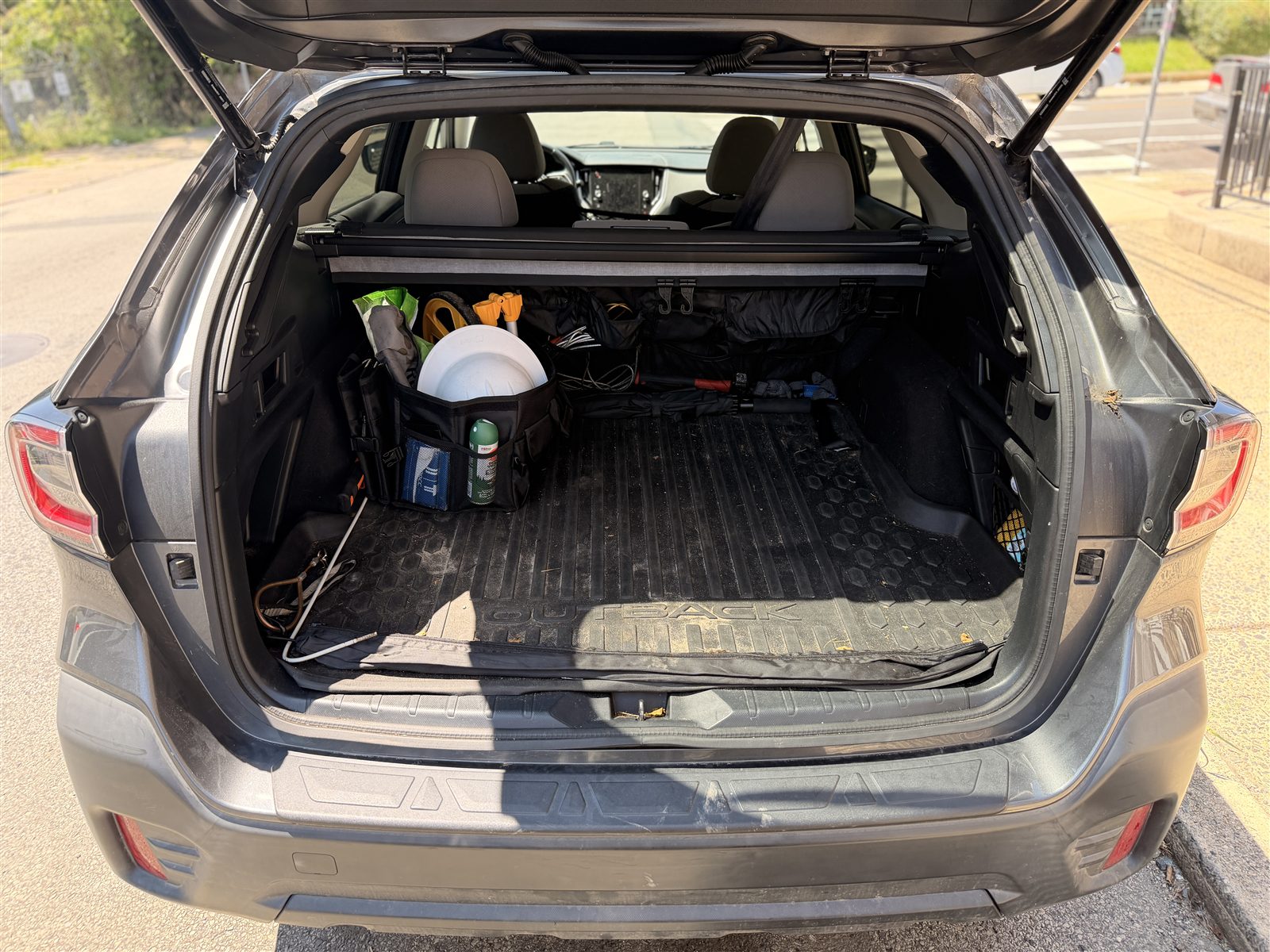
A Subaru’s cargo area is one big open space. That’s great for hauling a bike or a load of camping gear, and frustrating the rest of the week, when groceries tip over and small things slide under the seats. This guide covers how much room each model actually has, and a simple setup that keeps everyday cargo in place without giving up that open space.
How Much Cargo Space Each Subaru Has
Subaru’s official cargo volumes, behind the rear seats and with the rear seats folded. Where two numbers are shown, the first is the base trim and the second is the other trims, which Subaru lists as a little smaller.
| Model and years | Behind rear seats | Rear seats folded |
| Crosstrek 2018-2023 | 20.8 cu ft | 55.3 cu ft |
| Crosstrek 2024-2026 | 19.9 cu ft (Wilderness 20.0) | 54.7 cu ft (Wilderness 54.9) |
| Forester 2019 | 35.4 / 33.0 cu ft | 76.1 / 70.9 cu ft |
| Forester 2020-2021 | 31.1 / 28.9 cu ft | 76.1 / 70.9 cu ft |
| Forester 2022-2024 | 28.9 / 26.9 cu ft | 74.2 / 69.1 cu ft |
| Forester 2025-2026 | 29.6 / 27.5 cu ft | 74.4 / 69.1 cu ft |
| Outback 2018-2019 | 35.5 cu ft | 73.3 cu ft |
| Outback 2020-2025 | 32.5 to 32.6 cu ft | 75.6 to 75.7 cu ft |
| Outback 2026 | 34.6 cu ft | 80.5 cu ft |
The takeaway: behind the rear seats, a Forester or Outback has roughly 1.5 times the space of a Crosstrek. That gap is why organization matters most in a Crosstrek, where a stroller or a dog crate can take up much of the floor before the groceries go in. Hybrid Crosstreks are smaller still, so check your trim’s spec sheet.
What a Good Setup Does
- Stops things from sliding. A grippy liner and one or two containers do more than adding storage.
- Keeps everyday items reachable. A flat layout beats stacking, so you are not unloading three things to get one.
- Leaves open space. Keep part of the floor clear for anything bulky or unplanned.
- Is easy to reset. If it takes effort to clear out, it won’t stay organized.
Storage Options Compared
| Approach | Best For | Organization Level | Flexibility | Ease of Use | Main Tradeoff |
| Open Storage | Occasional or light use | Low | Very High | Simple | Items slide and mix together |
| Bins and Containers | Daily items and mixed use | Medium | Medium | Easy once set up | Can waste space if not sized well |
| Soft Organizers | Light, changing items | Medium | High | Easy to adjust | Less support for heavier items |
| Built-In / Semi-Permanent | Consistent gear (tools, camping) | High | Low | Very stable | Limits flexibility for larger loads |
A Simple Setup That Works for Most People
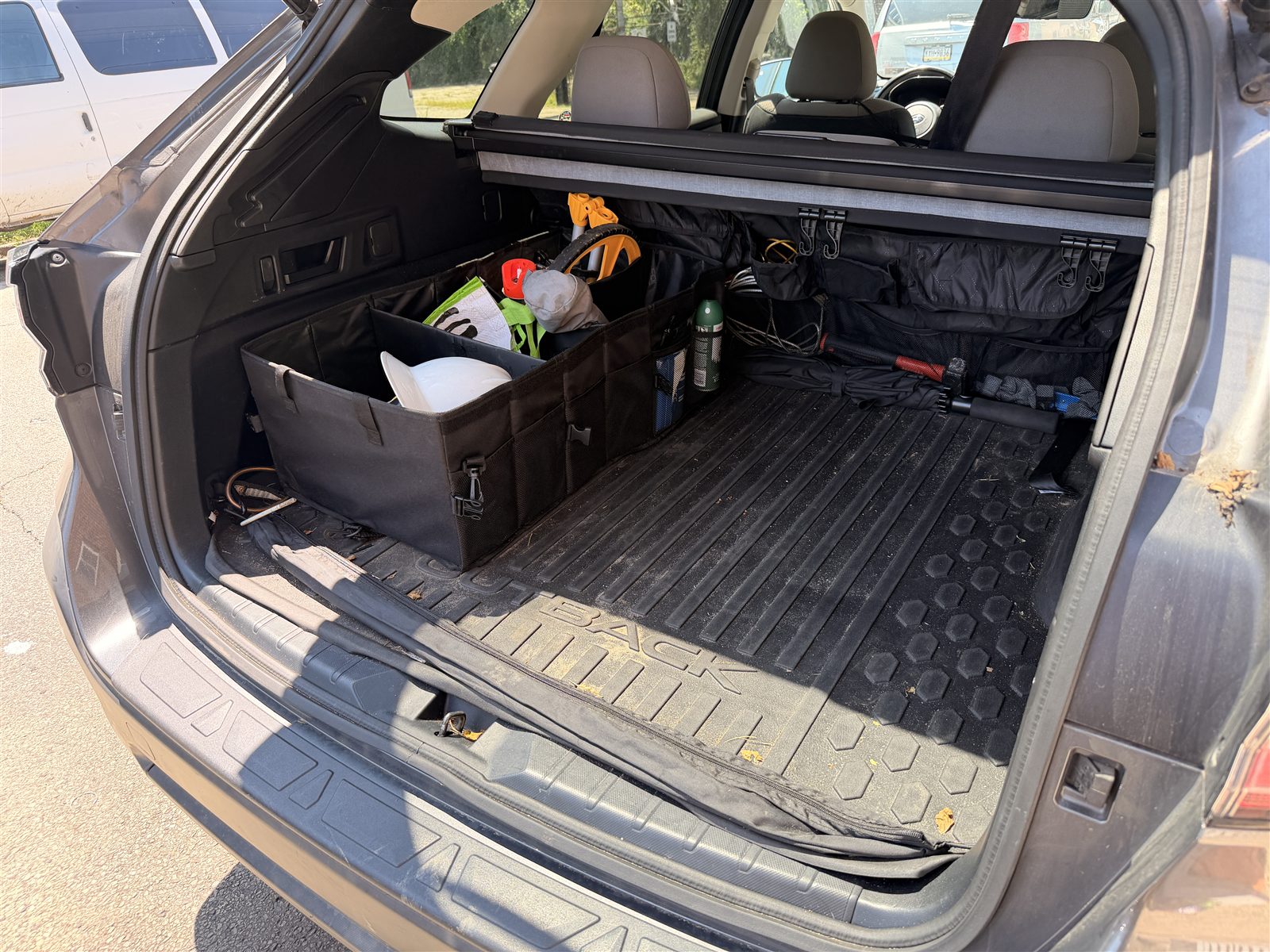
Start small: one collapsible organizer against one side of the floor for groceries and daily items, a liner underneath, and a cargo net for loose things. Leave the rest of the floor open. If you carry the same gear every day, like tools or sports equipment, add one rigid bin for it. That’s usually all it takes.
Layouts that work
- Side-to-side: bins along the sides, center left open for big items.
- Back-to-front: things you grab often near the hatch, rarely used gear deeper in.
- Zones: one area for daily items, one for gear, one for an emergency kit.
Grocery Runs
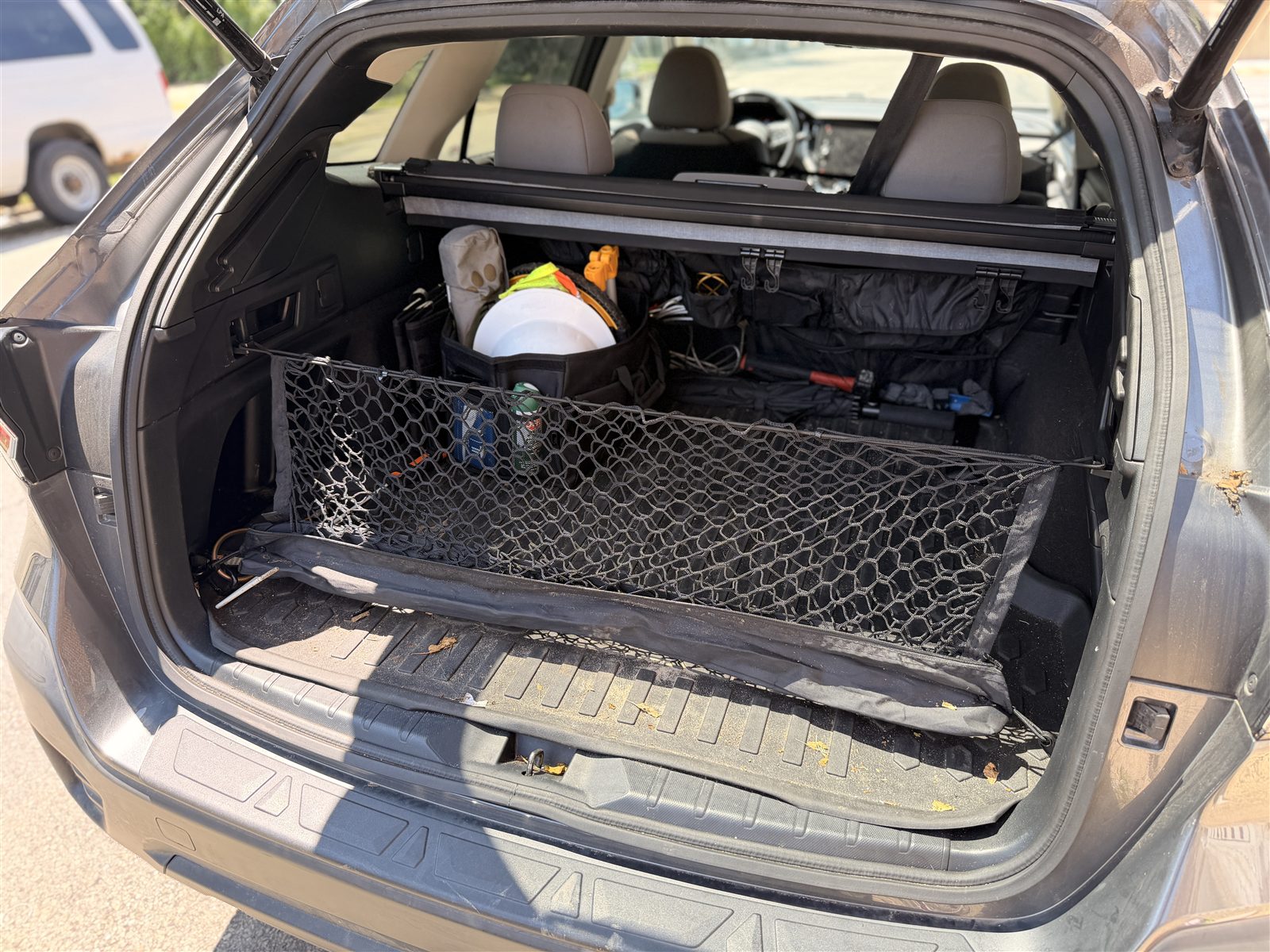
- Contain the bags. An organizer or a cargo net keeps them upright through turns and braking.
- Keep heavy and fragile apart. Water and canned goods crush eggs, bread, and produce.
- Group the cold items. An insulated bag keeps frozen and refrigerated food together, so it comes in first when you get home.
- Plan for what’s already back there. A stroller works best near the hatch; keep a dog’s space separate from the food.
Bags don’t belong on the seats or in the footwells, where they become projectiles in a hard stop. For car seats and family cargo, see Subaru Road Trip Setup (Family + Space).
Setups by Model
Crosstrek
About 20 cu ft behind the seats, so every inch counts. Use smaller containers, keep the organizer compact, and fold one side of the rear seat for bigger loads rather than stacking.
Forester
The tallest, squarest opening of the three, which makes it the easiest to load bins and boxy items. Taller spaces handle a little stacking, as long as nothing blocks your rear view.
Outback
The longest floor, which favors a flat, spread-out layout with separate zones. The 2026 Outback adds space, up to 34.6 cu ft behind the seats.
Common Mistakes
- Too many containers. Over-organizing wastes space and makes access slower.
- Containers that don’t fit. Oversized bins leave gaps; undersized ones slide around.
- Filling the whole floor. Leave an area open.
- Stacking high. It blocks your rear view and makes loads less stable.
FAQs
How much cargo space does a Subaru Crosstrek have?
19.9 cu ft behind the rear seats and 54.7 cu ft with them folded on 2024-2026 models. 2018-2023 models have 20.8 and 55.3 cu ft.
How much cargo space does a Subaru Forester have?
On 2025-2026 models, 27.5 to 29.6 cu ft behind the rear seats and 69.1 to 74.4 cu ft folded, depending on trim.
How much cargo space does a Subaru Outback have?
32.5 to 32.6 cu ft behind the rear seats on 2020-2025 models, and 34.6 cu ft on the 2026. With the seats folded, 75.6 to 80.5 cu ft.
How do I keep groceries from sliding around?
A grippy cargo liner underneath and a collapsible organizer or cargo net to hold the bags upright.
Should everything go in bins?
No. Containers for daily items, and leave the rest of the floor open for bulky or unplanned cargo.
Final Thoughts
Keep it simple: a liner, one organizer, a net, and some open floor. That handles groceries during the week and still leaves room for weekend gear, on any Subaru.
Sources: Subaru trim comparison specifications (2018-2026) for cargo volumes.
Leave a Reply