Disclosure: This article contains affiliate links. I may earn a commission at no extra cost to you.
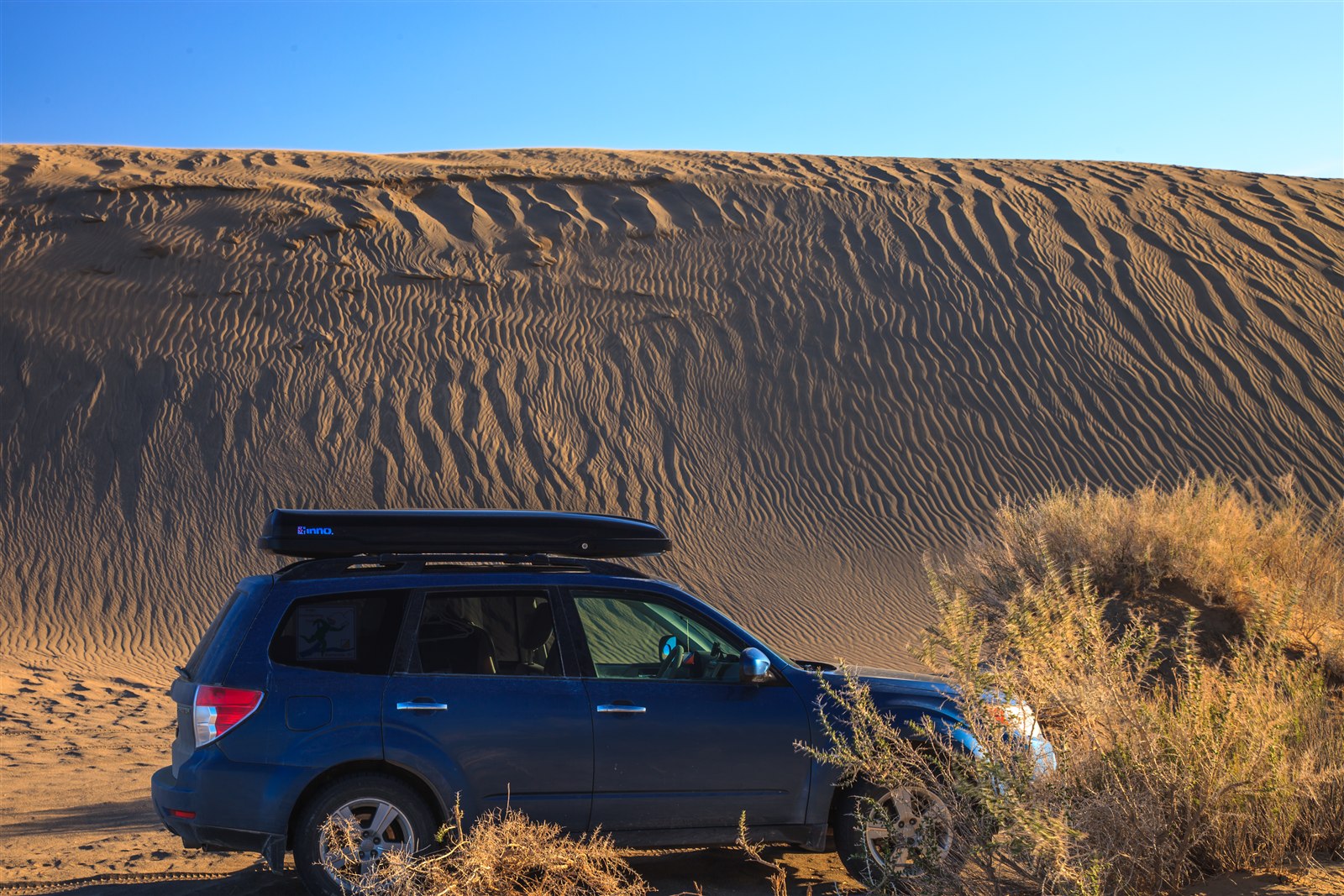
The Forester has the tallest roof of the three current Subaru models, so a cargo box adds more reach to loading than it would on a Crosstrek or Outback. Capacity-wise, the Forester can hold its own against the Outback — the difference is that on a Forester, going up a size stacks extra height on top of a roof that’s already the tallest of the three.
Here’s how to size a box that works with the Forester’s height instead of fighting it.
Quick Picks
Best overall: Yakima SkyBox 18 — around 18 cubic feet, the easiest size to live with on a Forester.
Best for families and gear-heavy trips: Thule Motion 3 XL — more capacity, but expect more reach when loading.
For most Forester owners, an 18-cubic-foot box like the Yakima SkyBox 18 is the practical starting point — enough room for road trips and camping gear without adding more height than necessary on a vehicle that’s already the tallest of the three Subarus.
Sizing Up: What Actually Changes
The Forester can technically fit an XL box the same as an Outback can — the roof space is there. What’s different is the loading experience: the Forester’s roof is already the tallest of the three, so a taller box on top of it means more real reach for anyone loading solo. The Thule Motion 3 XL works well for families who need the capacity, but a step stool earns its keep here more than it would on an Outback or Crosstrek.
Hatch Clearance Still Matters
Box length, not cubic feet, is what causes hatch interference. A box mounted too far back can catch the rear hatch on the way up regardless of size — adjusting crossbar spread and sliding the box forward usually fixes it without needing to size down.
Forester vs Outback vs Crosstrek Cargo Box Sizing
Model
Roof Length
Loading Height
Realistic Ceiling
Forester
Moderate
Tallest — more reach to load
Large; XL adds real loading effort
Outback
Longest of the three
Moderate
XL boxes, with room to spare
Crosstrek
Shortest, narrowest
Lowest, easiest to reach
Medium-Large; XL is a stretch
The Forester isn’t the easiest to load, but it’s not far behind the Outback on capacity — the tradeoff shows up in loading effort, not available roof space.
Cargo Box Size by Forester Generation
Third-generation Foresters (2009-2013) and fourth-generation (2014-2018) both handle medium and large boxes well, with XL sizes needing closer attention to hatch clearance. Current-generation (2019-present) Foresters offer the most flexibility, including XL with proper fitment. The Forester Wilderness shares the standard model’s roof dimensions, but its added ride height makes solo loading a bit more work — worth planning around if you load without help.
Common Mistakes Forester Owners Make
Not accounting for the extra reach when loading solo. The Forester’s tall roof means more lifting than an Outback or Crosstrek — a step stool helps if you load alone often.
Buying XL without trying it on for size first. The capacity is there, but the loading height adds up fast on a Forester.
Leaving the box mounted year-round. It adds drag and wind noise even empty.
FAQs
What size cargo box fits a Subaru Forester?
Most Foresters comfortably run 15-20 cubic feet. XL boxes are possible, but the Forester’s height means loading takes more effort than on an Outback of the same box size.
Does the Forester’s height limit box size?
Not really — it limits loading ease more than size. The roof can physically hold the same boxes an Outback can; reaching them is what takes more effort.
Does the Forester Wilderness fit larger boxes?
Yes, the roof dimensions match the standard Forester. Its taller ride height just adds a bit more to the reach.
Do I need aftermarket crossbars for a larger box?
Not always — factory crossbars handle most box sizes fine. Aftermarket bars help mainly if you need more adjustment for hatch clearance.
Final Thoughts
The Forester holds its own on capacity against an Outback — the real difference is loading effort, not roof space. An 18-cubic-foot box is the easy default; sizing up to XL works fine, but expect to reach further to do it. Match the size to how often you actually need the extra room.
Disclosure: This article contains affiliate links. I may earn a commission at no extra cost to you.
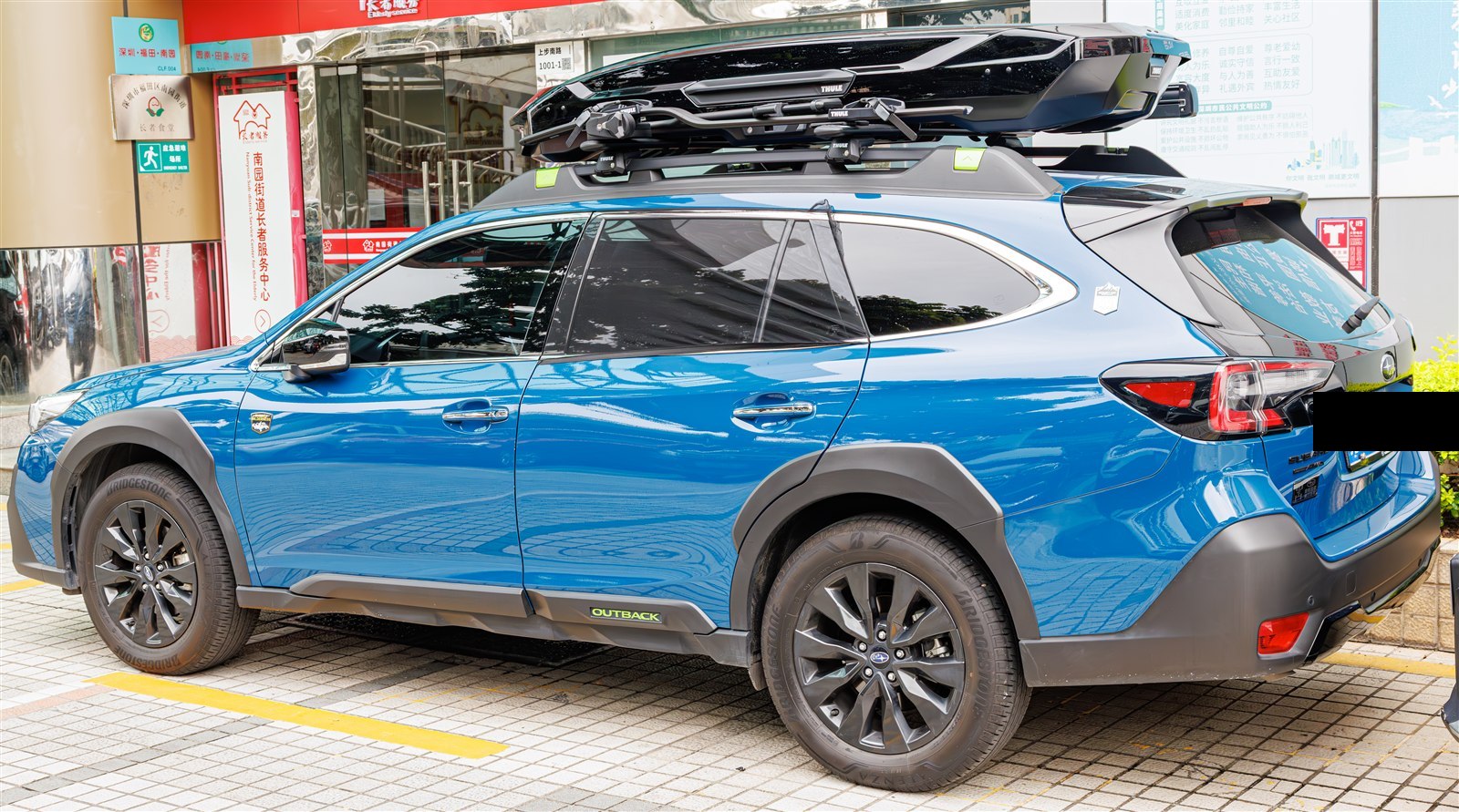
The Outback has the longest roof of the three current Subaru models, and it’s the one most often loaded up for road trips and camping. That combination means Outback owners tend to size up faster than Forester or Crosstrek owners — a box that looks oversized on a shorter roof usually still leaves room to spare on an Outback.
Capacity isn’t the only variable, though. Here’s how to pick a size that actually fits your Outback and your hatch.
Quick Picks
Best for most Outback owners: Thule Motion XT L — around 18 cubic feet, the practical default for road trips and camping gear.
Best alternative brand: Yakima SkyBox 18 — same size class, worth comparing if you prefer Yakima’s mounting hardware.
Best for families: Thule Motion XT XL — steps up capacity for families or gear-heavy trips.
Best for extended trips: Thule Motion XT XXL — maximum capacity; verify hatch clearance before buying.
For most Outback owners, an 18-cubic-foot box like the Thule Motion XT L covers the common case — road trips, camping gear, and family travel — without adding more roof bulk than necessary. The Yakima SkyBox 18 sits in the same class if you’d rather buy Yakima.
Sizing Up: Where the Long Roof Pays Off
This is the one upgrade where the Outback has a real edge over the other two Subaru models. Its longer roof gives an XL box more room to sit without crowding the windshield or overhanging the hatch as much as it would on a shorter vehicle. For families or anyone who regularly runs out of room, the Thule Motion XT XL is worth the extra size — and if you’re packing for extended trips, the Thule Motion XT XXL is about as large as it makes sense to go.
Hatch Clearance Is the Real Limit, Not Cubic Feet
Two boxes with similar capacity can have very different lengths, and length — not volume — is what causes hatch interference. The Outback’s long roof gives more room to work with than a Forester or Crosstrek, but a box mounted too far back can still catch the hatch on the way up. Adjusting crossbar spread and sliding the box forward usually solves it without needing a smaller box.
Outback vs Forester vs Crosstrek Cargo Box Sizing
Model
Roof Length
Loading Height
Realistic Ceiling
Outback
Longest of the three
Moderate
XL boxes, with room to spare
Forester
Moderate
Tallest — more reach to load
Large; XL adds real loading effort
Crosstrek
Shortest, narrowest
Lowest, easiest to reach
Medium-Large; XL is a stretch
The Outback is the one Subaru where sizing up rarely causes problems — the roof length absorbs it. On a Forester or Crosstrek, the same box demands more attention to positioning.
Cargo Box Size by Outback Generation
The 2010-2014 (fourth-gen) and 2015-2019 (fifth-gen) Outbacks both handle medium and large boxes comfortably, with XL sizes requiring closer attention to hatch clearance. Current-generation (2020-present) Outbacks offer the most flexibility of the three, including XL boxes with proper fitment. The Outback Wilderness shares the same roof dimensions as the standard Outback, but its taller ride height makes loading slightly more work — worth factoring in if you load solo.
Common Mistakes Outback Owners Make
Buying XL “just in case.” A bigger box adds wind noise and weight year-round — size for what you actually carry, not the one trip a year that needs more.
Ignoring box length in favor of cubic feet. Two boxes with the same capacity can have very different hatch clearance.
Leaving the box mounted year-round. It adds drag and noise even empty — worth removing between trips.
FAQs
What size cargo box fits a Subaru Outback?
Most Outbacks comfortably run 15-20 cubic feet, and many can size up to 21+ with proper hatch clearance — the long roof gives more headroom than a Forester or Crosstrek.
Can an Outback fit a 21+ cubic foot box?
Yes — the Outback is the most forgiving of the three Subarus for XL boxes, though hatch clearance is still worth verifying before buying.
Does the Outback Wilderness fit the same box sizes?
Yes, the roof dimensions match the standard Outback. The taller ride height just makes loading a bit more work.
Does a larger box hurt gas mileage?
Yes. Larger boxes add aerodynamic drag and are most noticeable at highway speeds — one more reason to size for typical use, not the biggest trip of the year.
Final Thoughts
The Outback’s long roof makes it the easiest Subaru to size up for road trips and family travel — an 18-cubic-foot box covers most owners, and stepping up to XL rarely causes the hatch and clearance problems it would on a shorter vehicle. Match the size to what you actually carry, and double-check hatch clearance once it’s mounted.
Many Subaru owners focus on crossbar style but overlook crossbar length. In reality, bar length affects accessory fitment, usable space, and everyday convenience.
Longer crossbars can be helpful for kayaks and multi-accessory setups, but more width is not always better. Excessive overhang can add noise and unnecessary bulk.
For most Crosstrek, Forester, and Outback owners, manufacturer-recommended lengths provide the best balance of flexibility and practicality. The goal is choosing enough bar for your gear without adding complexity.
Why Crossbar Length Matters
Bar Length Affects More Than Weight Capacity
Many Subaru owners assume crossbar length mainly affects how much weight the roof rack can support. In reality, bar length has a bigger impact on usable space and accessory placement.
Longer bars can make it easier to carry multiple accessories or larger gear, while shorter bars often provide a cleaner and more convenient setup for daily driving.
Wider Bars Create More Usable Space
Longer crossbars provide additional space outside the roof rails, which can be useful when carrying kayaks, bikes, cargo boxes, or multiple accessories at the same time.
This extra width becomes especially valuable for families and outdoor enthusiasts who frequently need to maximize roof storage without constantly changing their setup.
Longer Isn’t Always Better
More width is not always an advantage. Excessively long crossbars can add wind noise, create clearance concerns, and extend beyond the sides of the vehicle.
For most Crosstrek, Forester, and Outback owners, the goal is not choosing the longest bars available. It is choosing a length that provides enough usable space without adding unnecessary bulk or inconvenience.
What Crossbar Length Do Most Subaru Owners Need?
Crosstrek Owners
Most Crosstrek owners do not need unusually long crossbars. Standard lengths recommended by crossbar manufacturers typically provide enough space for cargo boxes, bikes, and occasional outdoor gear.
Longer bars become more useful when carrying kayaks or multiple accessories at the same time.
Forester Owners
Forester owners usually benefit from moderate crossbar lengths that balance usable space with everyday convenience.
Standard crossbar sizes are sufficient for most cargo boxes, bike racks, and family travel setups. Additional width mainly becomes valuable for kayaks or multi-accessory configurations.
Outback Owners
Because the Outback has a longer roof, it offers more flexibility for larger gear and wider setups.
Many owners still find that standard crossbar lengths work well. Longer bars are generally most useful for carrying two kayaks, multiple bikes, or combining accessories on the same roof.
Why Manufacturer Recommendations Usually Work Best
Crossbar manufacturers design recommended lengths around the dimensions of each vehicle and the intended mounting system.
For most Crosstrek, Forester, and Outback owners, these recommendations provide the best balance between usable space, stability, wind noise, and everyday practicality. Going significantly longer rarely provides meaningful benefits unless your gear requirements demand it.
Vehicle
Typical Crossbar Length
Crosstrek
Standard manufacturer-recommended length
Forester
Standard manufacturer-recommended length
Outback
Standard manufacturer-recommended length; longer bars optional for larger setups
When Longer Crossbars Make Sense
Carrying Multiple Accessories
Longer crossbars provide additional usable space, making it easier to mount multiple accessories on the same roof.
This can be helpful when combining bike racks, cargo boxes, ski carriers, or other gear without constantly reconfiguring the setup.
Kayaks And Wider Loads
Kayaks, canoes, and other wider loads often benefit from additional crossbar width.
Longer bars can improve support and create more room for carriers, especially when transporting two kayaks or larger equipment.
Cargo Box Plus Bikes
Combining a cargo box with one or more bike racks is one of the most common reasons owners choose longer crossbars.
The extra space can provide greater flexibility in accessory placement and make it easier to fit everything securely on the roof.
Families With Changing Gear Needs
Families often find their storage needs change over time.
Longer crossbars can provide additional versatility as bikes, kayaks, cargo boxes, and other gear are added to the mix. For owners who regularly carry different combinations of equipment, the extra usable space can be worthwhile.
When Standard-Length Bars Make More Sense
Daily Driving
For most Crosstrek, Forester, and Outback owners, standard-length crossbars provide enough space for common accessories without adding unnecessary width.
They are often easier to live with and better suited for vehicles that spend most of their time commuting or running errands.
Garage Clearance And Parking
Standard-length bars help keep the roof rack closer to the vehicle’s overall dimensions.
This can make parking in garages, navigating tight spaces, and moving around the vehicle easier during everyday use.
Reducing Head Bumps And Overhang
Crossbars that extend far beyond the roof rails can become easy to bump into when loading gear or walking around the vehicle.
Standard lengths reduce side overhang and help minimize accidental head and shoulder impacts while maintaining adequate carrying space.
Simpler Setups
Many owners only carry a cargo box, bike rack, or occasional outdoor gear.
For these setups, standard-length bars usually provide all the usable space needed without adding complexity, extra noise, or unnecessary bulk.
Problems With Bars That Are Too Long
Excessive Overhang
Crossbars that extend too far beyond the roof rails can create unnecessary overhang.
While additional width can be useful in some situations, excessive overhang increases the chances of bumping into the bars and can make the vehicle feel less practical during everyday use.
Loading Convenience
Longer bars do not always make loading easier.
For many setups, the extra width provides little benefit while creating more obstacles when reaching into the vehicle or moving around the roof. Most owners only need enough space for their most common accessories.
Appearance And Practicality
Very long crossbars can give the vehicle a bulky appearance and may look out of proportion to the roof.
More importantly, they can add inconvenience without improving functionality. A setup that fits the vehicle properly is usually easier to live with.
Why Bigger Isn’t Automatically Better
Many owners assume longer bars provide a better roof rack system.
In reality, the best crossbar length is the one that supports your gear without adding unnecessary width, noise, or inconvenience. For most Crosstrek, Forester, and Outback owners, standard lengths offer the best balance of usability and flexibility.
Crossbar Length And Cargo Boxes
Why Cargo Boxes Usually Don’t Need Extra Width
Most cargo boxes mount within the width of the roof rails, so longer crossbars rarely provide additional benefits.
For many Crosstrek, Forester, and Outback owners, standard-length bars offer plenty of support without adding unnecessary overhang.
Bar Spread Matters More Than Bar Length
When fitting a cargo box, the distance between the front and rear crossbars is usually more important than overall bar length.
Proper bar spread helps ensure secure mounting, improves stability, and can make it easier to position the box correctly.
Hatch Clearance Considerations
Rear hatch clearance is often a bigger concern than crossbar width.
Proper crossbar placement and cargo box positioning help prevent the hatch from contacting the box when opened. In many cases, adjustment flexibility matters more than using longer bars.
What Most Cargo Box Owners Actually Need
Most owners only need standard-length crossbars paired with proper bar spacing and a correctly sized cargo box.
For road trips, camping gear, and family travel, fitment and usability usually matter far more than maximizing crossbar width.
Crossbar Length For Bikes, Kayaks, And Multiple Accessories
Bike Rack Setups
Most bike rack setups do not require unusually long crossbars.
Standard-length bars are often sufficient for carrying one or two bikes, especially when no other roof accessories are involved. Additional width becomes more useful as gear combinations become more complex.
Kayak Carriers
Kayaks typically benefit more from additional crossbar width than cargo boxes do.
Longer bars can provide extra space for carriers and improve support, particularly when transporting two kayaks or larger watercraft.
Combining Accessories
Longer crossbars become more valuable when carrying multiple accessories at the same time.
A cargo box paired with bikes or kayaks can quickly use up available bar space. Extra width provides greater flexibility in accessory placement and helps avoid overcrowding.
Planning For Future Gear
Many owners start with a simple setup and gradually add more gear over time.
If you expect to carry multiple bikes, kayaks, or a combination of accessories in the future, choosing slightly longer crossbars can provide additional versatility without requiring a complete rack upgrade later.
Situation
Standard Length
Longer Bars
Cargo box only
✓
One or two bikes
✓
Daily driving
✓
Garage parking
✓
Two kayaks
✓
Cargo box + bikes
✓
Multiple accessories
✓
Growing family gear needs
✓
What Actually Works (Based On Real Use)
Most Owners Need Less Bar Than They Think
Many Subaru owners assume they need the longest crossbars available.
In reality, standard-length bars provide enough space for the majority of cargo boxes, bike racks, and everyday gear setups.
Cargo Boxes Rarely Require Longer Bars
For most cargo box owners, extra crossbar width offers little benefit.
Proper bar spread and box positioning usually matter far more than overall bar length when it comes to stability and usability.
Extra Width Is Helpful For Multi-Accessory Setups
Longer crossbars become valuable when carrying multiple accessories at once.
Combining bikes, kayaks, and cargo boxes often requires additional usable space, making longer bars worthwhile for more complex setups.
Manufacturer Recommendations Are Usually Right
Crossbar manufacturers size their systems around the dimensions and intended use of each vehicle.
For most Crosstrek, Forester, and Outback owners, the recommended bar length delivers the best balance of flexibility, convenience, and everyday practicality.
FAQs
What crossbar length does a Subaru Crosstrek need?
Most Crosstrek owners are well served by the bar lengths recommended by the crossbar manufacturer. Standard lengths are sufficient for most cargo boxes, bikes, and everyday gear.
What crossbar length does a Subaru Forester need?
Standard-length bars recommended for the Forester provide enough space for most roof accessories. Longer bars are usually only needed for multi-accessory setups.
What crossbar length does a Subaru Outback need?
The Outback’s longer roof provides more flexibility, but most owners still do well with manufacturer-recommended bar lengths.
Are longer crossbars stronger?
Not necessarily. Strength depends on the crossbar system and roof load limits, not bar length alone.
Are longer crossbars noisier?
They can be. Additional width and overhang may increase wind noise, especially at highway speeds.
Do cargo boxes require longer bars?
Usually no. Proper bar spread and box positioning are generally more important than extra crossbar width.
How much overhang is too much?
Excessive overhang varies by system, but bars that extend far beyond the roof rails can become inconvenient and easier to bump into.
Can crossbars be too long?
Yes. Overly long bars can add noise, reduce convenience, and provide little benefit if the extra width is never used.
Should I size up for future accessories?
If you expect to carry multiple accessories or larger gear later, slightly longer bars may make sense. Otherwise, standard lengths are usually the better choice.
Final Thoughts
The right crossbar length depends on your gear and how you use your Subaru.
For most Crosstrek, Forester, and Outback owners, standard-length bars are enough. Longer bars make more sense for kayaks and multi-accessory setups.
The goal is choosing enough width to support your gear without adding unnecessary overhang or complexity. As your needs change, factors like accessory compatibility and overall roof rack layout often matter more than bar length alone.
Disclosure: This article contains affiliate links. I may earn a commission at no extra cost to you.
Many Subaru owners eventually face a simple choice: aero bars or round bars. Both can carry cargo boxes, bikes, kayaks, and other gear, but they differ in wind noise, accessory compatibility, and everyday usability. For most Crosstrek, Forester, and Outback owners, the best option depends on how often the roof rack is used and what gear it needs to carry.
Aero bars use a wing-shaped profile to reduce wind resistance and noise, and they typically sit lower on the vehicle for a cleaner look. Round bars use a simple cylindrical design that’s been on roof racks for decades — their advantage is simplicity and broad accessory compatibility, since many bike racks, kayak carriers, and other accessories were originally designed around round-bar systems. For most owners, the decision comes down to whether wind noise and everyday usability matter more than the simplicity of a traditional round-bar setup.
Wind Noise and Highway Driving
Aero bars move air more smoothly over the roof, which minimizes whistling and wind noise at higher speeds — a real difference for owners who leave crossbars installed year-round or drive long distances. Round bars create more air disturbance, and while the difference is minor at lower speeds, it becomes more noticeable on the highway, especially with no accessories mounted to break up the airflow. Crossbar height also affects garage and parking-deck clearance: aero-bar systems tend to sit lower than comparable round-bar setups, though the exact difference varies by rack design. For occasional roof rack use, these differences matter less than accessory compatibility or cost.
Cargo Box and Accessory Compatibility
Most cargo boxes mount to both aero and round bars, but fitment depends more on bar spread, positioning flexibility, and hatch clearance than bar shape alone — a properly fitted box performs well on either style. Bike racks and kayak carriers are similar: most modern accessories work with both, though some older gear was designed specifically around round bars, so it’s worth checking compatibility before buying regardless of shape. If you’re running multiple accessories at once, usable bar space and mounting flexibility matter more than bar shape. Popular cargo box picks that pair well with either setup: Yakima SkyBox NX 16 (best overall), Thule Force 3 L (best for families), and Thule Motion 3 (premium pick). See our full Best Cargo Box for Subaru guide for more options.
When Aero Bars Make More Sense
Aero bars are usually the better choice for frequent highway driving, since the noise difference becomes more noticeable over hundreds of miles. Cargo box owners tend to benefit too, since many boxes are designed around aerodynamic profiles. For daily-driven vehicles, aero bars offer a better overall balance of noise, clearance, and everyday comfort — and if quiet operation is the top priority, aero bars are the clear pick.
When Round Bars Make More Sense
Round bars appeal to budget-focused owners who want functional roof storage without paying more for aerodynamics. If your setup is simple and unlikely to change — a single bike rack or occasional kayak trip — the extra refinement of aero bars may add little practical benefit. For owners who use roof storage only a few times a year, the wind noise and clearance differences are also far less noticeable.
FAQs
Are aero bars quieter than round bars?
Usually yes — aero bars are designed to reduce wind resistance and generally produce less noise, especially at highway speeds.
Do cargo boxes work better on aero bars?
Often yes — aero bars typically offer better cargo box compatibility, positioning flexibility, and overall fitment.
Are round bars stronger than aero bars?
Not necessarily — strength depends on the specific crossbar system, not just the bar shape.
Are aero bars worth the extra cost?
Often yes for owners who frequently use roof racks, drive long distances, or leave crossbars installed year-round.
Do aero bars improve gas mileage?
They can slightly reduce aerodynamic drag compared to round bars, but the real-world fuel economy difference is usually small.
Can you use the same accessories on both?
Many accessories fit both styles, but compatibility varies — always verify fitment before purchasing.
Final Thoughts
The choice between aero bars and round bars comes down to how you use your roof rack. Aero bars generally make more sense for frequent driving, cargo boxes, and year-round use, while round bars can work well for budget-focused, occasional, or simple accessory setups. For most Crosstrek, Forester, and Outback owners, aero bars offer the best overall balance of quiet operation, cargo box compatibility, and daily usability.
Disclosure: This article contains affiliate links. I may earn a commission at no extra cost to you.
Many Subaru owners eventually face a choice: keep their OEM crossbars or upgrade to an aftermarket setup. For some, factory crossbars work perfectly well. For others, larger cargo boxes, kayaks, and multiple accessories make aftermarket options worth considering. The right choice depends on how you use your vehicle — in real-world Subaru ownership, fitment and everyday usability usually matter more than weight capacity alone.
What’s the Difference?
OEM (Original Equipment Manufacturer) crossbars are designed specifically for Subaru vehicles and sold through Subaru dealerships or parts suppliers. Their biggest advantages are simplicity, straightforward fitment, and guaranteed compatibility with the vehicle. Aftermarket crossbars come from third-party brands like Thule and Yakima, offering more bar spread, adjustment range, and accessory compatibility — at the cost of an added purchase and installation step.
Where OEM Crossbars Work Best
For many owners carrying bikes, skis, or smaller cargo boxes, OEM crossbars provide enough functionality without added cost or complexity. If you use roof storage occasionally and your current setup handles your gear without problems, there’s often little reason to upgrade — simplicity, easy installation, and minimal setup complexity outweigh the extra flexibility aftermarket systems offer.
Where Aftermarket Crossbars Work Best
Aftermarket crossbars become worthwhile once larger cargo boxes enter the picture — many systems offer greater bar spread and positioning flexibility, making it easier to maintain rear hatch clearance as boxes get longer and larger. Hatch clearance is one of the most common reasons owners upgrade at all: more adjustment range makes it easier to position a box without the hatch catching. Kayaks, canoes, skis, and multiple simultaneous accessories also push owners toward aftermarket systems, since OEM bars run out of usable spread quickly once more than one accessory is mounted.
OEM crossbars are designed specifically for the vehicle and generally perform well for everyday driving and occasional use. Aftermarket aerodynamic crossbars can be even quieter, particularly when left installed year-round, with the biggest differences showing up on highway drives and longer road trips. On daily convenience, OEM keeps the edge — less setup, fewer compatibility concerns — while aftermarket trades that convenience for more flexibility when you actually need it.
Which One Makes Sense for You?
Keep OEM if you use roof storage occasionally and your current setup already handles your gear without problems — smaller cargo boxes, bikes, skis, and occasional road trips are all well within OEM’s range. Upgrade if roof storage becomes a regular part of how you use your vehicle: larger cargo boxes, kayaks, multiple accessories, or recurring fitment and hatch-clearance issues are the clearest signs aftermarket crossbars will pay off.
For most everyday roof storage, yes — limitations mainly show up with larger cargo boxes or multiple accessories.
Do aftermarket crossbars hold more weight?
Some do, but for most cargo boxes, OEM crossbars already work well — fitment and positioning matter more than raw capacity.
Which works better with cargo boxes?
For smaller boxes, OEM crossbars often work well. For larger boxes, aftermarket crossbars typically provide better fitment and positioning flexibility.
Do aftermarket crossbars improve hatch clearance?
Often yes — additional adjustment options make it easier to position a cargo box without interfering with the rear hatch.
Are OEM crossbars easier to install?
Usually — they’re designed specifically for the vehicle with fewer fitment and compatibility concerns.
Are aftermarket crossbars worth the extra cost?
They can be if you frequently use cargo boxes, kayaks, or multiple roof accessories. For occasional use, OEM crossbars are often enough.
When should you upgrade from OEM crossbars?
When you start experiencing cargo box fitment issues, hatch clearance problems, accessory limitations, or more demanding roof storage needs.
Final Thoughts
The choice between OEM and aftermarket crossbars comes down to your storage needs. For occasional use, OEM crossbars are usually enough — for frequent, heavier, or multi-accessory roof storage, an aftermarket upgrade pays for itself in fitment and flexibility.
Disclosure: This article contains affiliate links. I may earn a commission at no extra cost to you.
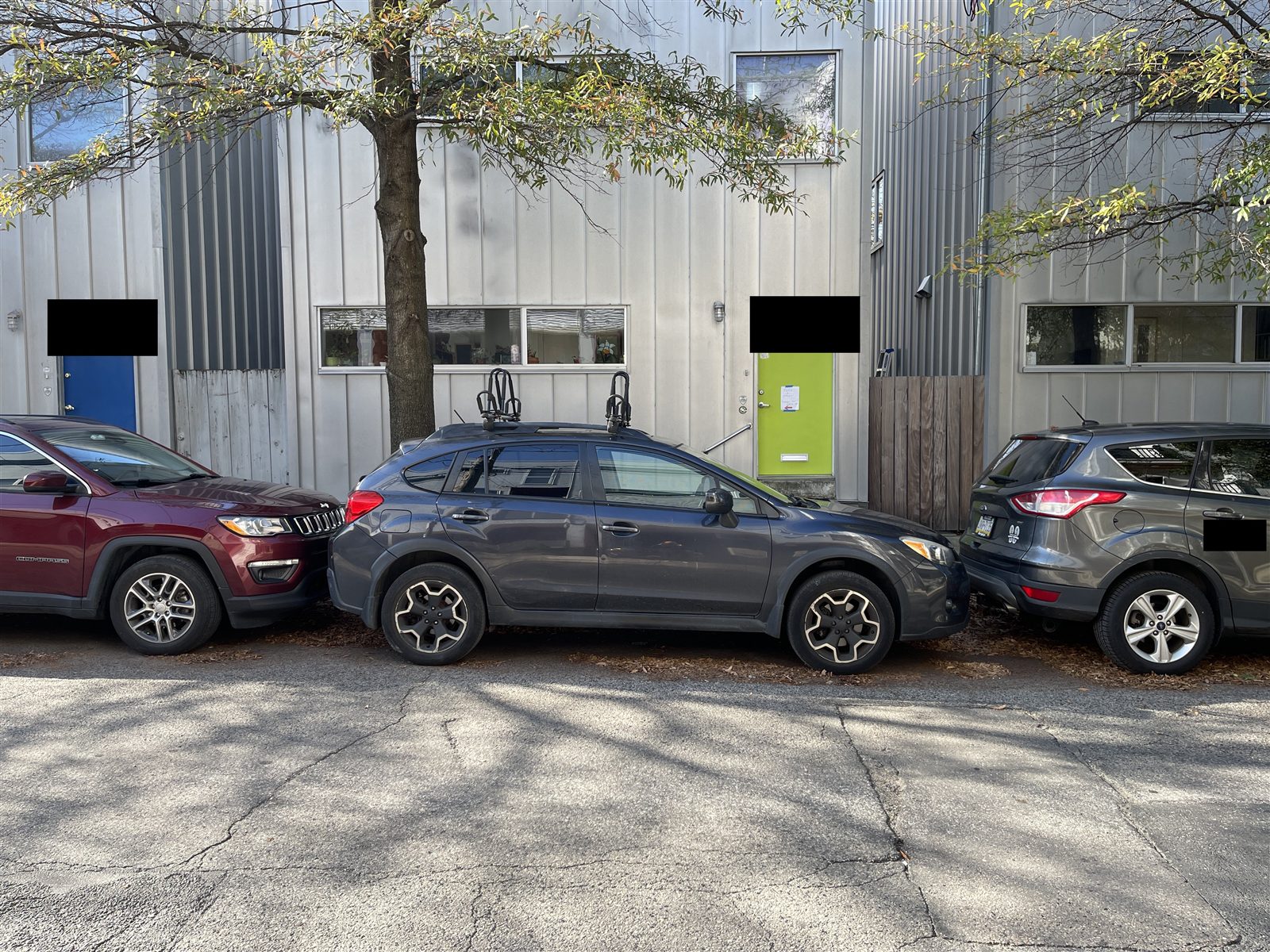
The Crosstrek has the shortest, narrowest roof of the three current Subaru models, which changes what aftermarket crossbars are actually good for here. On an Outback, upgrading unlocks real extra capacity. On a Crosstrek, the roof itself is the limiting factor — better crossbars won’t turn a small roof into a large one. What they’re genuinely useful for is accessory compatibility: switching between a cargo box, bike rack, and kayak carrier without fighting your hardware every time.
Here’s what aftermarket crossbars can and can’t do for a Crosstrek.
Quick Picks
Best overall: Thule WingBar Evo — low wind noise, broad accessory compatibility.
Best alternative brand: Yakima JetStream — comparable performance for Yakima owners.
Best mid-range Yakima option: Yakima CoreBar — solid fitment without the aero-bar price premium.
Do You Actually Need Aftermarket Crossbars on a Crosstrek?
For most Crosstrek owners, the factory integrated crossbars handle a medium cargo box, bikes, or occasional skis without issue — and unlike an Outback, sizing up to a larger box doesn’t necessarily solve anything, since the Crosstrek’s roof is already the shortest and narrowest of the three. Where aftermarket bars earn their keep here is accessory switching: if you’re regularly swapping between a cargo box, a bike rack, and a kayak carrier, better mounting hardware makes that easier without adding roof capacity you don’t have room for anyway.
If your roof setup rarely changes, there’s little reason to upgrade. If you’re constantly reconfiguring for different gear, that’s the real case for aftermarket bars on a Crosstrek.
Choosing Crossbars for a Crosstrek
Best Overall: Compatibility Over Capacity
The Thule WingBar Evo is the practical pick for most Crosstrek owners upgrading — its main value here is broad accessory compatibility rather than unlocking bigger cargo boxes, which the Crosstrek’s roof doesn’t really have room for anyway. The Yakima JetStream performs similarly if you’re already in the Yakima ecosystem.
Mid-Range Option
The Yakima CoreBar is a step down from the aero bars in noise and finish, but still handles the accessory-switching most Crosstrek owners actually need without paying for aerodynamics you may not notice on a smaller roof.
Budget Option
For light, occasional use, the VEVOR Roof Rack Crossbars are functional and inexpensive — reasonable if you’re not swapping accessories often and don’t need premium fit and finish.
Crosstrek vs Outback vs Forester: Where Aftermarket Bars Actually Help
Model
Roof Length
Where Aftermarket Bars Help Most
Crosstrek
Shortest, narrowest
Accessory compatibility more than added capacity
Outback
Longest of the three
Sizing up to large/XL cargo boxes
Forester
Moderate
Hatch clearance and positioning, not just capacity
The Crosstrek is the one Subaru where upgrading crossbars won’t buy back roof space the way it can on an Outback or Forester — the value is in flexibility, not capacity.
Common Mistakes Crosstrek Owners Make
Upgrading expecting more cargo box capacity. The Crosstrek’s roof is the limiting factor, not the bars — see the realistic size ceiling before buying bigger bars for a bigger box.
Buying premium bars for a setup that rarely changes. If you run one accessory year-round, a mid-range or budget bar covers it fine.
Leaving crossbars mounted year-round. They add noticeable drag and wind noise on a smaller vehicle even when empty.
FAQs
Are aftermarket crossbars worth it for a Crosstrek?
Mainly if you switch between different roof accessories often. For a single cargo box or rack used consistently, factory crossbars are usually enough.
Will aftermarket crossbars let me fit a bigger cargo box?
Not really. The Crosstrek’s roof length and width are the real limits, not the crossbars — sizing up bars doesn’t create more roof.
What are the quietest crossbars for a Crosstrek?
Aero bars like the WingBar Evo or JetStream are noticeably quieter than round-bar designs, especially at highway speed.
Do crossbars affect gas mileage?
Yes, though the impact is small without an accessory mounted — more noticeable on a smaller vehicle once a cargo box or rack is attached.
Final Thoughts
On a Crosstrek, aftermarket crossbars are worth it for flexibility, not extra capacity — the roof itself sets the ceiling. If you’re regularly switching between gear types, a WingBar Evo or JetStream makes that easier. If you run one setup consistently, the factory bars or a budget option cover it just fine.
.jpg)
_China_(9).jpg)